The Smartphone and the Disorder of Modernity ━ The European Conservative
There are many versions of conservatism, and nearly all of them claim, in one way or another, to stand for tradition. However, one version of conservatism largely neglected by the modern Right is Traditionalism, with a capital T. Whereas conventional liberal traditionalism usually concerns itself with the free market, traditional gender roles, and the continuation of inherited customs and ancestral habits, Traditionalism refers to the school of thought associated with figures such as René Guénon, Frithjof Schuon, and others. It is anti-modern and metaphysical in principle and values sovereignty, organic order, quality over quantity, endurance, and verticality—that is, an orientation toward what is eternal, perennial, transcendent, sacred, and true. For all their differences, both forms of traditionalism seem to stand far from technology, and this is even more so in the case of Traditionalism, some of whose thinkers were explicitly hostile to modern technology as such, seeing it as a force that distances man from organic order and rootedness. Moreover, the field of technology is generally experienced as fast-paced, a sphere in which trends come and go quickly and novelty is prized, whether in the form of some new gadget or the latest iPhone or other smartphone. Its rhythm rewards disposability, a cycle sustained by planned obsolescence. All this clashes on a fundamental, almost spiritual level with Traditionalism. In their dominant forms, the two stand in near-opposition at the level of values.
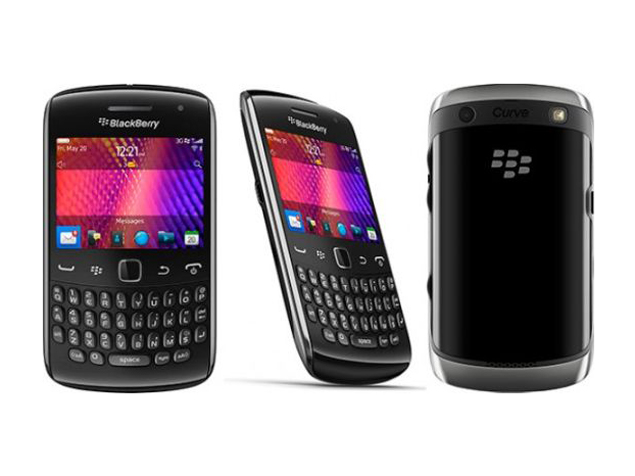
Few technologies embody this horizontality more clearly than the modern smartphone. When one buys a smartphone, one usually expects to keep it for a few years before it begins to fail. If the hardware does not fail first—for example, through a fall—software often becomes the point of decay. Through planned obsolescence and software abandonment, older phones receive fewer and fewer updates and gradually become slower in operation, irritating the ‘owner’ until he is effectively pushed into buying a new one, thereby increasing the revenue of the corporation that made it and the shareholder value it serves. This is not organic demand, nor is it an example of natural capitalism—not in the contemporary ideological sense of the word, but in the sense of something arising from the natural order and the genuine needs and wants of the customer. It is instead a synthetic demand, created through the manipulation of the so-called owner of the phone, who believes he owns it but has in reality been reduced to a consumer managed through cycles of dependence and replacement. In a more organic capitalist model, one arising from genuine demand and need, taking good care of the phone, repairing it, and preserving it would be the focus, just as a good pair of shoes is not thrown away when it has a problem but taken to a shoemaker. Such a model would favor durability, quality, and real ownership and sovereignty.
Can someone really be called the owner of a phone? Ownership implies both inward and outward sovereignty, yet the corporation still decides, more or less, when the ‘owner’ will be compelled to buy a new phone. The problem, however, is not necessarily technology as a whole—even if more hardline Traditionalists might disagree—but rather the metaphysical order that technology takes today: a synthetic order rather than one stemming from a natural order.
The problem with the modern phone is not only planned obsolescence, software abandonment, or its enclosure within synthetic cycles of replacement; it is also that it distorts the natural hierarchy of things. The phone is no longer used according to its proper function, as a tool serving higher purposes such as work, communication, memory, study, or coordination, but begins instead to subordinate the ‘owner’s’ attention, desires, habits, rhythms, and even self-understanding and identity, not only through branding but through the very way it is designed. The phone—and technology in general—must ideally be restored to its place in the natural hierarchy: subordinate to higher ends and aspirations rather than becoming the anchor around which modern life is ordered.
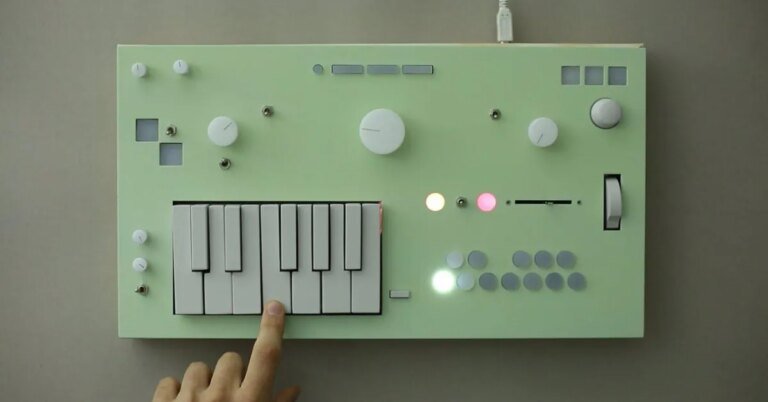
What, then, would be the governing principles on which a Traditionalist phone could be built? It would not be about the phone merely looking traditional, using luxurious materials, having Latin names, or possessing a beautiful aesthetic for branding. The principles would focus on sovereignty, endurance through being built to last, hierarchy of functions, and the subordination of the phone to its more legitimate uses, such as communication, necessary coordination, study, and the aiding of memory through calendars, recordings, photographs, and documents. They would also value quality over novelty, restraint over stimulation and endless notifications, and beauty through architecture and form. For that, it would have to be conceived and built as a long-lived platform made in layers: a permanent external body made of materials intended to let the shell endure for decades, while medium- and shorter-life modules such as the compute core, radio, camera system, battery, display, and speakers are designed for replacement. Therefore, the Traditionalist ideal would not be a phone that remains unchanged for fifty years, but one whose main body endures and may even acquire a deeper meaning for the owner through its more custom-made form, while its vulnerable parts are gradually renewed, repaired, or replaced according to the customer’s actual needs. If one customer values the phone camera more than another, he could go to the repair shop and renew it to a newer module, while a customer who does not would have no need to do so. This would open the possibility for the phone, or at least its enduring body and form, to be handed down to the owner’s children, not as consumer waste, but as an object of continuity renewed across generations.
Such a phone would probably be somewhat heavier and thicker than current ones, since it would need to be modular or semi-modular. Its operating system would aim to achieve several things: sovereignty, long-term endurance, security, privacy, the subordination of installed applications to the user’s higher ends, and the blocking of hidden avenues of data collection from the manufacturer’s side. The OS could also become a continuing source of revenue for the company selling the phone by including, at purchase, a core security-support window of five to seven years, after which the owner could choose to renew support for another five to seven years. A premium tier could then be offered for users who want early access to non-essential improvements, audit reports, quicker support where required, highly specialized device-health checks, maintenance tools optimized for this specific phone, and hardened versions for special use cases. These could be intended for politicians, journalists, dissidents, security researchers, doctors, lawyers, and others dealing with confidential information or heightened personal risk. This would create an incentive to keep the OS continuously updated in forms suited to the capabilities of each phone, rather than creating an incentive toward planned obsolescence, thereby extending the longevity of both the software and the device itself.
A Traditionalist phone, embodying these principles, does not yet exist on the market, and therefore buying and using it remains, for now, largely the domain of theory. That does not mean that an individual cannot still take steps toward the next best Traditionalist path available, namely using existing hardware and software options to approximate those principles as far as one can or desires. There are operating systems that operate on a donation basis, such as GrapheneOS, which officially supports a narrow range of devices centered on Google Pixel phones because of the hardware-security requirements it considers necessary. GrapheneOS focuses on privacy and security with a seriousness and rigor that few other mobile operating systems match. GrapheneOS support is tied to the secure support horizon of its devices, which in recent cases extends to roughly seven years. After that secure mainstream horizon ends, one possible way of extending the life of the hardware further is to turn to a project such as postmarketOS, an operating system oriented toward device longevity and long-term maintainability. The Nokia N900, released in 2009, is an example of this long-horizon approach, showing that a phone can be kept alive far beyond the normal assumptions of the industry and thus embody, at least in part, Traditionalist principles within a horizontal market. GrapheneOS and postmarketOS each embody only part of the Traditionalist ideal: the former, the principle of disciplined security; the latter, continuity through long stewardship of the device.
A phone, trivial as it may look at first glance, is not a neutral tool, for people use it absent-mindedly several times a day, and its form thus shapes the way they think, conduct themselves in everyday life, and structure their expectations. An addictive, horizontal device, meant to distract its owner, trains one relation to the world, while a bounded, durable, disciplined device ordered toward a longer horizon trains another. The former teaches life in cycles of impulse and replacement; the latter encourages a view of the world measured not in months or years but in decades. A device used every day, one that lasts longer and encourages sovereignty and real ownership, would embody a different view of the world: one oriented toward permanence, responsibility, and civilizational order.