US Air Force tests drones and ground robots for aircraft inspection
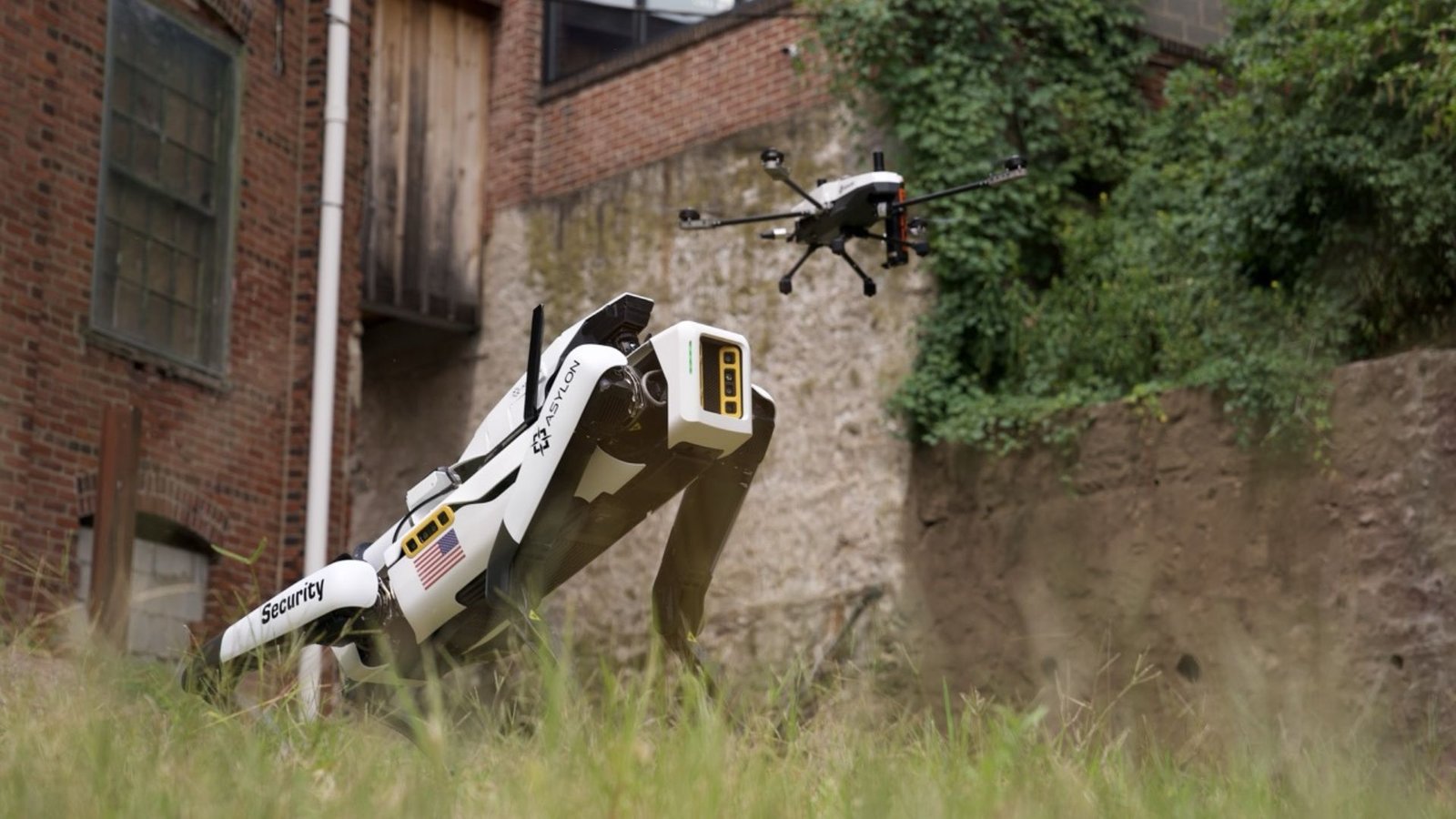
Asylon will bring its autonomous aircraft inspection technology to one of the U.S. Air Force’s largest sustainment centers after securing a Phase Three contract from the Warner Robins Air Logistics Complex. The project moves the company’s Multi-modal Autonomous Robotics for Inspection of Aircraft (MARIA) system from development toward operational use, giving maintainers a new way to inspect aircraft with coordinated air and ground robots.
The deployment aims to reduce the time required for general visual inspections while improving consistency across repetitive maintenance tasks. Air Force personnel at Warner Robins will also test how autonomous systems can support aircraft readiness without increasing manpower demands.
Autonomous inspection platform
MARIA combines Asylon’s Guardian small unmanned aircraft system with its DroneDog Q-UGV robotic ground vehicle. Both platforms operate through the company’s Range autonomy software and connect to the DroneIQ command-and-control system, allowing maintainers to manage inspections from a single interface.
Instead of relying solely on manual walk-around inspections, crews can assign inspection missions to the robotic platforms. The air and ground systems work together to capture aircraft imagery and other inspection data before sending the results to maintenance personnel for review.
Engineers designed the system to support unattended and repeatable general visual inspections across Department of the Air Force aircraft. The goal is to improve inspection quality while reducing the risks associated with labor-intensive maintenance work.
Digital maintenance workflow
DroneIQ also serves as the central hub for inspection results. It presents collected imagery alongside LiDAR point clouds, telemetry and other operational data through both traditional 2D workflows and interactive digital twin views.
Those tools are intended to help maintainers review inspection findings more efficiently and make faster maintenance decisions. Organizing inspection information in one platform could also simplify record-keeping and reduce the time spent comparing data from multiple sources.
Warner Robins Air Logistics Complex, one of the Air Force’s primary aircraft sustainment facilities, will serve as the flagship site for the MARIA deployment. Success there could help pave the way for wider adoption across military maintenance organizations and other defense sustainment operations.
Air Force partnership expands
The award extends Asylon’s collaboration with the Air Force beyond autonomous security operations, an area where its robotic platforms already support active missions. The company now plans to demonstrate how the same autonomous technologies can improve aircraft inspection and maintenance.
“We are honored to continue our partnership with the Warner Robins Air Logistics Complex on the MARIA system,” said Anthony McCarty, Asylon’s senior vice president of government. He said the award reflects the Air Force’s confidence in the company’s autonomous air and ground robotic platforms.
McCarty added that Asylon wants to give aircraft maintainers tools that make inspections faster, safer, and more consistent. The demonstration at Warner Robins will provide an opportunity to evaluate those capabilities in an operational maintenance environment before broader deployment across defense sustainment programs.
![[Most robots react. This one thinks a step ahead.] Ant Group’s Robbyant just published LingBot-VA 2.0 — a video-action foundation model built from scratch for robot control, not fine-tuned from a video generator.](https://jobssz.com/wp-content/uploads/2026/07/4pTW8s1905SYWeT15v1PzSnyWju423nCITj2GPvpXwU.png)