What if a model could only learn what trusted LoRA adapters can express? [R]
![What if a model could only learn what trusted LoRA adapters can express? [R]](https://preview.redd.it/t1vmc27m5vbh1.jpg?width=140&height=53&auto=webp&s=66cae41c8547e8fc3e74910933b327a507f9f67b "What if a model could only learn what trusted LoRA adapters can express? [R]") |
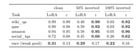
Hello I explored a different question: The idea is to constrain fine-tuning to a subspace learned from trusted LoRA adapters. Useful adaptation remains possible, but some malicious directions become geometrically unreachable. Another example is a local or on-device assistant that keeps adapting to its user. Instead of allowing it to learn any possible behavior from new data, its adaptation could be restricted to variations of behaviors already represented by a trusted pool of adapters. I tested the approach on 196 public LoRA adapters, including adaptive attacks specifically designed to bypass the defense. The results are strong: attack success drops sharply while useful adaptation is largely preserved on tasks covered by the adapter pool. The paper, code, and experiments are public. Paper: Code: I would be very interested to see people try to break it. submitted by /u/Bright_Warning_8406 |