Why I’m using wired Android Auto when all the cool kids are switching to wireless

Follow ZDNET: Add us as a preferred source on Google.
ZDNET’s key takeaways
- Using a wired Android Auto setup greatly reduces latency issues.
- Other benefits include better audio streaming quality and less overheating.
- There are useful accessories that can resolve traditional wiring issues.
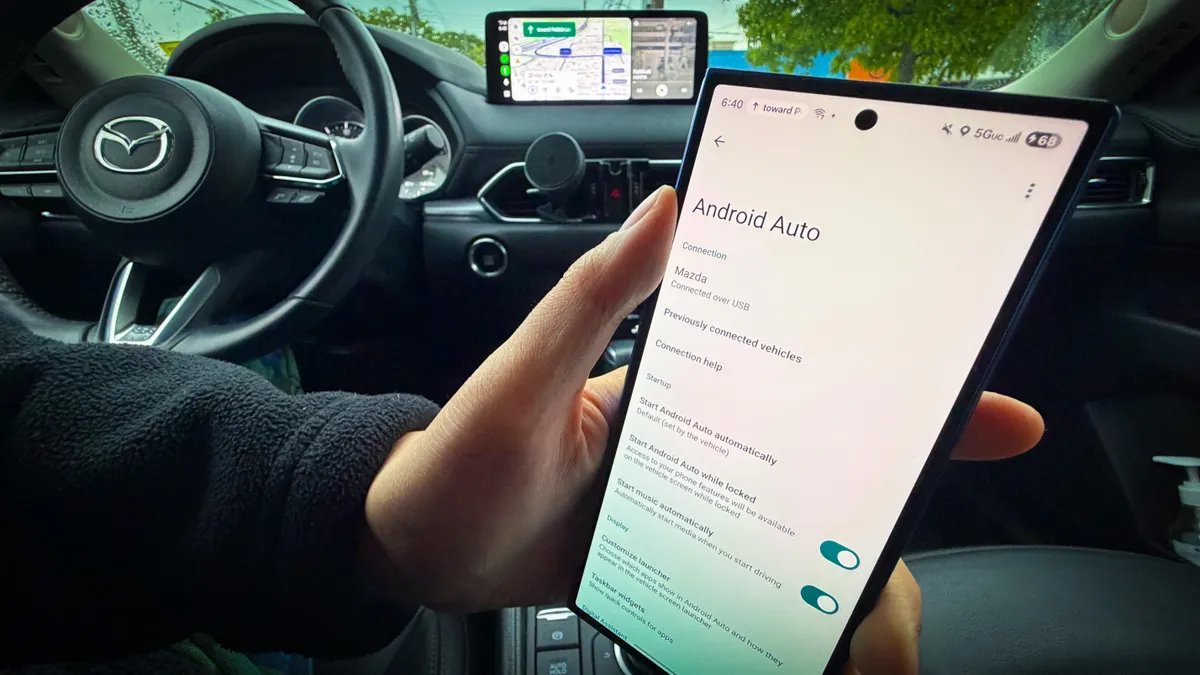
I’ve been using Android Auto since I bought my first car a few years ago, and while I’ve raved about the luxury of wireless connectivity, I recently had a change of heart.
While a wireless setup, whether through an adapter or your car’s native receiver, makes pairing your Android phone with your vehicle less of a burden, the technology’s caveats have become increasingly apparent — especially during the summer.
One pitfall is the consistently noticeable battery drain, with my Samsung Galaxy Z Fold 7 often losing about 10% of its power during a one-way commute. Hot temperatures and always-on navigation will do that, so I’m not too surprised. Then there are the occasional hiccups and stutters, whether it’s Gemini cutting itself off mid-answer or Spotify being spotty.
Does switching to a wired setup remedy any of this? Mostly, and definitely much better than a wireless one, as I’ve noticed a few weeks into the shift. At this point, I may keep things the way they are for the foreseeable future, even if it feels like I’m traveling back in time.
The benefits go beyond stability
As with home networking, the reliability of a wired setup for Android Auto will always be superior to that of a wireless one. This is especially true if you’re on an older vehicle or own an older Android phone, and the way the two communicate wirelessly may not always be optimal.
The connection typically involves a combination of Wi-Fi, Wi-Fi Direct, and Bluetooth, so there’s bound to be disruptions during rides. Even with my modern phone and car (a 2023 CX-5), I still experience the occasional connection drop when I hit a bump or drive through an underpass, so switching to a tethered setup has made a big difference.
Also: I use Android Auto in my living room now – and it solves one of my biggest productivity problems
For music lovers, streaming audio via a cable (or any wired setup, generally speaking) is best practice for the highest fidelity. That applies to the car, too, as many users, including myself, have found the playback quality to be much better through a wired connection versus a wireless one. I’m talking more engulfing bass and clearer mids and highs, and that’s without touching any of my vehicle’s or phone’s equalizer settings.
How noticeable this phenomenon is ultimately depends on the quality of your car’s built-in speaker system and sound deadening, as well as your ear for audio levels. But in my experience, I’ve enjoyed music on both Spotify and Apple Music without any wireless interference. House music generally sounds deeper; vocals are more distinct, everything is just better.
Your phone’s battery will thank you later
I mentioned earlier that my phone’s battery had been taking a beating throughout the summer, so much so that I found myself lugging around a portable charger whenever I expected to be outside for most of the day. While one solution is to set my phone on a wireless charging pad or a magnetic mount when it’s running Android Auto, the passive trickle charging from wired charging is much better for its longevity.
Also: 3 Android Auto automations that make my drives much easier – and how I set them up
That’s because the wireless charging coils in your phone generate more heat than when you’re charging it wired, and the higher temperatures can degrade the battery more quickly. While this may seem insignificant if you often switch phones, you’ll likely notice your battery life getting shorter over time.
To further prolong my phone’s battery health, I enable battery protection features that limit charging to 80%. This option is available on most Android models, including Samsung and Google devices.
Advice before you go
The USB cable you use for a wired Android Auto setup is just as important as the phone being connected. Notably, you’ll want to find a USB cable that supports data transferring and syncing. Most brands will clearly state this in their product listings. I generally prefer cables made of nylon, as they’re less susceptible to breaking when tucked in your center console.
If you’re afraid that a wired setup will wear out or damage your phone’s USB port, I’d recommend a magnetic USB adapter, which still lets you passively charge your phone when it’s paired with your car and greatly reduces the likelihood of damaging its port.