Why the AI Boom Won’t Crash Bitcoin: Coinbase CEO Debunks Key Mining Myth
Coinbase CEO Brian Armstrong categorically rejected the narrative that the artificial intelligence boom could destroy Bitcoin. He was responding to a widely discussed statement by billionaire Chamath Palihapitiya, who predicted a structural crisis for the cryptocurrency due to a mass exodus of miners into the AI sector, where computing power is currently said to generate 10–20 times more profit.
“The energy costs of Bitcoin mining do not determine its market value,” Armstrong said, pointing to a fundamental flaw in the skeptics’ calculations.
Why Bitcoin’s price has nothing to do with mining power
According to the Coinbase CEO, those spreading panic are overlooking Bitcoin’s core mechanism — automatic difficulty adjustment.
If half of all miners were to switch to servicing AI workloads tomorrow, the Bitcoin network would simply reduce its computational requirements, argues Armstrong. The time required to produce new blocks would remain the same, while the system itself would continue operating normally and become more accessible to the miners who remained.
That’s why, in Armstrong’s view, the real driver of Bitcoin’s price is not electricity costs but global fears of inflation.
As long as governments around the world continue increasing budget deficits and printing money, demand for a scarce digital asset will remain regardless of how many megawatts are used to mine it.
You Might Also Like

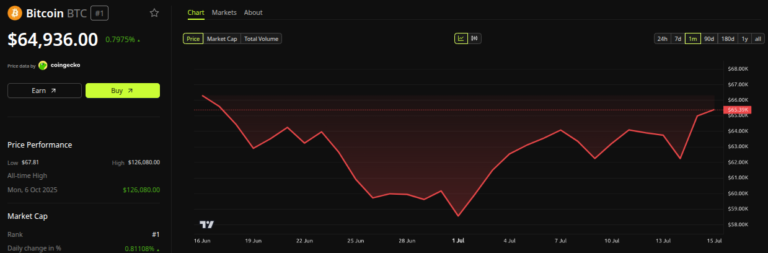
The discussion effectively expands on arguments Armstrong made a month earlier. In mid-June, amid a local market decline, he urged investors to look at the broader picture and published a chart of Bitcoin’s four-year cycles, reminding them that rises and falls are a natural part of the asset’s mechanics.
“Things are never as good or as bad as they seem. I am more bullish than ever and remain long,” the Coinbase executive said at the time, suggesting that the cyclical bottom for the price of Bitcoin had already been reached near the $60,000 level.