Why Trust Is Clinical Trials’ Next Big Breakthrough

Two organizations show how patient trust is reshaping clinical trials and accelerating drug development.
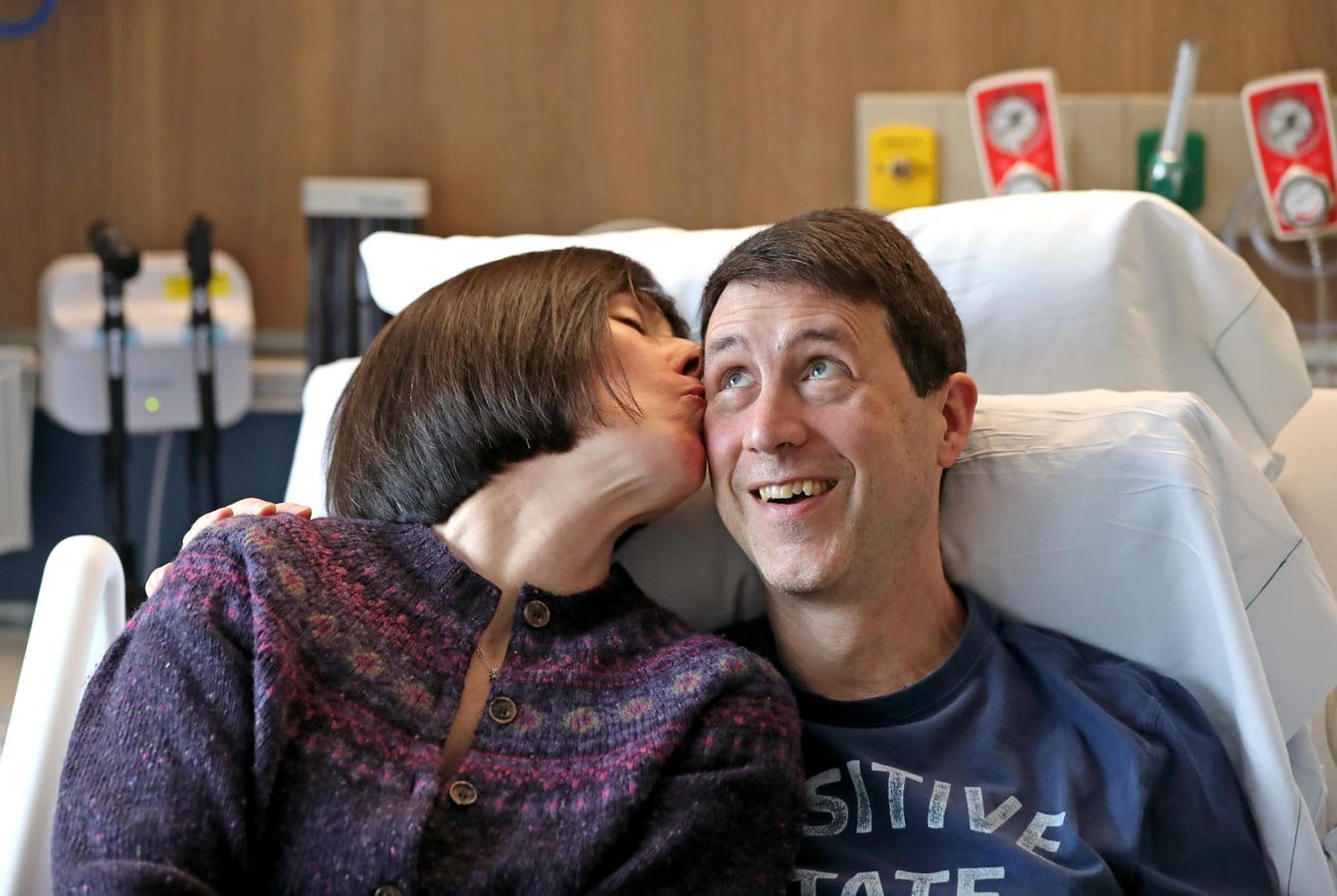
Boston Globe via Getty Images
Research by the Tufts Center reports that every day a clinical trial runs behind schedule it costs sponsor organizations an average of $800,000 in unrealized drug sales. And most trials run very far behind with around 80% failing to meet their enrollment targets on time.
The problem?
According to Erika Stevens, director of clinical research experience and faculty lecturer at Rutgers Health and former chair of the board of trustees for the Association of Clinical Research Professionals, the problem isn’t a lack of science — it’s a lack of trust.
“Clinical trials have a tainted history of unethical and non-compliant events. While safeguards exist to mitigate these risks, the lack of trust with who holds the research data continues to increase. This creates uncertainty in the system, with patients questioning if the system is working for them or simply extracting data from them,” Stevens noted during an interview.
Two organizations are working to solve this problem. One is a non-profit born from personal loss, the other a venture-backed startup born from a parent’s refusal to accept the status quo. Their approaches are strikingly similar, yet their business models are not. Both are making a compelling case that the real breakthrough in drug development is not a new AI tool, but earning the trust of the patients who generate the data.
Care To Cure: The EverythingALS Model
When Indu Navar’s husband was diagnosed with ALS, the progressive, neuro-degenerative disease that destroys motor function, she found a research system that was fragmented and built around institutions, rather than patients.
A key frustration is trying to find relevant clinical trials. “Systems like ClinicalTrials.gov are overwhelming and unproductive. It’s full of clinical jargon, and you can get hundreds, if not thousands, of results — and there is no guidance on eligibility,” shared Navar with me during a recent conversation.
The scale of the problem is significant, especially for ALS patients. According to a 2024 National Academies report, fewer than 10% of ALS patients join clinical trials. A 2019 Ipsos survey cited in that report found 78% of people living with ALS said they would participate in clinical trials if given the opportunity.
After losing her husband to the disease, Navar founded EverythingALS, a non-profit dedicated to rebuilding that system from the patient up. The insight behind EverythingALS was less about technology and more about relationships: If patients are treated as collaborators who own what they share, see their own insights in real time and understand what their participation makes possible, they will show up in ways the traditional model cannot achieve.
The clinical trial navigation tool, SAVA, helps ALS patients through a conversational AI navigator that matches them with eligible trials based on data they choose to share. Furthermore, Navar noted her non-profit had recently submitted a speech biomarker tool called Listener Effort, developed from patient-contributed recordings, to the FDA as a novel drug-development tool, as well.
According to EverythingALS’s 2025 Impact Report, the organization now includes a 21-company consortium of pharma and biotech companies and has generated more than five terabytes of multi-modal data, leading to better research for drug development companies.
A Different Origin Story, The Same Insight
Through her own crisis, Nasha Fitter arrived at the same conclusion — that the existing clinical trials process was broken. When her youngest daughter was diagnosed with FOXG1 syndrome, an ultra-rare, neuro-developmental condition, Fitter discovered that the biggest gap in advancing research was access to rich clinical data. Because of this, she eventually co-founded Citizen Health in 2023 with tech entrepreneur Farid Vij.
Here the story diverges in one important way: Citizen Health is not a non-profit. It has raised $44 million in venture funding, including a $30 million Series A led by 8VC, with backing from the Chan Zuckerberg Initiative.
Citizen Health’s platform spans more than 350 rare diseases and 8,000 patients, with 98.3% of patients consenting to share data for research — one of the highest voluntary sharing rates in healthcare. That number is not a tech-centric achievement. It is a trust achievement that has produced tangible results. In fact, data from the platform helped the FOXG1 Research Foundation redirect its treatment endpoint from seizures to movement disorders.
The foundation then received FDA alignment to use patient natural history data as a placebo control arm, potentially saving $80 million by bypassing a traditional phase-three trial. In December of 2025, Citizen Health announced a multi-year partnership with UCB, the global bio-pharmaceutical company, covering epilepsy and five rare disease indications.
The Real Breakthrough Is Trust In The System
The traditional clinical trial model is designed to extract data from patients — not earn trust from them. Stevens is an advocate of what EverythingALS and Citizen Health are doing: “When patients are treated as partners, rather than participants, they own their data, see their own insights, and understand what their participation makes possible, enrollment and retention rates improve.”
Whether a non-profit or for-profit entity, the lesson is the same: Trust is not a soft value. It is the infrastructure that makes everything else work. The organizations figuring that out are not just running better trials, but they are building the data foundation that gets to cures faster. Every patient waiting on a diagnosis is counting on them to get it right.