Why your data layer is AI’s most critical climate technology

I have spent enough time building cloud and AI infrastructure to know one thing: Efficiency problems never show up where teams expect them. They tend to sit just beneath the surface, quietly shaping outcomes long before they appear in the metrics anyone is tracking. Most enterprise conversations still center on token pricing. That focus makes sense. The per-unit cost of using models has fallen quickly, and organizations want to understand whether AI can scale without pushing budgets out of bounds.
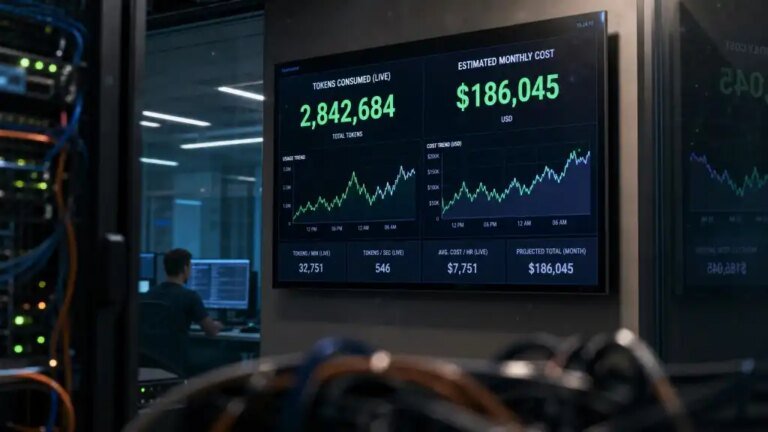
That question has become more complicated than it looks. At the same time, the nature of each interaction has changed. What used to resemble a straightforward exchange now involves retrieval and ongoing reasoning that unfolds across multiple steps. Even with lower unit costs, total consumption continues to rise because each request requires more underlying work. This creates a contradiction. Tokens are cheaper, yet overall compute demand keeps increasing. That compute demand has to go somewhere, and where it goes is a growing problem.
The answer, increasingly, is the power grid. The International Energy Agency has warned that AI and data centers are becoming a major source of electricity demand, and Goldman Sachs Research has projected that data center power demand could rise 165% by 2030 compared with 2023 levels. Today, electricity consumption from data centers already amounts to roughly 415 terawatt hours, or about 1.5% of global electricity use, and has been growing at roughly 12% annually over the past five years. Much of the response has focused on models or hardware. Both matter, but they do not explain the full picture. In enterprise environments, a meaningful share of inefficiency begins before a model processes anything at all. It begins in the data layer.