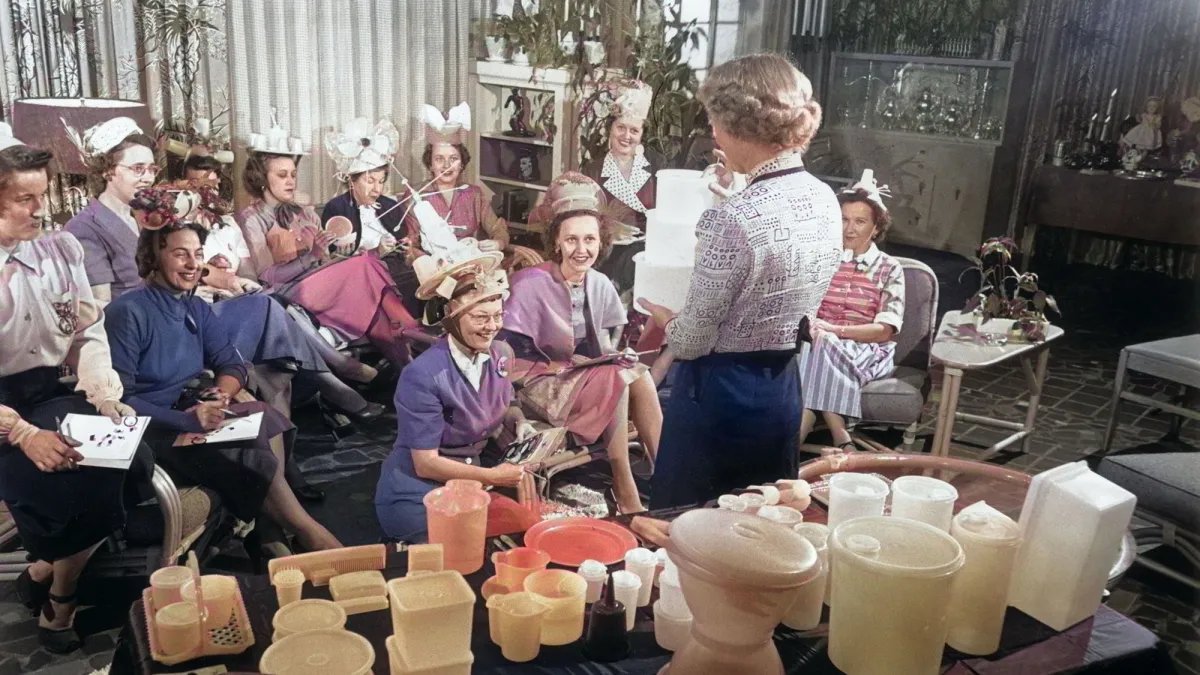
WWII helped create Tupperware. Potlucks made it iconic.
In the 1950s, plastic quickly began infiltrating the American household. Women slipped into nylon stockings and Bakelite jewelry; their children played with injection-molded polyethylene dolls and toy soldiers; their husbands donned vinyl raincoats on dreary days.
But plastic made its biggest incursion in the kitchen. Shatterproof cups, colorful plastic mixing bowls, vinyl tablecloths—all were marketed as time-saving solutions to ease a housewife’s burden. Tupperware, plastic containers with tightly locking lids, transformed the way food was stored (as well as the way brands sold their wares).
But Tupperware did something else, too: It helped reinvigorate a food tradition with ancient roots, and maybe even helped spur on the feminist movement.
The origins of the potluck
One of the first references to large communal meals where every attendee contributed is in the Bible. In his first letter to the Corinthians in the New Testament, the apostle Paul describes bringing together members of the early Christian community across economic divides to share everything in common.
The community is “supposed to be egalitarian,” and gathering at the table in fellowship was a strong ideal, Jonathan Brumberg-Kraus, professor of religion at Wheaton College in Norton, Massachusetts, tells Popular Science. In practice though, “it didn’t work out so well.”
Not only did community members have questions around religious dietary restrictions and the division of labor, “apparently rich people were bringing nice food and poor people were bringing not-so-nice food, if any food at all, and [the wealthy] were not sharing.”
Despite its challenges, sharing food with friends and strangers across social divides was firmly rooted in Christian tradition by the Middle Ages. That’s at least when the term “potluck” seems to have originated. The “luck of the pot” refers to leftovers stored and kept warm in a pot to offer to travelers and unexpected guests to English households.
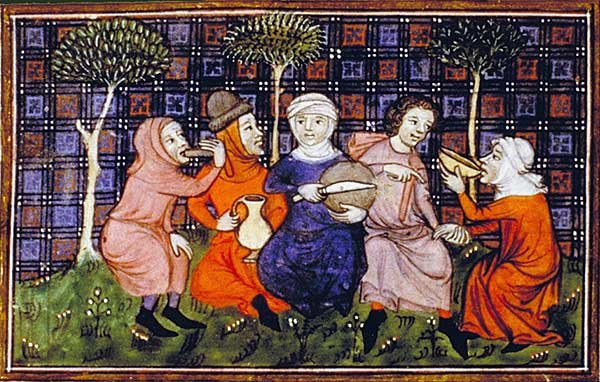
It wasn’t for a few more centuries then that the potluck came to describe the communal, egalitarian meal it does today. During the 19th and 20th centuries in the United States, Protestant churches held potlucks to build community connections.
In some immigrant enclaves, potlucks were a feature of communal events like barn raisings or fundraisers. During the lean Depression and war years, when unemployment was high and food was being rationed, potlucks provided a social outlet that didn’t put the financial burden on a single host.
But as America settled into an era of prosperity following World War II, potluck meals began to fall out of fashion. That is, until Tupperware brought them back into style.
Tupperware changed the game
Earl Tupper was hired as a sample inventor for the Du Pont chemical company in 1937, which was heavily invested in exploring the potential of plastics manufacturing. In his free time, Tupper experimented with his own polyethylene creations, including a shaving cream dispenser with a self-closing cap and a clear belt with slots for inserting snapshots.
In 1939, he founded the Earl S. Tupper Company to sell his whole range of novelties, from nautical steering wheel-shaped necktie racks to combs disguised as fountain pens.
It was around 1942 that Tupper first produced the flexible, injection molded polyethylene that would become the stuff of Tupperware. Manufacturers made good use of the material for wartime equipment and, a couple years after the conflict ended, Tupper returned to considering its domestic uses. In 1949, he invented an airtight lid that sealed a bowl-shaped storage container shut with a distinct burp.
Related ‘History of Every Thing’ Stories
Like potlucks themselves, Tupper’s design “originated from the ideals of social reform and utopianism,” writes Alison J. Clarke in Tupperware: The Promise of Plastic in 1950s America. His invention captured in plastic his desire to be “a better social friend” and to improve the lives of “the masses.” To a generation of women who, despite having tasted more public lives working outside of the home during the war were now forced back inside, fashionable Tupperware may have represented something else, says Brumberg-Kraus.
“I think there’s a definite correlation between potlucks with feminism and the sharing of responsibilities. It changes the paradigm of one person, often the matriarch, being responsible for putting on large meals.” Potlucks democratized large group meals, turning a massive task usually completed by one woman into smaller, more manageable tasks completed by many.
Tupperware didn’t just provide a way to easily contribute to a celebration or event, Brumberg-Kraus continues. The new technology also provided a way to take leftover food home. That infamous burping seal was proof that whatever was inside was still fresh, and could replace the next meal that a woman would otherwise have had to prepare herself.
For decades, Tupperware remained a staple of both the American home and the American potluck. Eventually, though, market competition edged the product out of fashion. The company filed for bankruptcy in 2024. Interest in communal, egalitarian meals, meanwhile, has surged in recent years, with concepts like “Friendsgiving” and “chosen families” going mainstream.
“I believe very strongly in building community through shared meals and I think potlucks are a really good way to do it,” says Brumberg-Kraus. Whether it’s a summer barbecue or a holiday celebration, America seems to agree—even if the term, “potluck” doesn’t always appear on the invite.
From sunglasses to ketchup, zippers to lip balm, ordinary objects carry epic, mind-bending stories that span centuries. In ‘The History of Every Thing,’ we dig into the surprising science, curious origins, and hidden histories behind everyday things.

2026 Popular Science Home of the Future Awards