Zer0Fit: I took Google’s new TabFM & TimesFM ML foundation models and made them available as an MCP server for zero-shot ML tasks (forecasts / classifications / regressions). 100% local. [P]
![Zer0Fit: I took Google's new TabFM & TimesFM ML foundation models and made them available as an MCP server for zero-shot ML tasks (forecasts / classifications / regressions). 100% local. [P]](https://preview.redd.it/cy6kekuamsch1.jpg?width=140&height=70&auto=webp&s=73676a2130325bec57d5a5677698a48d658477e2 "Zer0Fit: I took Google's new TabFM & TimesFM ML foundation models and made them available as an MCP server for zero-shot ML tasks (forecasts / classifications / regressions). 100% local. [P]") |
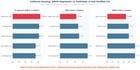
TL:DR: I’m a grad student in AI, I saw that Google released TabFM and TimesFM last week, I built an MCP wrapper to serve both transformer models in a single Docker container so you can connect their new ML transformer models to a local LLM via Open WebUI, Claude Code, or Codex and do ML tasks that would have previously required building, training, and tuning ML models to do. Tested with classic ML datasets (Iris, California Housing, etc), Pretty solid scores for accuracy for being zero-shot: (94.7% for Iris) and R2 of 0.91 for regression test) vs. traditionally tuned ML models. You need about 16GB of VRAM to run both models. I added dynamic model load and unload with a TTL set to 5 mins. CSV. support now, with XLS, XLSX, JSON, JSONL support soon. PyTorch-based so CUDA only. Works on DGX Spark, 3090, H100 and most anything Nvidia with 16GB+ VRAM. Install script auto detects architecture. Here is my repo if you want to try out the MCP: https://github.com/porespellar/Zer0Fit Here’s the non-TLDR version: I’m working on my Masters in AI and I saw someone’s post here the other day about Google’s new TabFM Tabular data foundational transformer models released last week and I thought that they were super groundbreaking in that they were basically bringing ML models into the GenAI space which is both weird and cool because ML models are very different animals than LLMs Here was the original Google blog post on it: https://research.google/blog/introducing-tabfm-a-zero-shot-foundation-model-for-tabular-data/ Anyways, I wanted to play around with these new models from a chat interface and try to “kick the tires” a bit, so I built an MCP implementation for both the TabFM and TimesFM models. Nothing super fancy, just a quick and dirty MCP wrapper of the PyTorch versions (this will only run on CUDA). I made the MCP with 2 build targets in mind: DGX Spark (arm-based with CUDA 13) and 3090 (AMD64 with CUDA 12.6). No Mac support because of Google using PyTorch, sorry. I also wanted this to work with my preferred chat client: Open WebUI, so that’s what it’s geared towards running best with and was tested against, I also added Claude Code and Codex CLI support as well, but haven’t really fully tested those out yet. Install is just a git clone and an ./install.sh. The whole thing runs out of a single Docker container and dynamically loads and unloads the models into VRAM with a TTL of 5 minutes to free up reserved VRAM when not in use. I also included an Open WebUI Skill.md that can be imported into Open WebUI, and skill.md and agents.md for the other harnesses. I tested it with some fairly classic ML datasets from Kaggle that most data science students have probably encountered while studying AI/ML. – Iris (classifiers) I spent a semester trying to learn ML models and tuning them and not really knowing what the hell I was doing, usually overfitting my models, and changing all kinds of parameters that I didn’t know if they were really helping or hurting my models. It all seemed like a dark art that I never fully understood. TBH, I wasn’t really a fan of ML, I think it’s cool stuff, but I just don’t have the math skills or stats chops to be able to understand WTF I’m doing most of the time with hyperparameters tuning. A man has to know his limitations, LOL. Anyways, as I said earlier, I just wanted to get Google’s cool new ML models running where I could feed a dataset to an MCP and then have it do all the ML magic that Google trained these foundational models to do. I tried to make it easy for the average person like myself to run. I thought others might want to test out the models too so I made it a public repo. So here it is if you want to mess around with it: https://github.com/porespellar/Zer0Fit I’ll try and do some maintaining if I see that there is any continued interest, but I can’t promise that I’ll keep up with it, so please feel free to fork the repo and take it in any direction you want to. I think models like TabFM and TimesFM are going to low-key bring the branches of AI / ML tree closer together and we’re going to see some really cool and wild stuff as people take these concepts further in the future. Note: This repo was hastily built to just get the models running. I’ve done very limited testing only on DGX Spark. Again, feel free to fork it and make it as good as you want to. And please remember that this stuff is very experimental. Don’t use the forecasts or predictions made by these models for anything other than just research curiosity. Use at your own risk. Let me know what you think of the repo if you give it a try. Cheers. Note Regarding my test results in the images: I created the test scripts using DeepSeek V4 Flash and I had Claude Opus 4.6 review the test methods, code, and results. I don’t claim to be smart enough to know if the stats / math is correct. I would love it if some of the very smart ML research folks on here would give the repo a try and let us know if they are getting similar results or if my results are completely wrong. I included the sample datasets in the repo so “apples-to apples” comparison tests could be run by others to either prove or disprove my results. I really don’t mind if I’m wrong, I’m a student and just want to learn and improve. submitted by /u/Porespellar |