Skullcandy Crusher 1080 Review: Haptic Bass Meets Whisper-Quiet ANC
The new flagship headphones blend Bose audio and big bass.

RATING : 7.8 / 10
- Solid ANC
- Well-balanced sound
- Unique bass experience
- Dated design
- Heavy for prolonged use
Skullcandy has spent years carving out its own niche in the headphone market. While brands like Sony, Bose and Sennheiser were fighting over which had the best sound quality and noise cancellation, Skullcandy leaned into its reputation on one thing above all else: bass. The Crusher line, with its signature haptic bass system, has always been unapologetically over the top and front and center for the brand.
But times change, and there are hints that the company wants to grow out of that niche. The new flagship Crusher 1080 headphones come with audio credentials borrowed from Bose. Specifically, they carry Bose’s QuietControl active noise cancellation (ANC), TrueSpatial directional audio and WaveForm tuning. This isn’t the first Skullcandy headphone to be part of the Bose Sound program, but it’s the first with such deep integration.
At around $270, though, Skullcandy is entering a fiercely competitive segment where Sony, Bose and Sennheiser already have pricier, well-established favorites. That means the Crusher 1080 has to be more than just fun — it has to be genuinely good. Thankfully, for the most part, it is.
Hardware and features
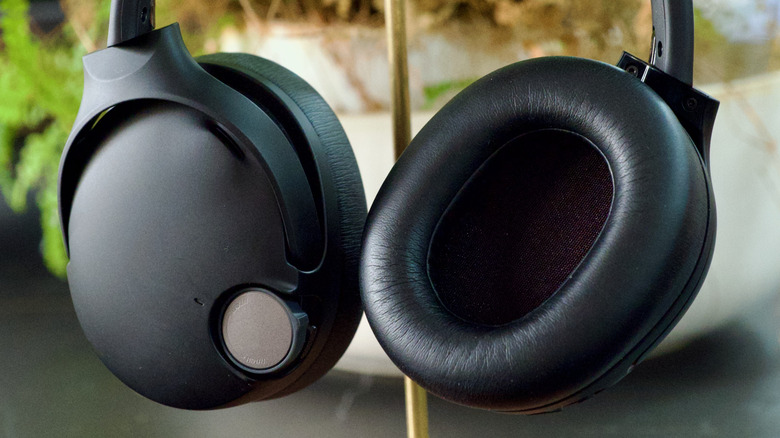
On paper, the Crusher 1080 checks just about every flagship box. There’s the aforementioned ANC along with wear detection, a claimed 60 hours of battery life, fast charging, multipoint Bluetooth, Auracast and an EQ with customizable controls via an app. The over-ear design is reminiscent of older Crusher models, with a reassuring, but hefty build and an understated aesthetic that feels a bit 2010’s in a non-intentional way. There are some nice metal accents in the headband which make it feel premium, but overall it’s a larger, more robust headset compared to the sculpted lines of current Sony or Bose models.
 James Trew for Engadget
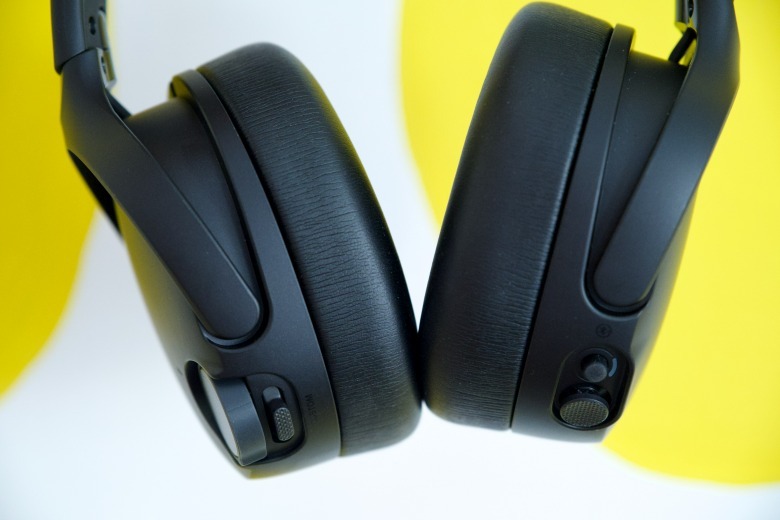
Skullcandy hasn’t really ventured into the realm of gesture and touch controls, and they remain absent here. The physical buttons are all quite large which generally makes them easy to locate. The biggest is the dedicated haptic bass dial, which is so large it’s part of the aesthetic. Nestled beside that is a switch for toggling between ANC and transparency mode. This pressable switch also cycles through listening presets (Music, Podcast, Movie and Custom). These two controls are close enough to each other that I often accidentally deactivate ANC when I want to adjust the haptic bass. The right-hand side has a mini joystick style control for volume and media, plus a button for power/pairing. The Crusher 1080 also supports regular 3.5mm and USB-C wired connections.
With 50 hours of battery with ANC active or 60 without, the Crusher 1080 is already pretty longevous. I still appreciate the fast-charging feature as quick top-ups can provide enough juice for a long commute or cafe work session on the occasions you forgot to plug them in.
Who’s the Bose?
The standout feature on the Crusher 1080 is no longer the haptic bass, although that, too, has been given a makeover. This focus here is on the Bose-powered audio. Skullcandy already dabbled with Bose Sound on the Method wireless buds, but that was more of a general tuning. With the Crusher 1080, Bose’s fingerprints are all over the audio, from the main WaveForm audio engine to the TrueSpatial dimensional feature and, of course, the Bose-powered ANC.
The result is a clear sonic upgrade. I use a pair of Crusher 540’s as my gym headphones, so I’m familiar with the Skullcandy sound. The Crusher 1080’s are quite a departure, with a much more well-rounded, open/balanced sound stage. The 540’s feel dense and flat by comparison, even with the beefy bass.
I spent an unreasonable amount of time swapping between the Crusher 1080’s and the Sennheiser HDB 630’s, listening to The Streets’ Original Pirate Material hoping that the combinations of sharp snares and gritty basslines would expose the differences between the two headphones. And differences there are, but not nearly as much as I was expecting. In general, the HDB 630 remains more spacious and neutral. The Crusher’s sound feels elevated in the upper mid-ranges.
Without the haptic feature enabled, the low-end on the 1080 almost feels modest — present but controlled. The overall sound is still higher energy than the pricier Sennheiser HDB 630, but it feels much closer to what you’d expect from a premium pair of wireless headphones.
While I would say the Sennheiser still has the superior sound over all, the Bose-tuned Skullcandy two characteristics I prefer. One is the presence of those upper mids: Percussion, hi-hats and other sounds in this range are more forward on the Crusher’s tuning. The other advantage is just that the Skullcandy headphones offer more volume, making them better suited for older music that isn’t mastered so loud.
Noise cancellation
Perhaps the biggest improvement over previous Skullcandy headphones is the Active Noise Cancellation. This is leagues ahead of earlier Skullcandy efforts and, in my own testing, even outperformed the Sennheiser HDB 630 and Soundcore Space One Pro — two headphones that sit either side of the Crusher in price. Constant background noise is handled impressively well, making commuting or working in busy environments much more pleasant.
It’s still not quite at the level of Bose’s class-leading ANC on its own headphones, and Sony remains one of the benchmarks in the category, but the gap is now much smaller than I expected. For the first time, Skullcandy deserves to be taken seriously in this area. Transparency mode is similarly solid, sounding natural enough for quick conversations without needing to remove the headphones.
Crushing it
What would a pair of Skullcandy headphones be, though, without Crusher Bass? This feature is as iconic as it is divisive. Personally, I enjoy it at the right moments. There’s a reason why I wear Crushers in the gym, and sometimes bangers just slap a little bit more when you can feel them. But older Crusher models got comically over the top when the haptic effect was dialed up too much.
On the 1080, the effect has been rebooted, and it’s for the better. It’s still the same haptic bass, but when used in moderation it genuinely feels like the movement is part of the bass, rather than a mechanical trick. Sure, if you drive it all the way up, things will get rumbly, but it’s still a lot of fun, and you don’t ever have to use it if you don’t want to.
The competition
This is where things become more complicated. At $270, the Crusher 1080 is in an awkward spot. Skullcandy has priced them around $100 cheaper than the likes of Sony’s WH-1000XM6, Bose’s own QuietComfort lineup and the Sennheiser Momentum 5. But if you are okay with a Momentum 4, or an XM5, suddenly the Crushers look more expensive. Even Anker’s Soundcore Space One Pro — a similarly-specc’d mid-range favorite — are coppable for $100 less than the Crusher’s asking price if you don’t want the bass feature and ANC is less important.
The question might really be, are these a more affordable entry point to Bose-level audio? Bose still has the edge in ANC and a stronger all-round audio experience in a more premium package. But the Crusher 1080 occupies a category almost entirely by itself: a capable sound, strong ANC and, of course, that unique approach to bass. This makes it far easier to recommend than previous generations.
Wrap-up
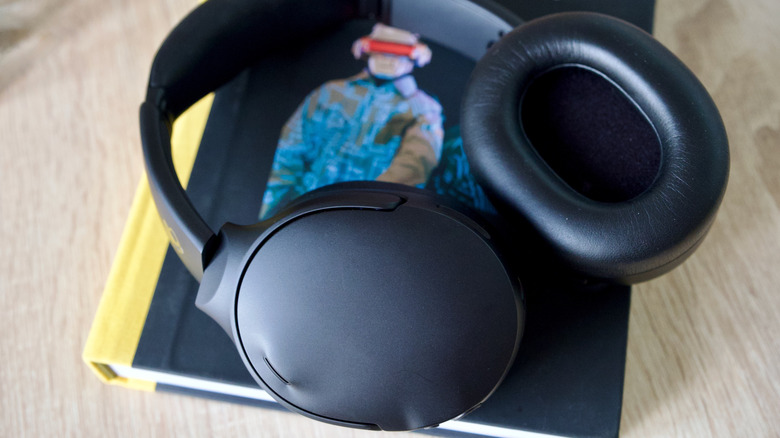
The Crusher 1080 is the most complete and mature pair of Skullcandy headphones I’ve used. Rather than relying solely on its bass credentials, it finally delivers the fundamentals expected from a premium wireless headphone: enjoyable sound, capable ANC, good battery life and a feature set that feels relevant in 2026.
It’s not perfect. The design still lacks some of the polish of its biggest rivals, the controls could be better laid out and the weight becomes noticeable during longer listening sessions. But if you’ve ever been curious about the Crusher concept and dismissed previous models as novelty headphones, this is the one that changes all of that.