A Downed WWII Plane May Be Buried in This Polish Forest, and Its Crew Might Still Be There
A resident of Świnoujście, Poland, went into a coastal forest on the eastern side of the city to gather blueberries. While picking them, he came across a hole someone had dug, with aluminum fragments and burned ammunition scattered around it.
He picked up one loose fragment and carried it to the Underground City. The former secret Cold War military command center is now part of the Museum of Coastal Defense.
According to the museum, its staff followed the fragment back into the forest and found dozens more pieces scattered across the ground. The debris may mark where an Allied aircraft crashed during World War II, though the plane itself still has no name.
Read More: Has Amelia Earhart’s Long-Lost Plane Finally Been Found?
World War II Aircraft Wreckage Carries British Clues

(Image Courtesy of Museum of Coastal Defense in Świnoujście – Gerhard’s Fort)
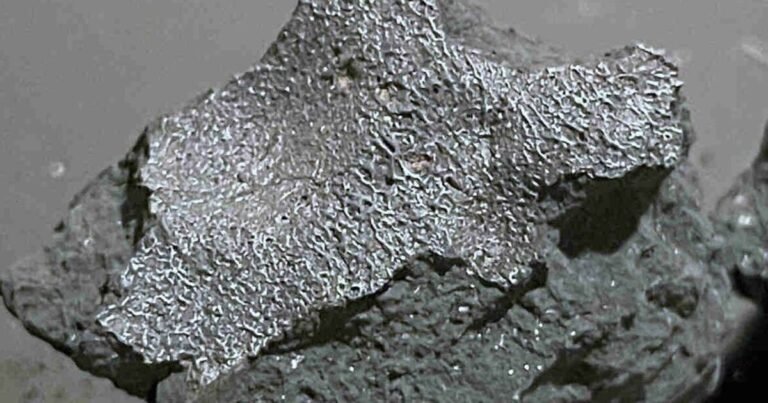
Wiktor Czeszewski of the Museum of Coastal Defense was the first to examine the fragment. The thin sheets of aluminum and the way they had been shaped and riveted looked like aircraft parts rather than ordinary scrap, he said in the museum’s account published by the Polish aviation outlet dlapilota.pl.
Museum staff believe the ammunition is .303 British, a caliber used in British Browning aircraft machine guns. That makes a British aircraft, or one flown by another Allied air force, more likely.
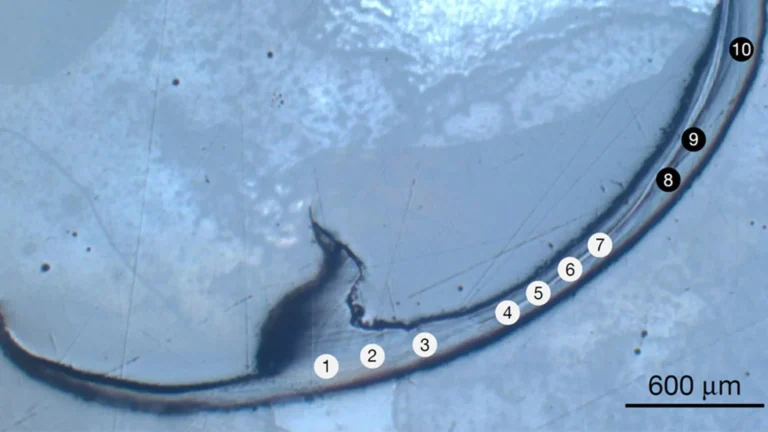
After cleaning the recovered pieces, staff found a copper tube stamped “T7.” In technical records from Britain’s Royal Air Force, T7 refers to tubing used in aircraft fuel, oil and other onboard systems, according to dlapilota.pl.
The tube ends in what appears to be an Avimo high-pressure connector, a fitting that joined tubes carrying liquids or gases under pressure inside British aircraft. Museum staff said the same type of connector appeared in the cooling systems of Rolls-Royce Merlin engines.
The connector cannot identify the plane on its own. Merlin engines powered several aircraft, including the Spitfire, Lancaster and Mosquito.
A Lancaster Wing Recovered in 2009 May Be Connected

(Image Courtesy of Museum of Coastal Defense in Świnoujście – Gerhard’s Fort)
The museum already holds a roughly 16-foot section of an Avro Lancaster wing that fishermen pulled from the Baltic Sea in 2009, roughly 0.6 miles from the new site. Museum director Piotr Piwowarczyk said the two finds may come from the same aircraft, according to the Polish Press Agency (PAP).
Piwowarczyk said researchers identified the earlier wing and found the names of three crew members connected with the aircraft. The airmen had flown over Świnoujście while traveling to bomb industrial targets near Police or Szczecin.
Allied aircraft regularly crossed the region during the final months of World War II. Świnoujście, then known as Swinemünde, held a base operated by Germany’s navy and guarded by coastal guns and anti-aircraft defenses.
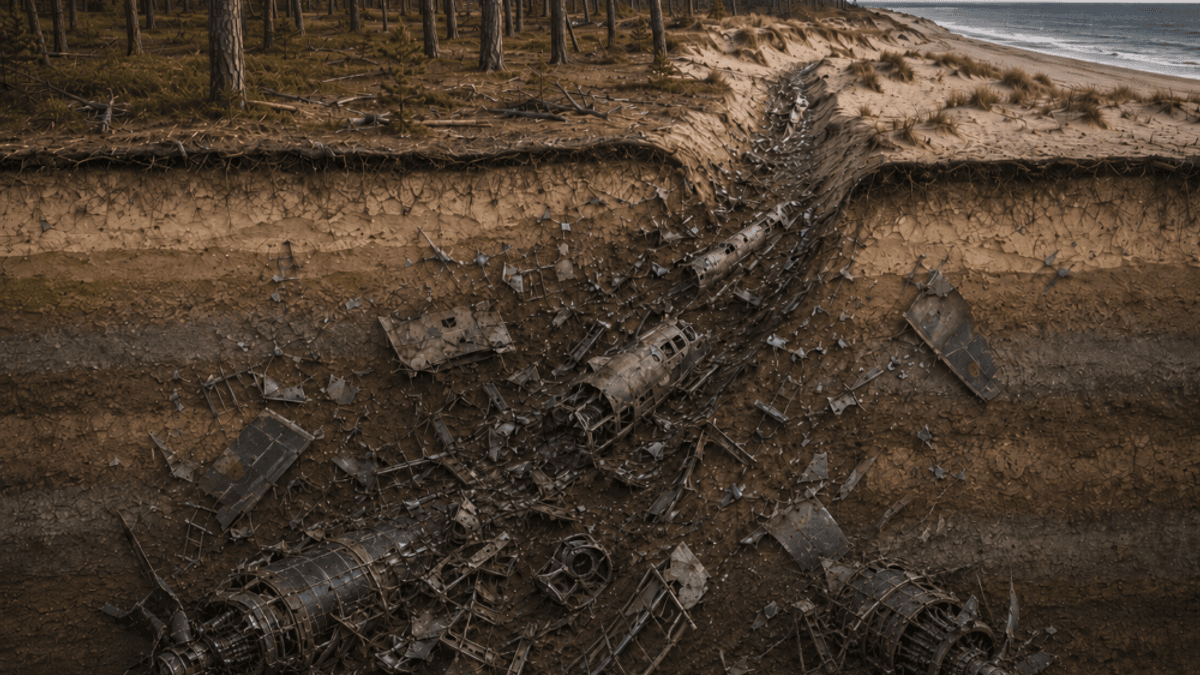
Piwowarczyk said the ground around the new site rises and dips in an unnatural way. A larger piece of wreckage is still lodged in the soil, leading him to believe the aircraft’s main body may have crashed at the site.
The Forest May Still Hold the Aircraft’s Crew

(Image Courtesy of Museum of Coastal Defense in Świnoujście – Gerhard’s Fort)
If the main wreckage remains beneath the forest floor, the site could also be a grave. Piwowarczyk said members of the crew may still be buried with the aircraft. The museum has contacted officials responsible for the forest, historic sites, and military graves, according to PAP.
The museum has not marked the location and has warned people against digging or taking fragments as souvenirs. No excavation date has been announced. Until archaeologists investigate, no one knows how much of the aircraft survives, whether its crew remains inside or whether the debris matches the Lancaster wing pulled from the Baltic Sea 17 years ago.
Read More: World War II Relics And Hunger Stones Emerge In European Drought
Article Sources
Our writers at Discovermagazine.com use peer-reviewed studies and high-quality sources for our articles, and our editors review for scientific accuracy and editorial standards. Review the sources used below for this article: