Amazon Leo files FCC bid for 5,105-satellite D2D network
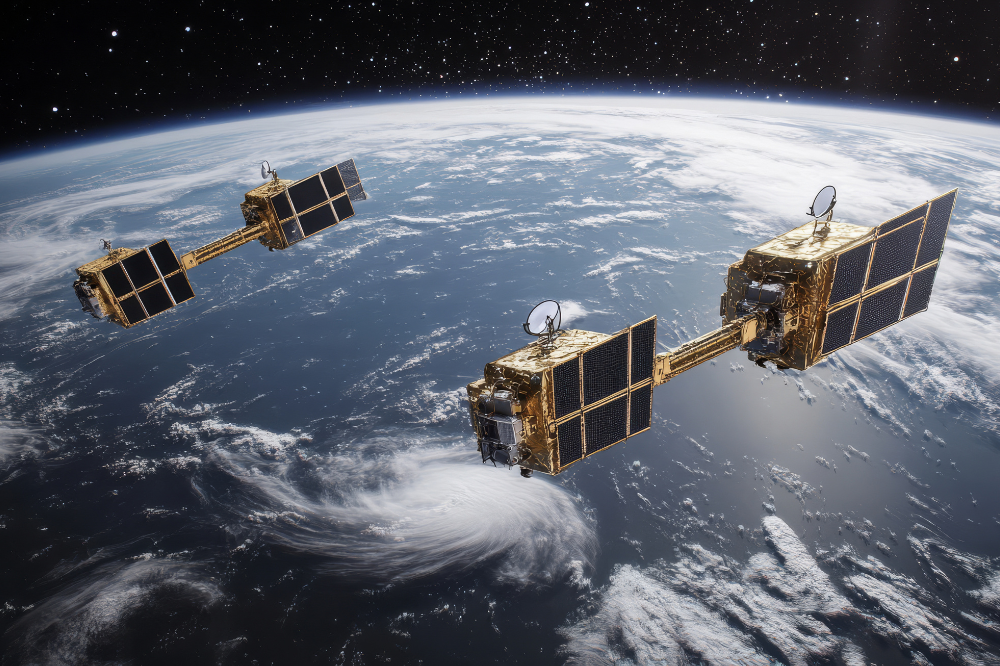
Amazon Leo has applied to the US Federal Communication (FCC) for approval to launch a direct-to-direct (D2D) satellite system comprising up to 5,105 low Earth orbit (LEO) satellites.
If approved, the deployment of the Amazon Leo Direct-to-Device System will begin in 2028.
As a result, the constellation is designed to connect compatible smartphones and other mobile devices directly via satellite, extending voice, messaging, data and emergency services into areas beyond the reach of terrestrial mobile networks.
Don’t miss the stories shaping the future of mobile technology.
Subscribe to Mobile Europe’s newsletter – delivered twice a week.
The move follows the technology giant’s merger agreement with Globalstar, announced in April, which will provide the company with Globalstar’s satellite operations, infrastructure and globally authorised mobile satellite service (MSS) spectrum licences.
Rather than replacing existing mobile infrastructure, Amazon is positioning the D2D system as a complementary service for mobile network operators, covering gaps in remote or difficult-to-reach locations.
Alongside this the network is expected to support applications including disaster response, remote industrial operations, fleet management, supply chain monitoring, Internet of Things (IoT) deployments and emergency communications when ground-based infrastructure is unavailable.
Additionally, the proposed constellation will be spread across five orbital layers, each positioned at different altitudes and angles to help deliver coverage across the globe.
Three of these shells will focus on mid-latitude regions, where much of the world’s population is concentrated, while the remaining two will extend coverage further north and south towards high-latitude and polar areas.
Amazon stated: “Unlike conventional satellites that simply relay signals to the ground (known in the industry as “bent pipe” satellites), Leo’s D2D satellites will process the signals in orbit before relaying them to improve performance.
“Also, Leo’s D2D satellites will be equipped with optical inter-satellite links-laser connections between the satellites in orbit—to support intelligent traffic routing across the constellation.”
IN RELATED NEWS
![[Monitor] Refurbished INNOCN 27M2V 27" 4K 160Hz Mini-LED IPS – $319.99 ($329.99 – $10 discount with code WELCOME25)](https://jobssz.com/wp-content/uploads/2026/07/iveiSsE-NKNa9QdooXe3uTr2CT5_i28Fn6oSBgY4rUM.jpeg)