Andromeda Running Out of Newborn Suns – Space/Science news
A major new study using data from NASA’s Hubble Space Telescope has found that star formation in Andromeda has been declining for the past 500 million years, with the slowdown becoming dramatically worse over the last 40 million years.
The findings, published in The Astrophysical Journal, suggest that our neighboring galaxy is producing only a fraction of the new “Suns” it once did, giving astronomers fresh clues about how galaxies age and evolve.
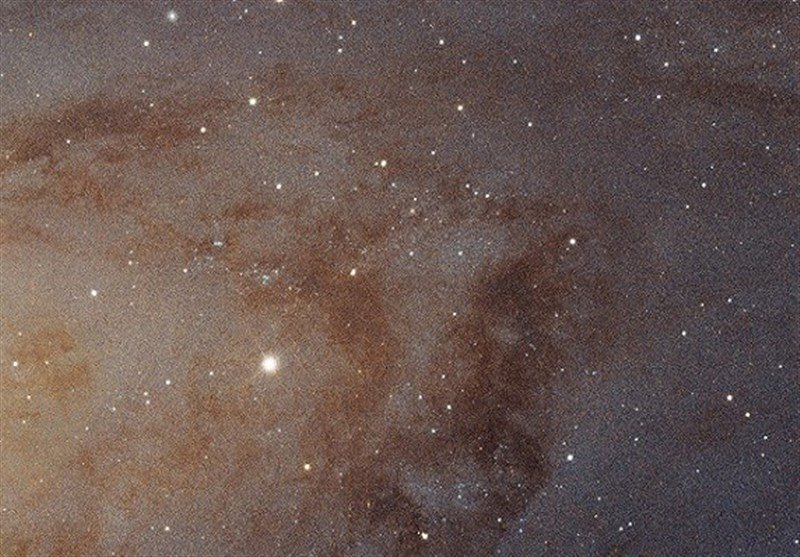
Located around 2.5 million light-years from Earth, Andromeda is similar in size and structure to the Milky Way, making it an ideal laboratory for studying the future of galaxies like our own.
To reconstruct Andromeda’s history, researchers analyzed nearly 200 million individual stars using two of Hubble’s largest surveys. By studying the color and distribution of stars, scientists were able to trace where and when new stars were born over hundreds of millions of years.
Young, massive stars appear bright blue, while older stars glow redder. Regions rich in blue stars indicate recent star formation, allowing researchers to build a timeline of the galaxy’s activity.
The results reveal a striking decline. Around 500 million years ago, Andromeda was creating stars at a rate equal to about one Sun’s mass every year.
By 40 million years ago, that rate had fallen by half. Today, the galaxy produces only about one-fifth of a Sun’s mass worth of stars annually, its lowest known rate.
Scientists say Andromeda is not running out of the gas and dust needed to form stars. Instead, the galaxy appears to be naturally winding down after an intense period of activity that began roughly 2 billion years ago, likely triggered by a collision or close encounter with another galaxy.
“It’s just like after running a marathon, sometimes you’ve got to take a bit of a breather,” said lead author Tobin Wainer from the University of Washington.
Researchers also suspect Andromeda’s small companion galaxy, Messier 32 (M32), may have played a role.
The team found a noticeable decrease in star formation near M32, suggesting a past interaction around 60 million years ago may have disrupted stellar nurseries. While they cannot yet confirm the connection, scientists say M32 remains the most likely suspect.
The study is particularly important because Andromeda and the Milky Way are expected to collide in about 4.5 billion years. Understanding why Andromeda’s stellar nurseries are shutting down could offer valuable clues about the long-term evolution of our own galaxy.
Future observations by NASA’s Nancy Grace Roman Space Telescope, expected to launch soon, will map the entire Andromeda Galaxy in unprecedented detail, helping astronomers uncover why the birth of new stars in our cosmic neighbor is fading away.