What if the Universe Isn’t as Uniform as Scientists Think?
One of the fundamental pillars of modern cosmology may be beginning to wobble. A study published in Nature has found evidence that the universe may not behave the same way in every direction on the largest observable scales.
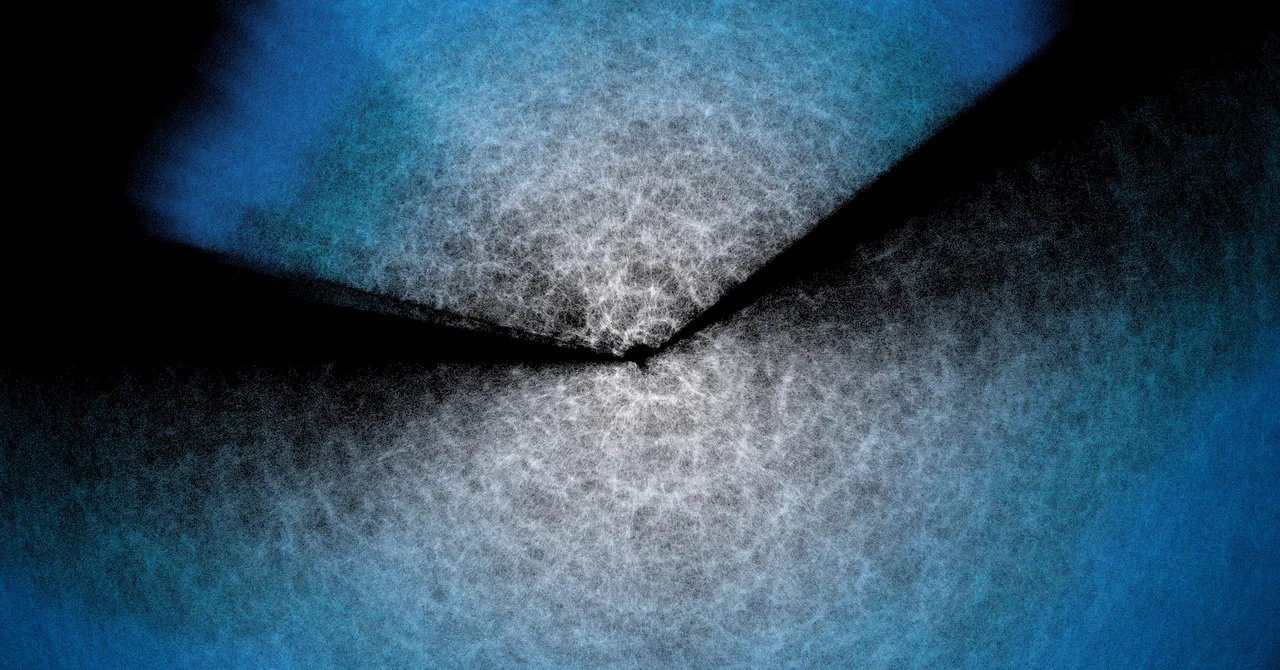
“What we found is a network of enormous filaments and walls of galaxies that remain aligned and interconnected across billions of light-years,” says Francesco Sylos Labini, research director of physics at the Enrico Fermi Research Center in Italy and the study’s lead author.
What Should the Universe Look Like?
To explain the finding, Sylos uses a far simpler analogy than any mathematical equation. Imagine a map of the universe in which every galaxy is represented by a single point. If the universe truly becomes uniform on the largest scales, he explains, there should come a point at which the map looks essentially the same in every direction. Like a photograph viewed from a great distance, its details would gradually blur together until only a nearly uniform background remained.
But that is not what Sylos and his colleague Marco Galoppo found.
“The idea that the universe becomes statistically uniform on sufficiently large scales is what allows us to describe it using relatively simple mathematical models,” Sylos says. Their observations, however, suggest that the real universe may remain more structured and directionally organized than this picture assumes.
In other words, the organization of these vast cosmic networks does not disappear as increasingly larger regions of the universe are examined. Rather than gradually fading into a featureless background, the universe’s largest structures retain recognizable patterns even on scales where, according to the standard cosmological model, those patterns should no longer be detectable.
No Cosmic Arrow but a Persistent Pattern
The researchers stress, however, that this finding requires an important qualification. It does not mean the universe has a single preferred axis or direction.
“We are not claiming that the entire universe has one preferred direction, as though there were a cosmic arrow running through space,” Sylos says. “What we found is much more subtle.”

Instead, the team detected coherent patterns in the distribution of galaxies that persist over extraordinarily large distances.
As the volume of the universe under observation increases, galaxies should eventually become indistinguishable from a uniform background, much like the blurred photograph in the earlier analogy. “Instead, as we expand our field of view, new coherent structures continue to emerge,” Sylos says. “Rather than converging toward uniformity, the cosmic web remains organized on progressively larger scales.”
The conclusion is the culmination of more than two decades of research. Since the early 2000s, Sylos has sought to answer a question that is rarely tested directly: how do we actually know that the universe becomes homogeneous and isotropic on sufficiently large scales? (An isotropic medium has the same physical properties in every direction.)