Deep-sea life has a secret food source scientists never expected
Scientists have uncovered an unexpected source of food in the deep ocean that could change how researchers understand both marine ecosystems and Earth’s carbon cycle. A new study from the University of Southern Denmark (SDU) suggests that deep ocean microbes are not living in such a nutrient-starved environment after all.
The research found that tiny sinking particles known as marine snow release dissolved carbon and nitrogen as they descend into the deep sea. Those leaked nutrients become an immediate food source for microbes living in the surrounding seawater.
Deep ocean pressure unlocks hidden nutrients
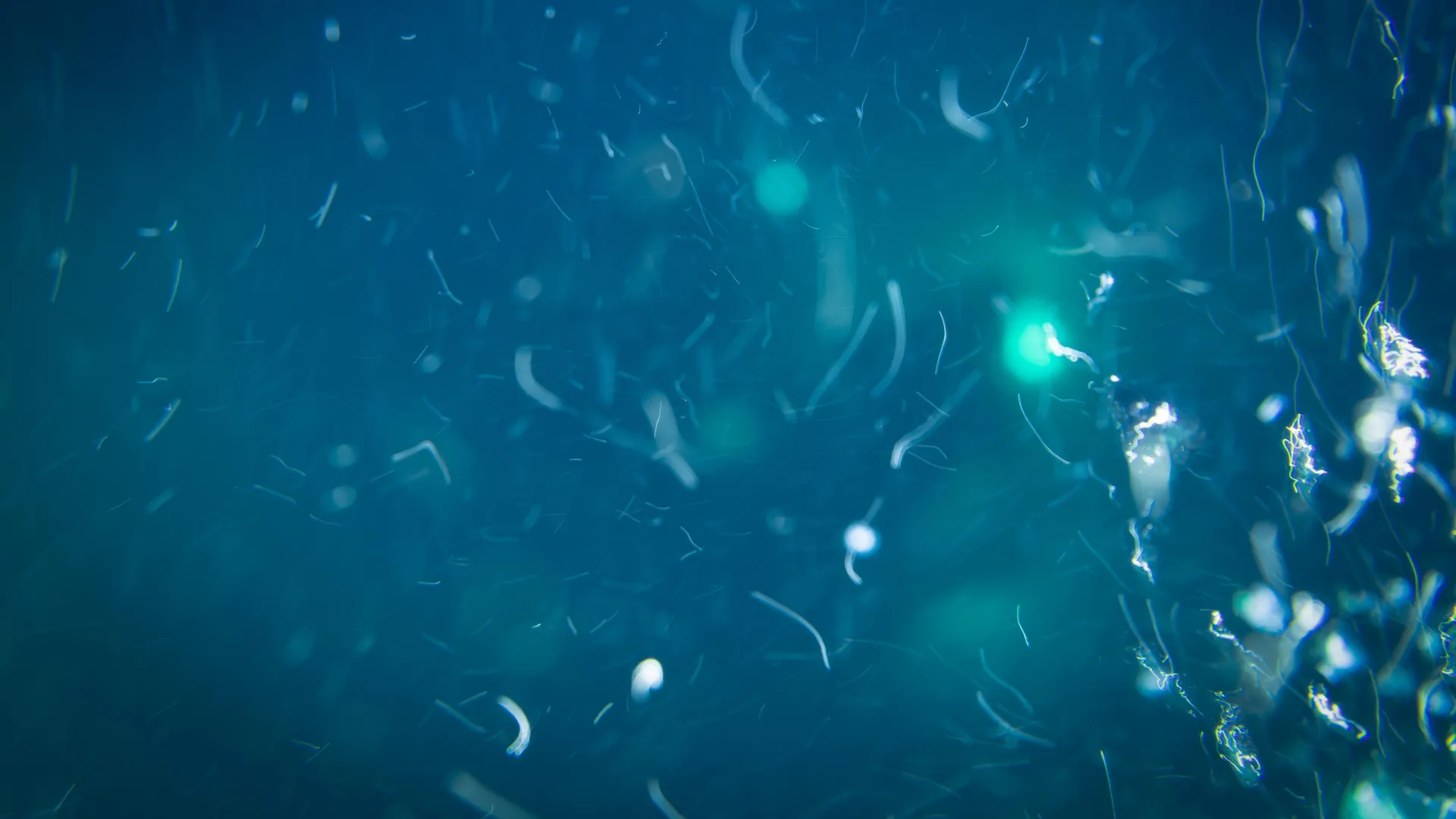
Marine snow is made up of tiny clumps of dead algae, microbes, and other organic material drifting through the ocean. According to the study, once these particles reach depths of about 2 to 6 kilometers, the enormous hydrostatic pressure begins forcing dissolved organic matter out of them.
“The pressure acts almost like a giant juicer,” says first author of the study, biologist and Associate Professor Peter Stief from research centers Nordcee and Danish Center for Hadal Research, “It squeezes dissolved organic compounds out of the particles, and microbes can use them immediately.”
The findings were published in Science Advances in the paper, “Hydrostatic pressure induces strong leakage of dissolved organic matter from ‘marine snow’ particles.”
The researchers estimate that sinking marine snow can lose as much as 50% of its original carbon and between 58% and 63% of its original nitrogen during its descent through the deep ocean.
Discovery could reshape understanding of the carbon cycle
The results also have important implications for Earth’s carbon cycle.
Scientists have long assumed that much of the carbon carried by marine snow eventually becomes buried in deep ocean sediments. However, if large amounts of carbon leak out before the particles reach the seafloor, less carbon may be permanently stored in sediments than previously believed.
Instead, much of that dissolved carbon remains suspended in deep ocean waters, where it can stay for hundreds or even thousands of years before gradually returning to the surface ocean and eventually the atmosphere. Carbon that does become buried in seafloor sediments, by contrast, can remain locked away for millions of years, accumulating over vast stretches of time. Much of the oil and natural gas extracted today formed through this long-term burial process.
“This process affects how much carbon the ocean can store and for how long,” says Peter Stief, “It’s relevant for understanding climate processes and for improving future models.”
Simulating marine snow under extreme pressure
To investigate the process, the researchers recreated marine snow in the laboratory using diatoms, microscopic algae that naturally clump together as they sink through the ocean.
The team placed these artificial particles inside specially designed rotating pressure tanks that kept the marine snow suspended instead of allowing it to settle. This setup allowed the researchers to measure how much carbon and nitrogen escaped under conditions similar to those found in the deep ocean.
Their experiments showed that up to half of a particle’s carbon content leaked out while sinking. Most of the released material consisted of proteins and carbohydrates that free-living deep ocean microbes can readily consume.
Microbes respond almost immediately
The leaked nutrients quickly fueled microbial growth.
Within just two days, bacterial abundance increased 30-fold, while respiration rates rose dramatically. These results indicate that dissolved organic matter released from marine snow provides a rapid and valuable energy source for microbes living at great depths.
The researchers also observed the same leakage pattern across multiple species of diatoms, suggesting that this mechanism is likely widespread throughout the world’s oceans.
Next stop: The Arctic Ocean
The next phase of the research will move from the laboratory to the open ocean.
The team plans to search for molecular fingerprints of this process in both surface and deep waters during a future expedition to the Arctic aboard the German research vessel Polarstern. Detecting those signatures in nature would help confirm that the pressure driven leakage observed in the laboratory is occurring throughout the deep ocean.
The study, “Hydrostatic pressure induces strong leakage of dissolved organic matter from “marine snow” particles,” was authored by Peter Stief, Jutta Niggemann, Margot Bligh, Hagen Buck-Wiese, Urban Wünsch, Michael Steinke, Jan-Hendrik Hehemann, and Ronnie N. Glud.
The research was supported by the Danish National Research Foundation, the European Union’s Horizon 2020 Research and Innovation program, and the Independent Research Fund Denmark.