Do AI writing detectors actually work? We put 5 to the test.
Whether you’re marking essays or reviewing job applications or merely browsing the web and scrolling through social media, it’s a sign of our times that you might find yourself wondering—did an AI write this?
There are, supposedly, telltale signs of AI writing, including the em dash. There are also multiple tools available that check pieces of writing against combinations of these AI tics to tell you whether or not something was written by a human.
Can AI-produced text be as regularly identified as these tools claim, however? We decided to put them to the text and test: five different checkers against a selection of samples written either by me, ChatGPT, Gemini, or Claude.
I picked out a selection of introductions from articles I’ve recently written (all without the help of AI, by the way), then had AI bots write their own 150-word versions based on each article’s title and premise.
Then, it was over to the AI detectors to see if they could tell the difference, and here are the results.
Pangram
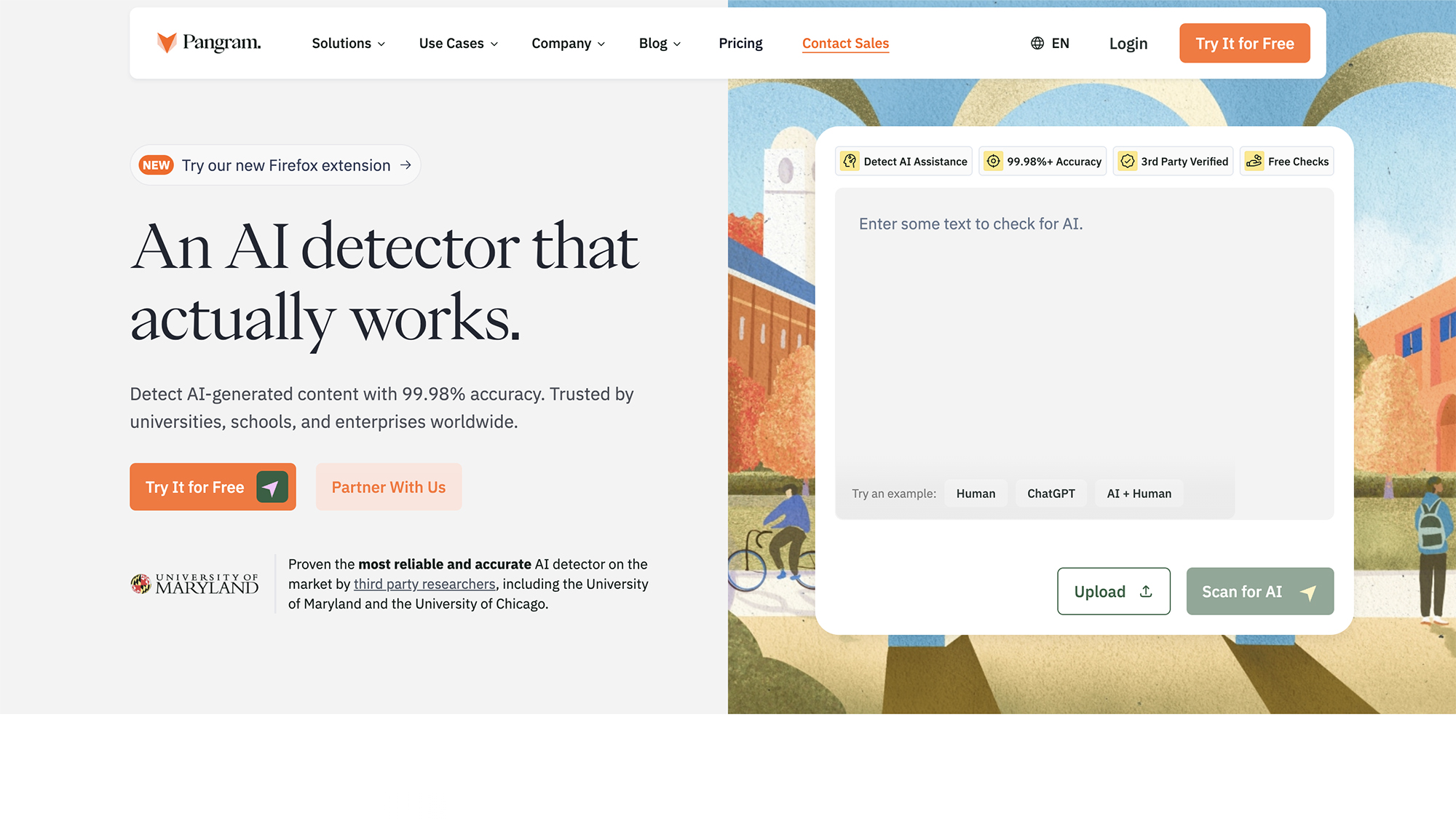
Pangram promises to be “an AI detector that actually works.” You can run up to four queries a day for free, with much higher limits and extras such as plagiarism detection available with a subscription starting at $20 a month.
The good news for me was that both samples of my own writing showed up as 100 percent written by a human being—and Pangram declared a “high” level of confidence in each decision. Whatever my writing style is, it’s not AI-like, apparently.
I gave Pangram some AI-written introductions from ChatGPT and Claude, and it correctly identified them both as 100 percent AI-written—top marks for Pangram. It also explained some of the giveaways, like the phrase “from the moment you …”.
4 / 4 correct
Grammarly
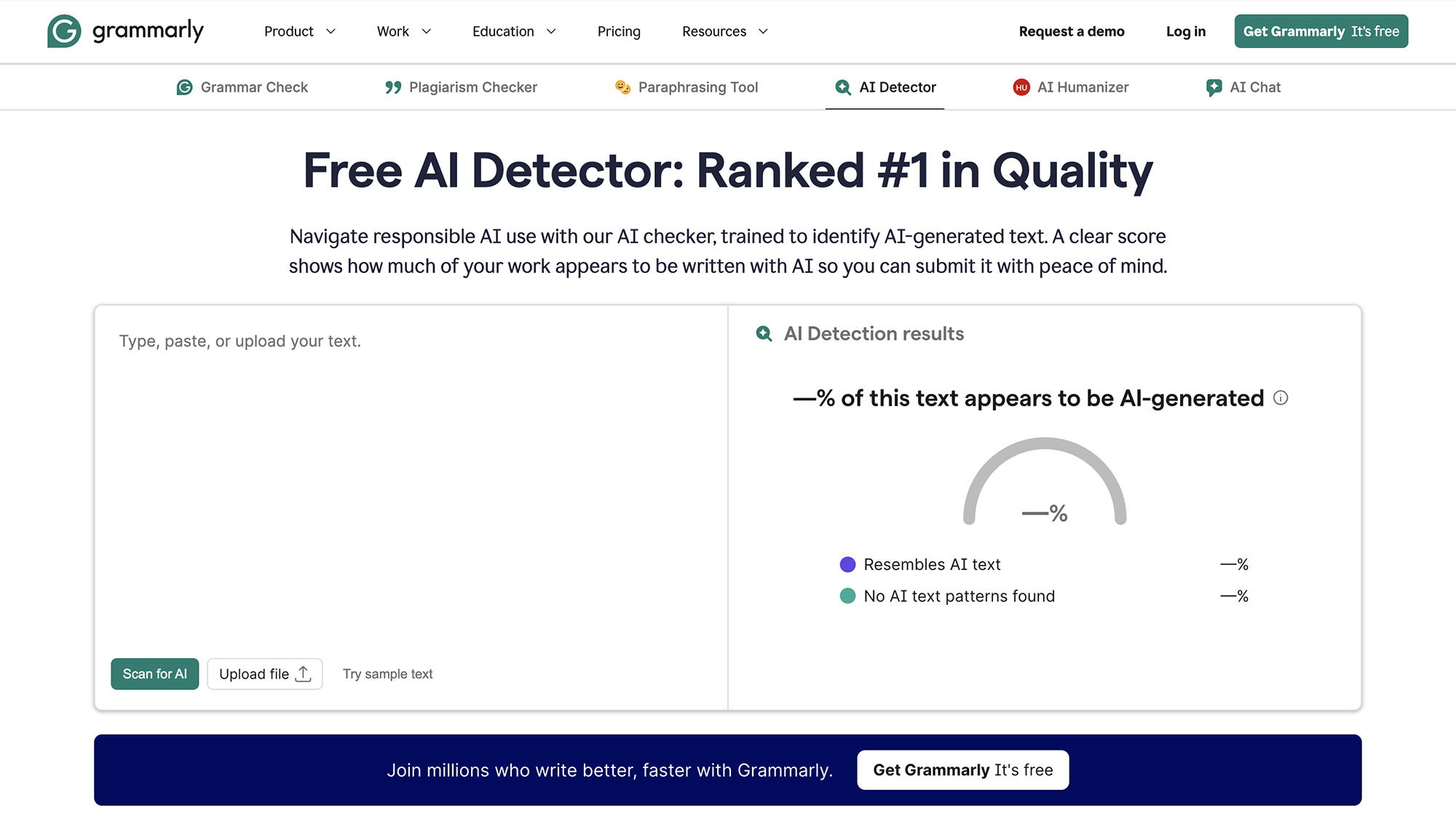
Next up, Grammarly. It’s been around for years as a spelling and grammar helper, and now it does AI and AI detection as well. You get three free AI checks per day, with paid plans starting at $12 per month offering much higher limits (and a host of other features).
Again, the results were reassuring for how un-AI-like my writing is: Both my writing samples got a perfect score for being written without a machine. The text samples came back as having 0 percent AI text or AI text patterns in them.
The AI samples I tested Grammarly with were from Claude and Gemini, and these were marked as being 68 percent and 66 percent AI-written, respectively. Grammarly caught the AI characteristics, but wasn’t fully convinced.
4 / 4 correct
GPTZero
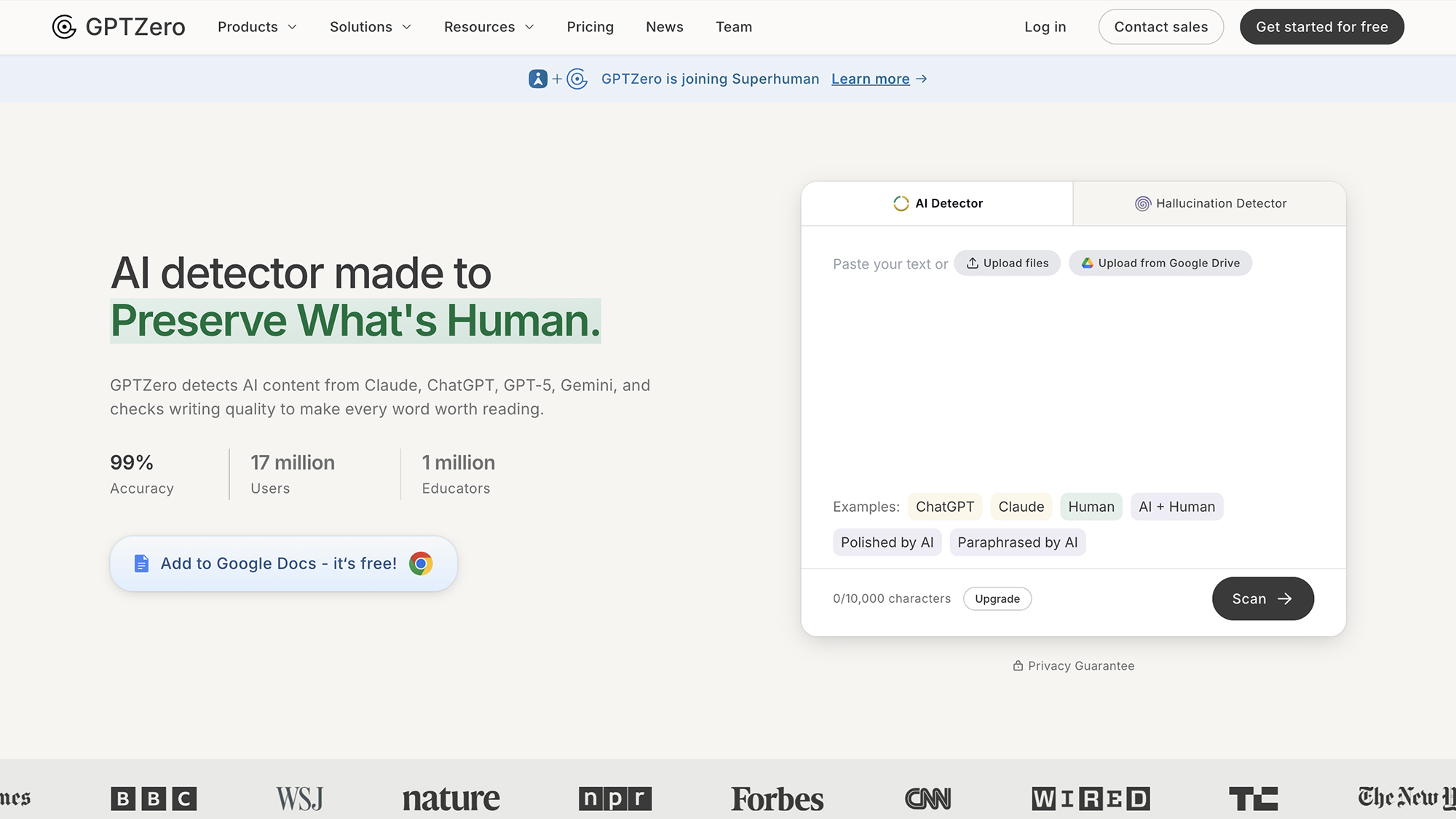
The stated aim of GPTZero is to “preserve what’s human,” and that includes being able to spot sentences put together by AI. On a free account, you can scan up to 10,000 words every month, while paid plans start at $23.99 per month, letting you scan a lot more words and access a lot more features.
By this stage, I was getting confident that my writing was free from whatever it is that these detectors are looking for, and sure enough, GPTZero marked both my samples as written by a person: “We are highly confident this text is entirely human,” I was told.
When met with writing samples from Gemini and ChatGPT, GPTZero correctly spotted them as AI-generated text they were—and even pointed out the most AI-like sentences (though honestly, I struggled to spot the patterns in these flagged phrases).
4 / 4 correct
Scribbr
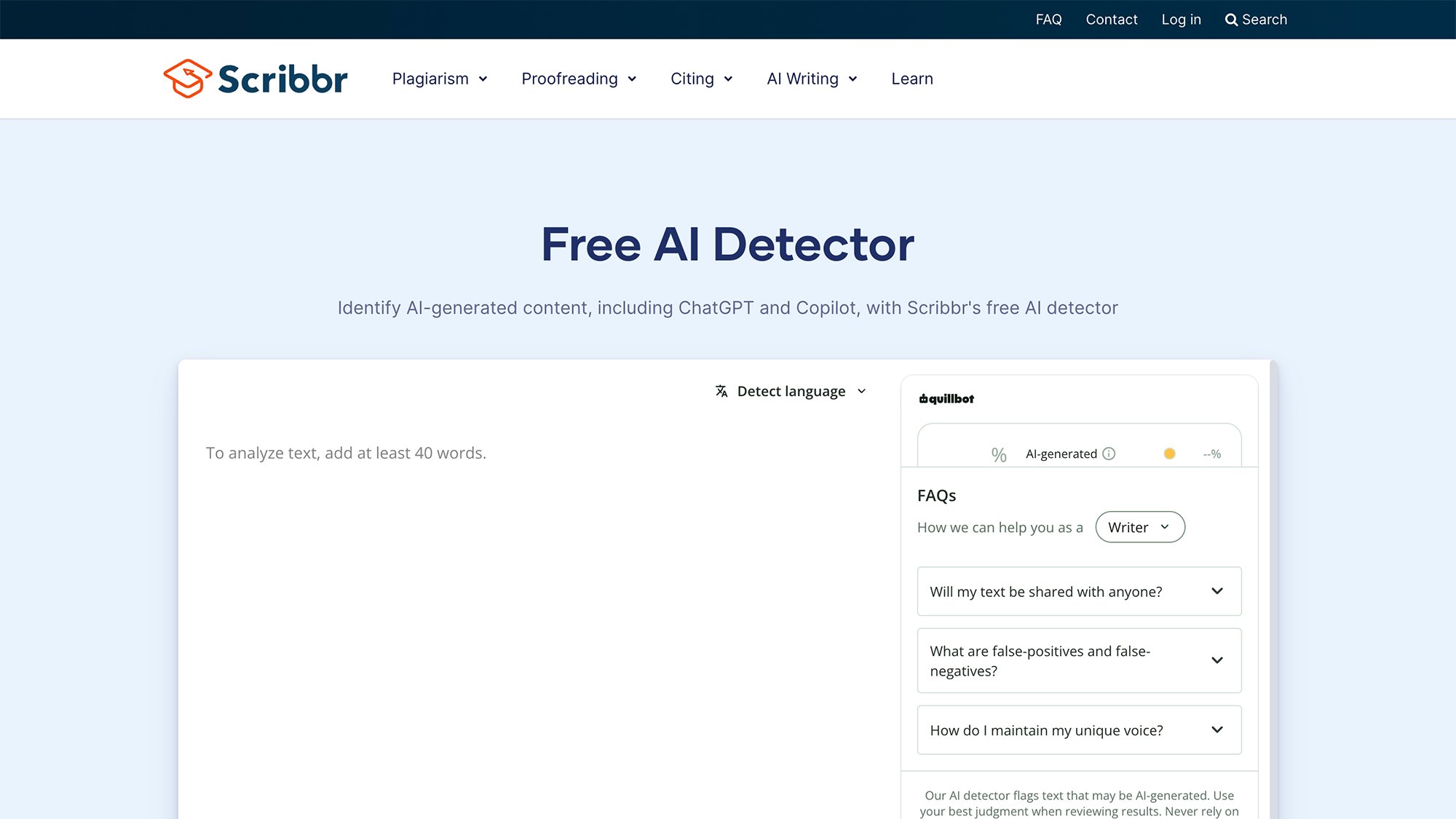
Our fourth AI-detecting tool is Scribbr, which offers a variety of other editing and proofreading services too. Its detector tool is completely free to use, and you don’t even need to register an account to start checking text.
My own samples were cleared as being 100 percent written by a human. Although Scribbr does have a disclaimer saying that AI detectors aren’t always fully reliable, it was certainly accurate in assessing my own writing.
However, the samples I fed in from ChatGPT and Claude were also marked as fully AI-free, which wasn’t the case—and Scribbr seemed very confident in its conclusions. Whatever it’s doing to detect machine-made text, it needs to improve its methods.
2 / 4 correct
Copyleaks
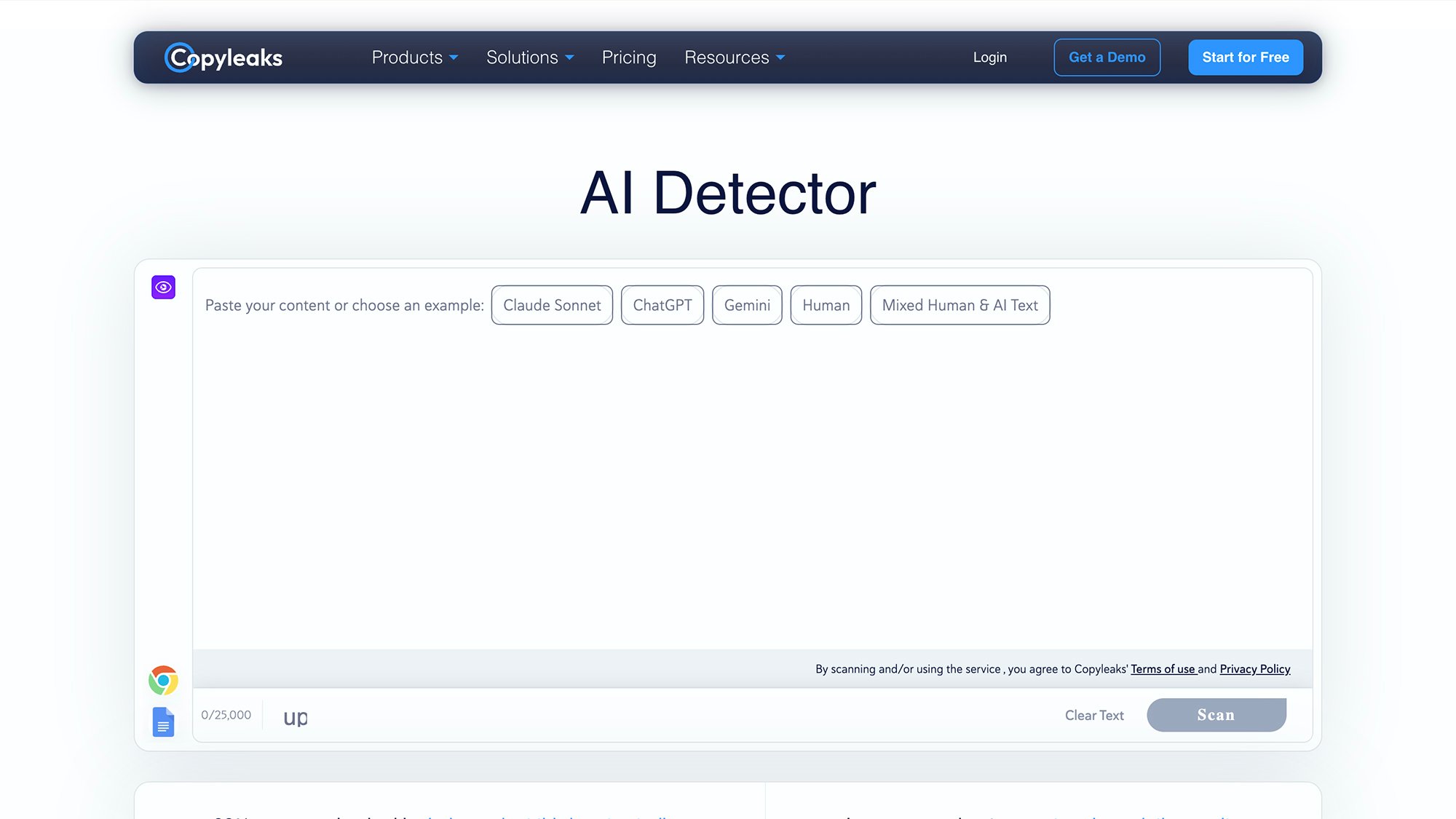
The fifth and final checker I tried was Copyleaks, which has tools for detecting AI images and videos, too. I was able to scan four samples free of charge, though paid plans—starting at $16.99 a month—give you access to more detailed reports and extra features.
Like the other AI writing detectors in this list, Copyleaks gave my writing samples the all clear: They were both marked as being 100 percent free from AI. With these tools, at least, it doesn’t seem like I’ll be accused of writing with AI anytime soon.
When I tried writing samples from Claude and Gemini, the former was marked as being 0 percent AI-written, and the latter was rated as 100 percent AI-written—so it was half right. Like Scribbr, there seems to be something off with the AI detection calibration.
3 / 4 correct
The verdict
I wasn’t quite sure what to expect from these AI writing detectors, which was part of why I wanted to test them out. Personally, I feel like I’ve got a pretty good idea of what AI writing looks like, but it’s hard to identify specific patterns and tells (well, except for ‘it’s not x, it’s y’).
Based on my tests, these AI detectors really do work—or at least most of them, most of the time. Human-written text was identified as such in every instance across all of these tools, perhaps showing it’s easier to tell what hasn’t been written by AI than what has.
AI detection wasn’t as foolproof, though it depends on the checker you’re using. If you’re serious about spotting AI writing, my advice would be to use two or three of these checkers in tandem, alongside other checks—and perhaps to upgrade to tiers where you get detailed reports on the detector’s reasoning.
Disclosure: Ziff Davis, Popular Science’s parent company, filed a lawsuit against OpenAI in April 2025, alleging it infringed Ziff Davis copyrights in training and operating its AI systems.

2025 PopSci Best of What’s New