Enflame Technology IPO Registration Effective 83% Revenue from Tencent How Will AI Chip Firm Achieve Independent Growth
The “Four Little Dragons of Domestic GPUs” are about to meet in the capital market.
On July 9, the Shanghai Stock Exchange official website updated the IPO review status of Shanghai Enflame Technology Co., Ltd. (hereinafter referred to as “Enflame Technology”): Registration Approved. [Reply “260714” to download the Enflame Technology prospectus].
This means that after Moore Threads, MUSA, and Biren, the final piece of the “Four Little Dragons” puzzle has also obtained its A-share market admission ticket, securing a 12-month issuance validity period. It will then go through processes including inquiry, pricing, subscription, and registration, which usually take 2 to 4 weeks to complete listing.
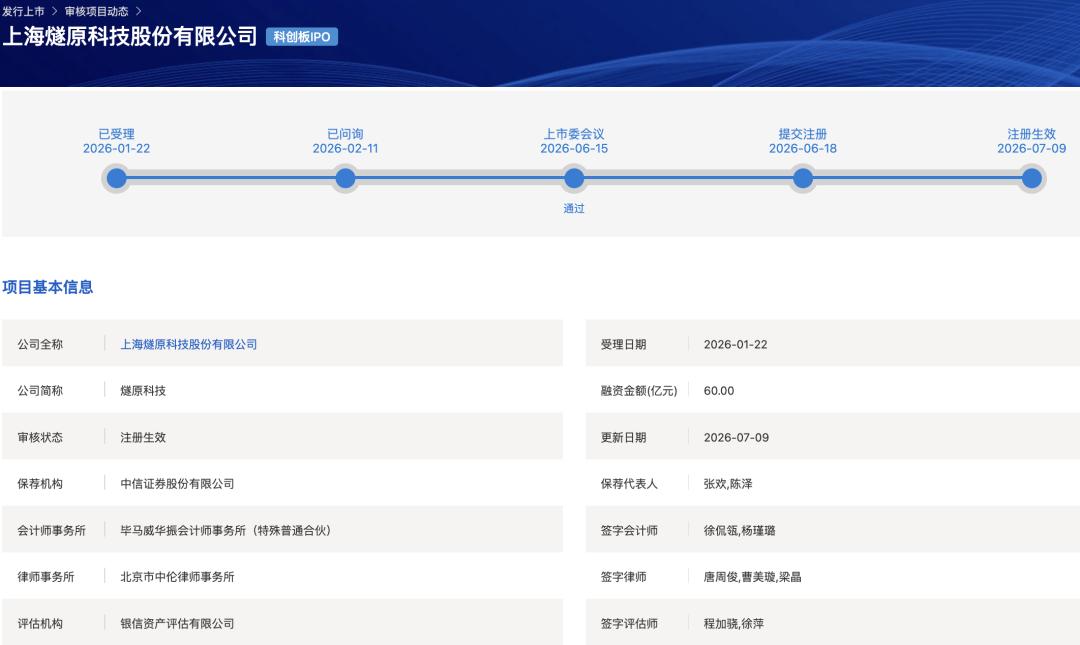
Enflame was the earliest founded among the four, establishing its presence in Zhangjiang, Shanghai back in March 2018. However, it was the last one to complete the listing process, nearly a year behind schedule. Moore Threads and MUSA landed on the Sci-Tech Innovation Board in 2025, while Biren rang the bell at the Hong Kong Stock Exchange in early 2026.
The reason for the delay is not complicated. This company possesses certain characteristics that are not easily understood by the capital market: it is deeply tied to Tencent — Tencent is both its largest shareholder and its largest customer. This “dual identity” may not be a major issue in other industries, but in the semiconductor sector, especially in the field of AI chips related to national computing power security, high customer concentration signifies the fragility of the business model.
Regulators will raise questions, the market will have concerns, and the prospectus must state these matters truthfully.
Nevertheless, Enflame has successfully navigated the entire process of inquiry, review approval, and registration, arriving at the threshold of listing.
The Two Founders Who Came From AMD
Let’s travel back to 2018.
That year, the global AI computing power wave was just gaining momentum, and NVIDIA’s GPUs became scarce commodities that the entire industry was scrambling to secure. It was also the year when the shadow of Sino-US tech rivalry began to take concrete shape, with semiconductors becoming the focal point.
Zhao Lidong and Zhang Yalin decided to start their own business.
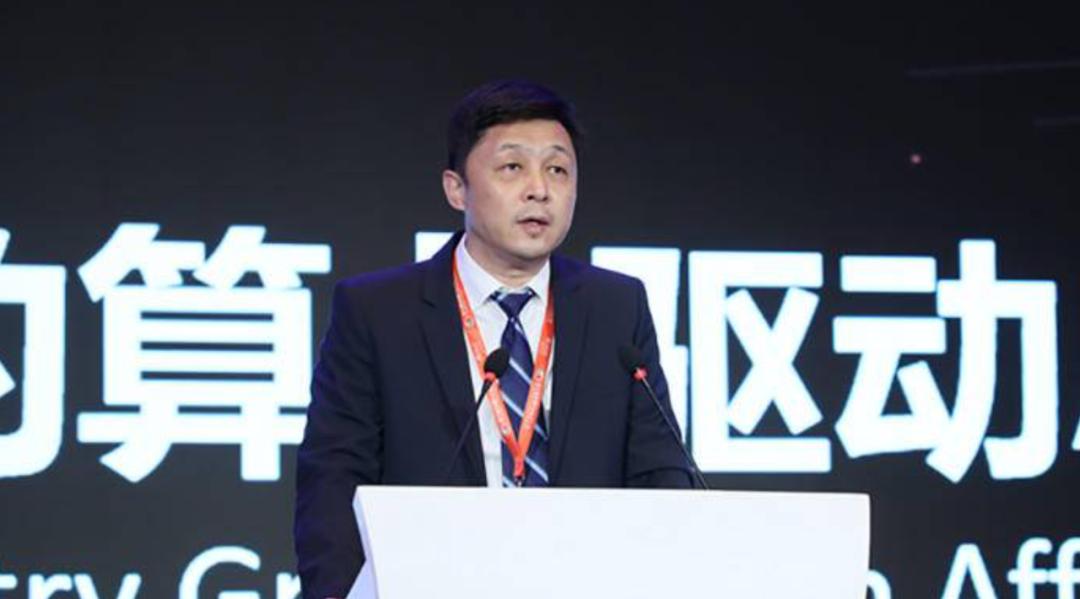
Zhao Lidong, Founder of Enflame Technology
The two are long-time colleagues, both having worked at AMD for many years.
Zhao Lidong graduated from the Department of Electronic Engineering at Tsinghua University, with over 20 years of industry experience in Silicon Valley, and participated in the establishment of AMD’s China R&D Center. Zhang Yalin was one of the core leaders of AMD’s global semiconductor R&D team, boasting profound expertise in ultra-large-scale chip design.
The two veterans who had spent decades in the industry chose to return to China in 2018 to start a business, targeting cloud AI training chips.
This choice itself is quite revealing: they did not opt for tracks with low investment and quick returns such as consumer electronics chips, MCUs, or Bluetooth/Wi-Fi modules, but instead directly charged at the most challenging wall. There are only a handful of companies worldwide capable of developing high-end AI training chips, with NVIDIA as the absolute dominant player, and AMD still struggling to catch up.
What truly differentiates Enflame from other domestic semiconductor firms, however, is their choice of technical path.
Biren, Moore Threads, and MUSA have all adopted the general-purpose GPU (GPGPU) path led by NVIDIA. The advantage of this approach is compatibility with NVIDIA’s CUDA ecosystem, allowing developers to run their existing code with minimal modifications, resulting in low customer migration costs and rapid commercialization.
Enflame took a different path: the DSA architecture, which is not compatible with CUDA.
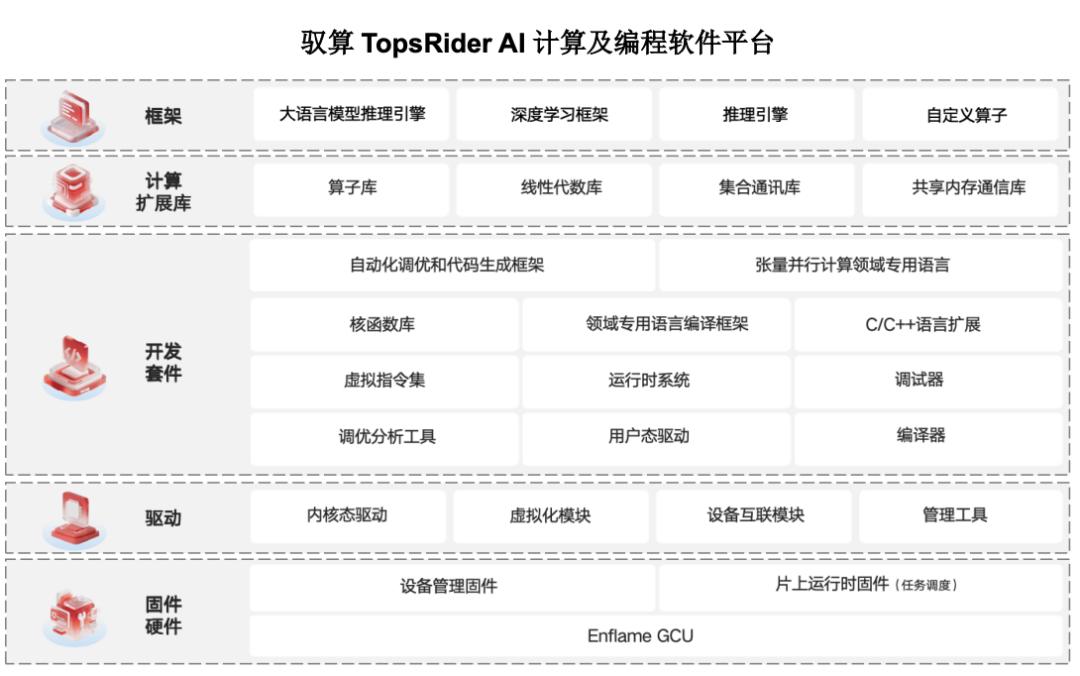
This meant they had to build their entire software stack from scratch: writing their own compilers, developing their own libraries, and creating their own developer tools. To put it simply, while others are driving on the highway built by NVIDIA, Enflame has to pave the road, build the cars, and train the drivers all by themselves.
From a business perspective, this choice seems “uneconomical.” However, the decision-makers in 2018 had a more long-term vision: what if NVIDIA’s chips become unavailable one day, rendering the CUDA-compatible path unworkable? Instead of being a “substitute” within someone else’s ecosystem, it is better to build a completely independent system.
In hindsight, this judgment may not have been wrong.
The Role of Tencent: From Investment to Deep Integration
Tencent is an inseparable presence in Enflame’s journey to the present day.
Starting from the Pre-A round, Tencent has appeared on Enflame’s shareholder list. Tencent has participated in almost every subsequent financing round. By the time the prospectus was disclosed, Tencent and its concert parties held a combined stake of over 20%, making Tencent Enflame’s largest external shareholder.
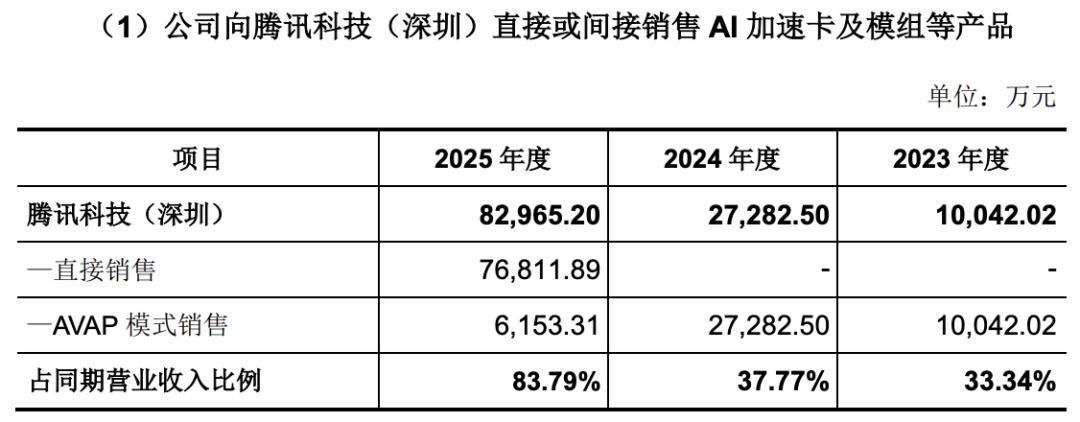
Tencent’s increasing proportion in Enflame Technology’s revenue
But Tencent provided more than just capital to Enflame.
More critically, it provided orders and real-world application scenarios.
What is the biggest fear for a semiconductor company? It is not being unable to design a chip, but designing one that no one dares to use. No matter how impressive the performance parameters of a startup’s chip are, customers hesitate to deploy it on a large scale — who would bear the losses if a business interruption occurs due to chip failures?
Tencent was willing to be the “first to eat the crab.”
Enflame’s chips were deployed behind national-level applications such as WeChat and Tencent Meeting. Real business traffic runs through scenarios like intelligent search, speech recognition, and content recommendation, with massive volumes of data being fed back. The value of this “real-world training” is something that can never be achieved in a laboratory.
The results are reflected in the revenue data.
In 2022, Enflame’s revenue was less than 100 million yuan. It rose to 301 million yuan in 2023, exceeded 722 million yuan in 2024, and reached 990 million yuan in 2025 — a tenfold increase in three years, a growth rate that is quite remarkable in any industry.
Behind this rapid growth, however, lies increasingly high customer concentration.
In 2023, Tencent contributed 33.34% of Enflame’s revenue. In 2024, this figure rose to 37.77%, and in 2025, it skyrocketed to 83.79%.
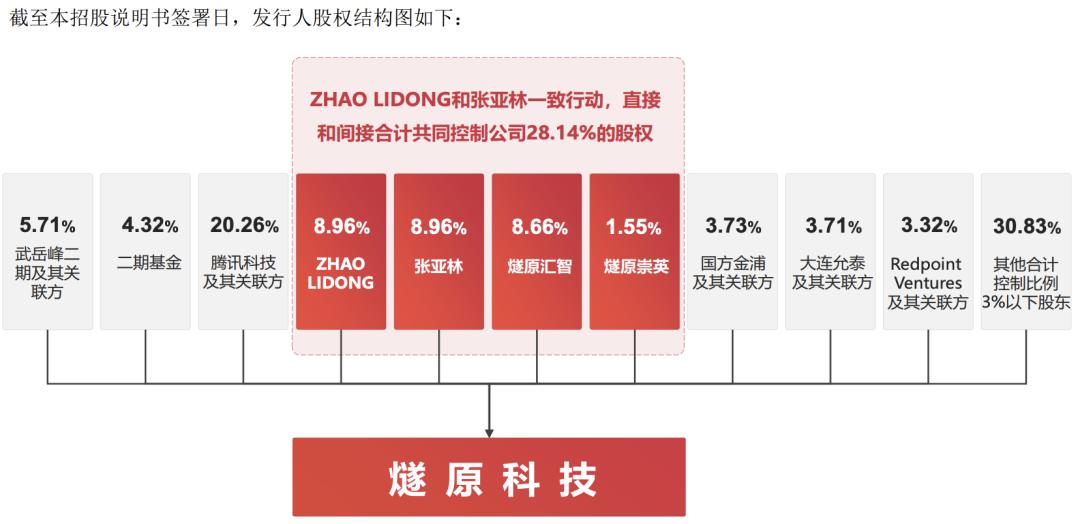
Equity Structure of Enflame Technology
In other words, nearly 84 out of every 100 yuan of Enflame’s revenue comes from Tencent.
The prospectus itself acknowledges: “We expect the situation where sales to Tencent account for a high proportion will continue for a certain period in the future.”
This model triggered a series of regulatory inquiries: what would happen to Enflame if Tencent adjusted its procurement strategy, or if Tencent’s self-developed chip “Zixiao” was deployed on a large scale to replace Enflame’s products? After all, Tencent has already publicly announced the deployment of its self-developed chips.
This is not groundless worry. In its early years, Cambricon was deeply tied to Huawei. Later, Huawei developed its own Ascend chips, and Cambricon’s revenue experienced a precipitous decline.
More importantly, since Tencent is the largest shareholder, competitors like Alibaba and Baidu will likely be reluctant to procure chips from a “Tencent-affiliated” company, which has erected an invisible barrier for Enflame’s market expansion.
Enflame stated that its existing products have been deeply adapted to a large number of AI models in Tencent’s supply chain, supporting multiple internal business scenarios of Tencent. Meanwhile, the company emphasizes its capability to develop and adapt products for other customers, with 3 potential customers from the internet sector expected to achieve small-scale deliveries by the end of 2026, and 1 potential customer from a non-internet sector expected to deepen cooperation after completing the full process validation.
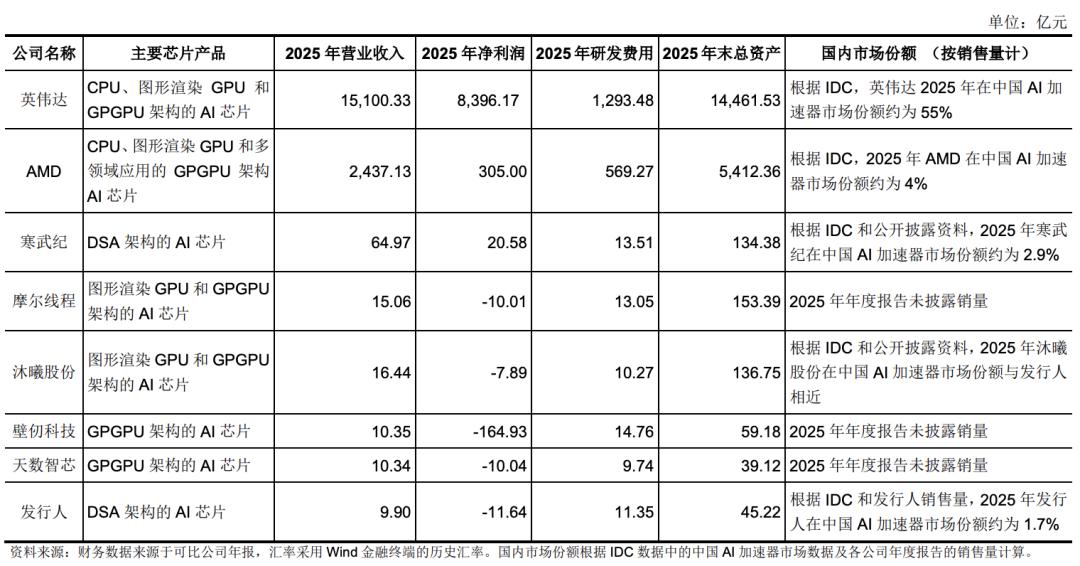
Comparison of Operating Performance Between Enflame Technology and Peers
Whether these statements can dispel the market’s doubts still requires time to verify.
Choice of Technical Path: Not a Generalist, But a Specialist
Enflame’s technical path is essentially two sides of the same coin with its business strategy.
Having chosen the CUDA-incompatible DSA architecture, general-purpose computing is no longer feasible. Enflame’s strategy is: focus solely on AI inference, not training.
This choice is highly pragmatic.
While the training chip market is high-end, with a single chip potentially selling for tens of thousands or even hundreds of thousands of dollars, the overall demand is limited. Moreover, in this field, NVIDIA’s dominance is almost unshakable — products like the A100 and H100 have become industry standards, resulting in extremely high switching costs for customers.
The inference market is different.
As large models transition from the “training phase” to “application deployment,” demand for inference computing power is exploding. Furthermore, the inference market is extremely cost-sensitive: for the same amount of computing power, whoever can deliver greater energy efficiency at a lower cost will win orders. This is a natural advantage for the DSA architecture, which prioritizes energy efficiency ratio.
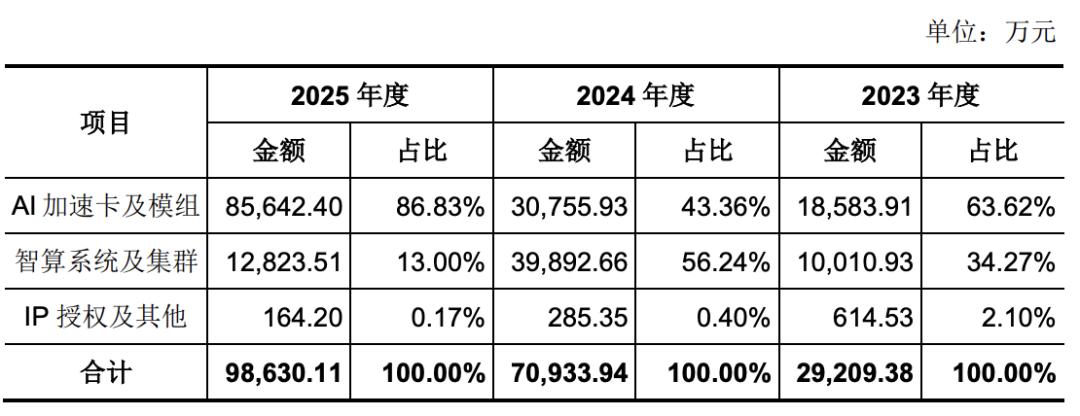
Revenue from Each Business Line of Enflame Technology
Enflame’s fourth-generation product, the L600, claims its computing performance matches and “greatly surpasses” NVIDIA’s H20. In 2025, they built China’s first 10,000-chip domestic inference computing cluster in Qingyang, Gansu Province. This project is an important milestone for Enflame, proving that its products are capable of large-scale networking deployment.
Nevertheless, challenges remain.
Enflame’s products have not yet been included in the “national team” security and reliability evaluation catalog, which to some extent limits its expansion in government and large central SOE markets.
Additionally, the production-sales ratio of Enflame’s AI accelerator card was 78.53% in 2024, dropping to 69.48% in the first three quarters of 2025. The company explained that this was to stock up in advance to meet customer demand in the fourth quarter, but this explanation indirectly indicates that the order rhythm is controlled by large customers.
This “large customer” is primarily Tencent.
After Listing: 6 Billion Yuan in Fundraising and Three Paths Forward
Enflame’s IPO plans to raise 6 billion yuan, mainly for the R&D and industrialization of its fifth- and sixth-generation AI chips.
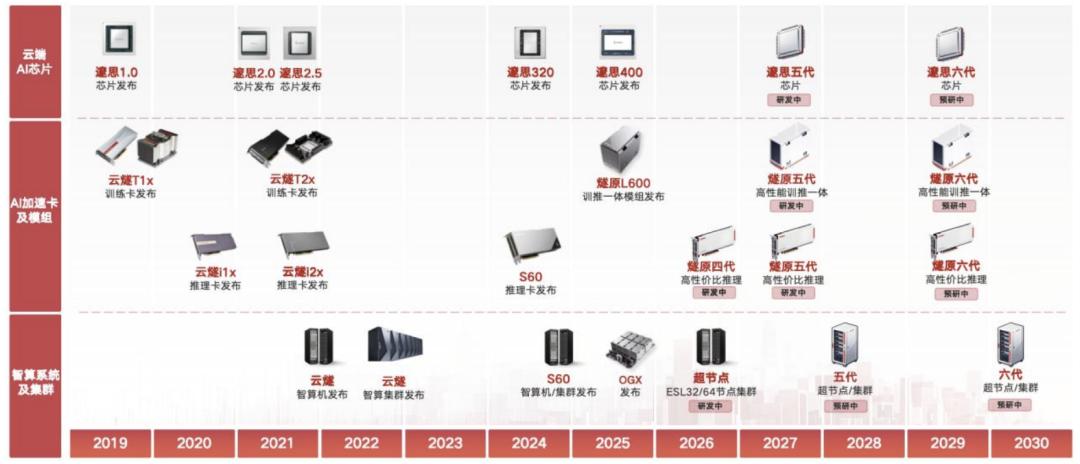
Product Evolution of Enflame Technology
According to the plan, the fifth-generation chip will be launched in 2027, and the sixth-generation chip will be released in 2029. This means that over the next three years, Enflame will need to simultaneously advance the R&D of two generations of products, placing significant financial pressure on the company.
A look at Enflame’s financial data illustrates just how crucial this funding is.
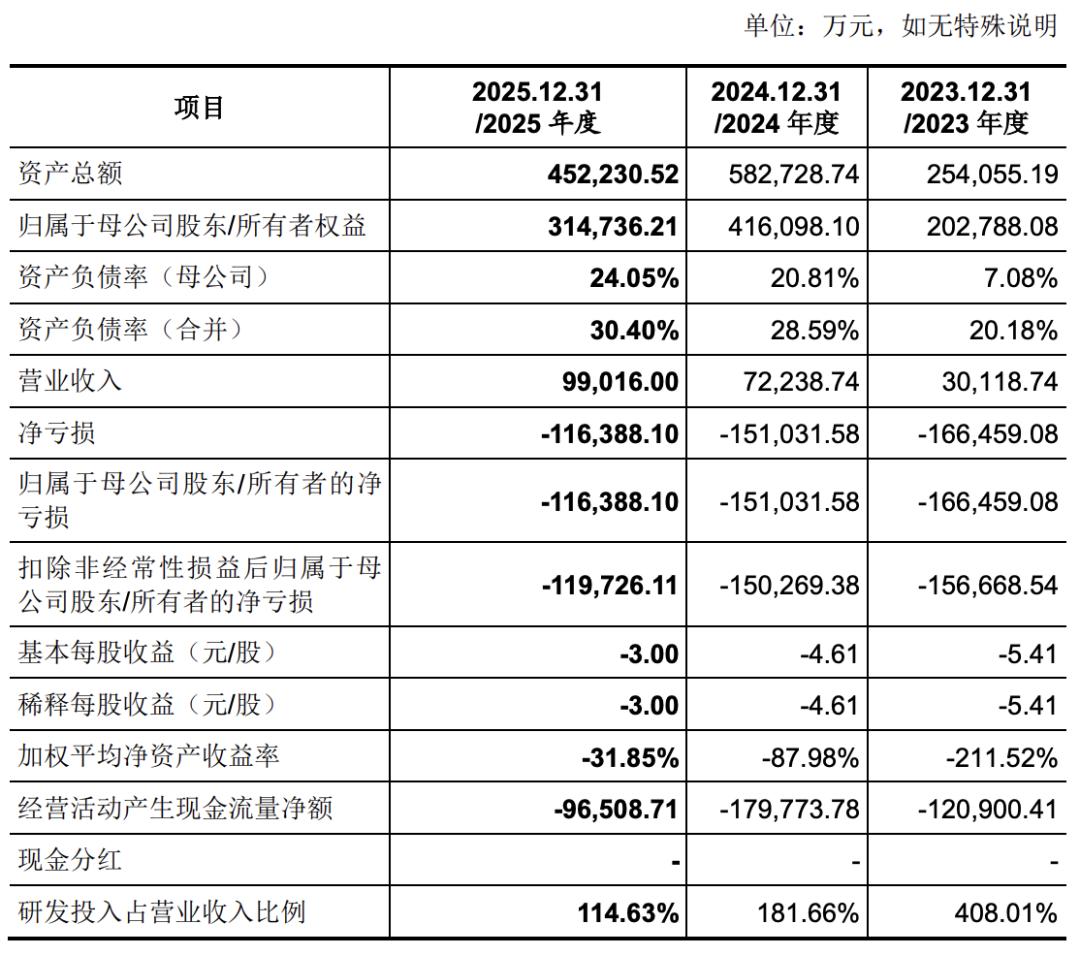
Key Financial Performance of Enflame Technology
From 2023 to 2025, Enflame’s revenue grew from 301 million yuan to 722 million yuan, and then to 990 million yuan, with a compound annual growth rate exceeding 80%. However, alongside revenue growth, losses continued. The net loss was 1.665 billion yuan in 2023, 1.51 billion yuan in 2024, narrowing to 1.164 billion yuan in 2025. Total accumulated losses over the three years exceeded 4.3 billion yuan. As of the end of 2025, the company’s consolidated unrecovered losses reached a staggering 4.44