Every PC part is getting more expensive except one, and it’s the one worth buying up right now
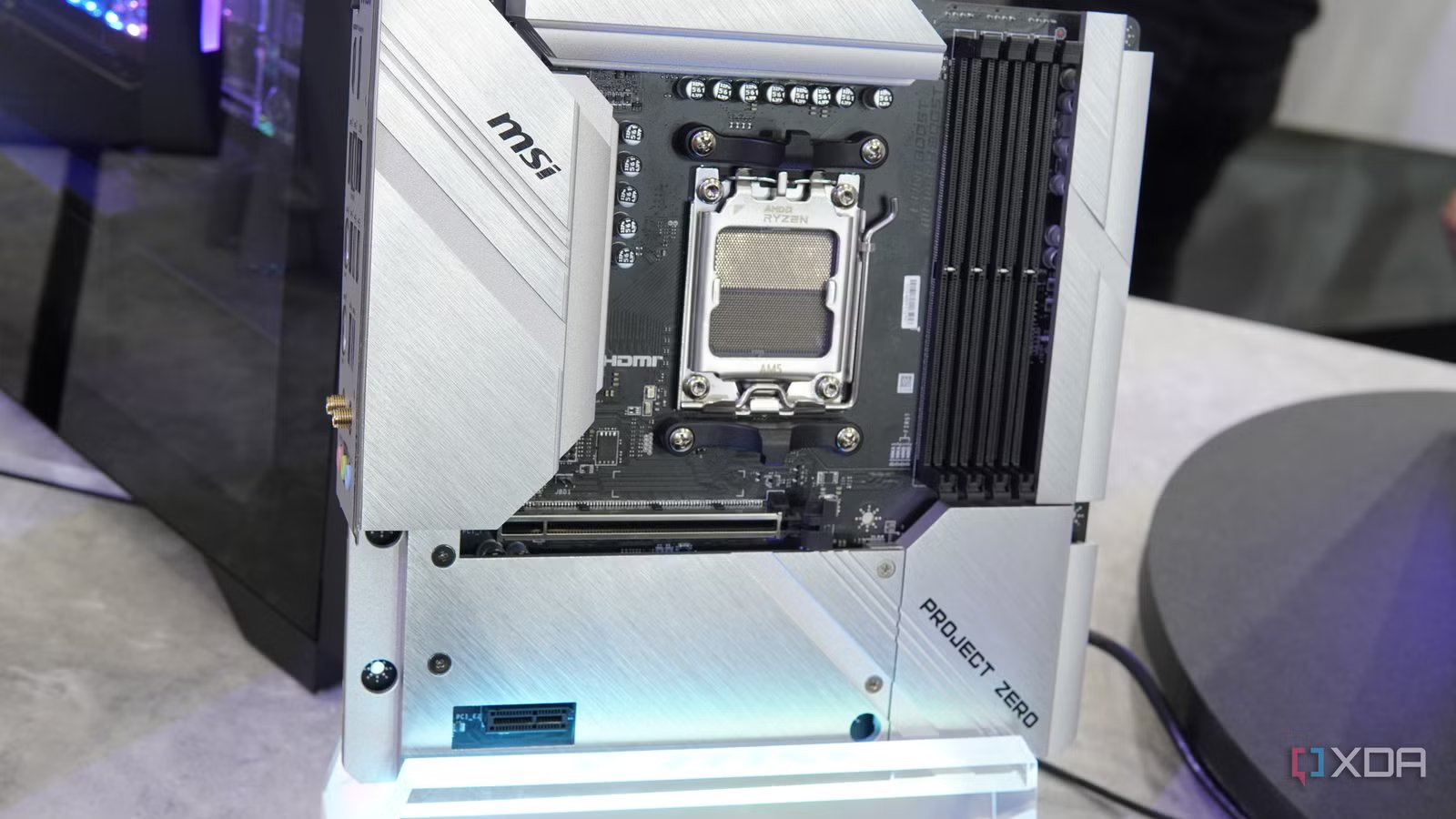
It’s not often that a motherboard becomes the best deal in the PC market. These are components that launch, sell at roughly the same price for a couple of years, and then disappear from the market. However, in 2026, this pattern seems to be undergoing another change never seen before, thanks to the DRAM crisis and the consequent historic lows in the sales of PC components.
Flagship AM5 and LGA1851 motherboards have now started to sell at entry-level prices, with premium designs marked down by as much as 50% in the US market. These are the kind of throwaway prices you’d normally expect from discontinued inventory, except these platforms are still very current and showing no signs of losing support anytime soon. The explanation, as always, has little to do with the motherboards themselves, and everything to do with the AI memory boom that’s distorting the rest of the PC market.
Motherboards are the shortage’s only exempt component
No memory means no inflation

Motherboards have seen to be suspiciously exempt from the hardware inflation cycle that seems to have driven up the prices of every other component that goes inside a PC. As a matter of fact, they seem to be going down in value as the DRAM crisis continues. The reason for this is that the AI boom affects PC component pricing through two chief components, including DRAM, and recently, NAND.
Nearly every modern PC that’s built carries at least one of them. RAM is pure DRAM, while SSDs and NVMe drives are NAND with a controller. GPUs, on the other hand, carry the increasingly expensive and scarce VRAM, and these days consumer laptops carry both. The motherboard, of course, is the lone major component with neither. It’s copper, PCB, VRMs, sockets and controllers, none of which the AI industry is interested in hoarding. This leaves consumer motherboards somewhat insulated from the inflation cycle.
Now, insulation itself would be enough to keep prices stable, but not enough to drive them down. What’s driving down the prices is the demand side of the crisis. As DDR5 memory and increasingly DIY-hostile GPU prices continue to make PC building prohibitively expensive, prospective builders have either indefinitely postponed their plans or abandoned them altogether, which has led to a sharp drop in motherboard sales. It’s something of an ongoing trend that has been observed since the start of the summer this year. Earlier in May, Tom’s Hardware reported motherboard sales collapsing by more than 25%, noting that major manufacturers like Asus expect to sell roughly 5 million fewer boards in 2026. It has only been two months since the projection, but so far, this pattern seems to be holding.
The deals are better than ever before
You can find flagship boards at entry-level prices

Unlike most other times, the discounts you’d see on the motherboard market at the moment aren’t strictly confined to the less-popular, rarely-bought SKUs, and a quick scan of live listings determines as much. On the AMD side, high-end X870-class motherboards with three or four M.2 slots can be found between $230–$250, after a $100-$120 price cut. In the budget segment, B650 motherboards have appeared for as low as $109 against a $179 list price, and on the Intel side, Z-series motherboards have dropped to as low as $180. Price trackers like Pangoly list pages worth of information, and Newegg now maintains an entire storefront filter for boards at 40% off and beyond.
Deal watchers have found deeper cuts on Intel boards than AMD ones, and the likely explanation for this is consumer concern around socket longevity. AMD has confirmed that AM5 will be supported through 2029, so the boards are priced accordingly for their future-proofed value proposition.
So you’ve bought a motherboard. What about the rest of the components?
Anchor the platform now, and chase deals later
A key issue most consumers would likely have while committing to a platform is the fact that spending money on a board right now wouldn’t make sense if the rest of the components are simply unaffordable given the current market conditions. Furthermore, the prevailing conventional wisdom around PC building says that you should buy the components all at once, but this conventional wisdom was borrowed from consumers in a market that was far less volatile than it is now.
Here’s where I would argue that building a rig in an uncertain hardware economy requires an unconventional approach. An all-at-once build would likely cost you the full shortage premium on every component simultaneously, since buying everything today means paying today’s exorbitant RAM, SSD, and GPU prices in a single receipt, with no opportunity to catch either of them on a dip. Building incrementally, on the other hand, gives you numerous opportunities to scour for better deals over a period of time. You have an option to anchor the platform first while that layer is selling below its own launch pricing, and then acquire each remaining component when a listing breaks the pattern similarly.
Of course, there’s an exception where you can and probably should forgo doing this, which is when you find a retailer packaging a generous bundle. If you’re revisiting the PC hardware market after a few years, you may be surprised to learn that, at times, pre-built configurations can actually be the more economical choice rather than buying every component one after another.
Always keep an eye out for the unlikely bargain
The past year has proven that the conventional PC building methodology doesn’t apply to a (deeply) unconventional market. The best value may not necessarily be where you’d expect it to be, so it’s always worth watching for the unlikely bargain. Even if the shortage premium doesn’t fully disappear as far as RAM and SSDs are concerned, saving a good chunk of cash on other components, bought incrementally, can help offset the added cost and return a lower average cost for your build.