Missed some of our top stories from the week? Check out our round-up below, covering the biggest science news and stories that matter.
This week’s stories, from July 18 to July 24, 2026, include how much daily caffeine is deemed safe for adults, rare footage of the Arctic bobtail squid, a skeleton that may be the earliest known victim of a sharp-object attack, why hair loss may be a side effect of GLP-1 medications, a new species of eyeless cavefish found in Alabama, and the double feature of a solar eclipse and meteor shower happening in August.
1. American Heart Association Deems 5 Cups of Coffee Safe but Warns Against Energy Drinks
A recent scientific statement from the American Heart Association offers some answers about caffeine and cardiovascular health. According to the latest evidence, drinking up to five cups of caffeinated coffee a day is considered safe for most adults and may even be associated with a lower risk of certain cardiovascular conditions.
2. Rare Arctic Bobtail Squid Filmed With Eggs in Remote Greenland Waters for the First Time
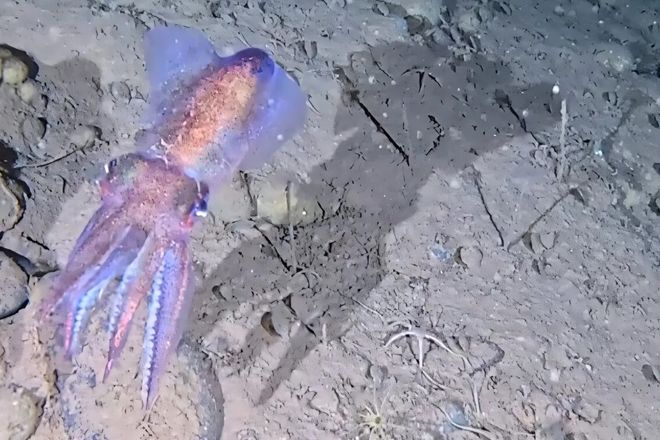
Rare footage of the Arctic bobtail squid (Image Courtesy of Polar BLAST, Paige Maroni, Tim Macdonald)
In the frigid North Atlantic waters around Northeast Greenland National Park, researchers spotted something miraculous: an Arctic bobtail squid with her eggs.
This is the first time this species of squid has been spotted in the park. Arctic bobtail squid (Rossia moelleri) are a rare sight, and capturing footage of one in this national park is even rarer.
3. A 90,000-Year-Old Skeleton May Be One of the Earliest Known Victims of a Sharp-Object Attack
One hundred thousand years ago, someone may have stabbed a young man in the face with a sharp object. Today, his remains are an archaeological marvel.
The fossil, named Qafzeh 25 after the Qafzeh Cave in Israel, where it was found, is between 92,000 and 145,000 years old — a time when archaic Homo sapiens began venturing out of Africa. According to the team involved, this may be one of the earliest known examples of trauma inflicted with a sharp tool.
4. Hair Loss May Be a New Potential Side Effect of GLP-1 Weight Loss Drugs
GLP-1 receptor agonists may be linked to an increased risk of hair loss (alopecia), and although the absolute risk is low, researchers want to understand how the occurrence of this adverse effect compares to other commonly prescribed diabetes drugs, hoping to better inform treatment decisions for practitioners and patients.
5. A New Eyeless “Demon” Cavefish Species Lurked Undetected in an Alabama Cave for Decades
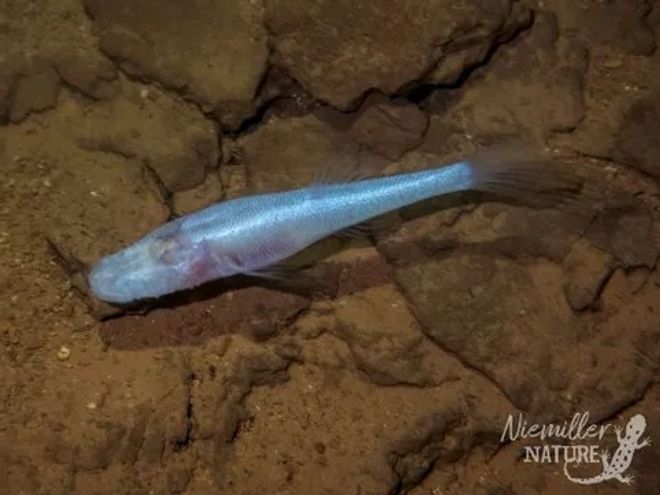
The new Demon Cavefish species swimming. (Image Courtesy of University of Alabama at Huntsville)
The newly discovered fish is not merely another species within a familiar group. Researchers determined that it represents both a new genus and a new species, which they named Demogorgonichthys arcanus, or the Demon Cavefish.
6. A Total Solar Eclipse and the Perseids Meteor Shower Will Share the Sky in August 2026
Mark Aug. 12, 2026, in your calendar because there is not one, but two major astronomical events to look forward to.
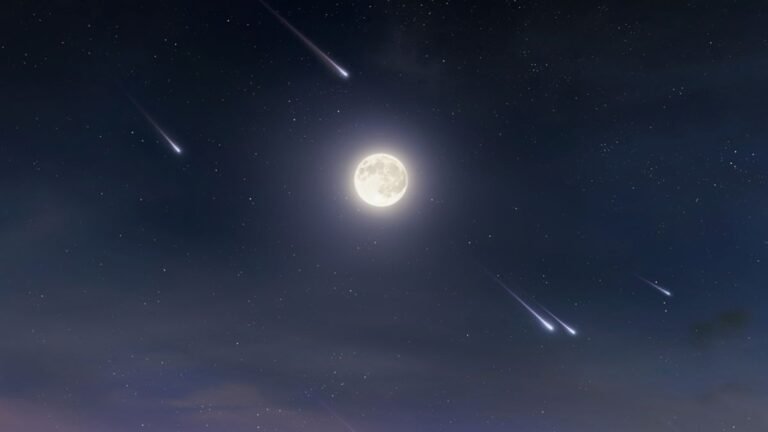
The first is a solar eclipse, which will appear total from Russia and parts of Europe, and partial from the U.S. The second is the peak of the Perseids — described by NASA as “the most popular meteor shower of the year.” This will appear particularly spectacular thanks to its concurrence with a new moon.
Looking up at the night sky during mid- to late July until mid-August 2026, you may catch the faint Southern Delta Aquariids if you’re lucky. While this can be a popular meteor shower, the viewing can be difficult depending on your location and whether or not there is a full moon. Still, that doesn’t mean…
Early Christian communities in Sweden often buried children in the same grave with adults, but archaeologists have found that these individuals rarely shared close biological ties, raising the question of how medieval people interred their dead. In a new study, researchers analyzed the DNA of 142 skeletons from three cemeteries in Sweden dating to the…
This week’s science news reminds us how the past still speaks if we listen closely, with news of the discovery of 18 ancient Egyptian tombs filled with dozens of gold tongues topping the bill. The ancient Egyptians believed that gold was the flesh of the gods, meaning that bestowing gold tongues upon the deceased could…
Physicists from the University of Jyväskylä and Aalto University in Finland have successfully created a two dimensional topological crystalline insulator, marking the first experimental realization of a quantum material that scientists had predicted for more than a decade. Until now, attempts to produce it had been held back by difficulties in developing the right materials….