Gesture Controlled Robot Market Forecast to 2035: Growth Driven by AI and Contactless Automation – News and Statistics
Abstract
According to the latest IndexBox report on the global Gesture Controlled Robot market, the market enters 2026 with broader demand fundamentals, more disciplined procurement behavior, and a more regionally diversified supply architecture.
The World Gesture Controlled Robot market is undergoing a structural expansion as industries shift toward intuitive, contactless human-machine interfaces that reduce programming complexity and enhance operational safety. By 2035, the market is projected to register a compound annual growth rate in the high teens to low twenties, supported by the convergence of gesture recognition with artificial intelligence and computer vision. This technological fusion enables robots to interpret nuanced hand and body movements with increasing accuracy, opening applications in sterile manufacturing environments, collaborative workspaces, and precision assembly lines. The Asia-Pacific region currently accounts for an estimated 40–50% of global procurement volume, functioning as both the largest demand center and a major manufacturing base, while North America and Europe contribute approximately 30% and 20% respectively to overall market value. Industrial and collaborative robot applications represent roughly 55–65% of global demand by value, with gesture-based control systems being integrated into pick-and-place, assembly, and material handling workflows. Miniaturization of sensor modules and falling unit costs for depth-sensing cameras, inertial measurement units, and processing chips are lowering the entry barrier for smaller OEMs and system integrators, expanding the addressable installed base across light industrial and educational applications. The market also benefits from rising demand for collaborative robots that can operate safely alongside human workers without safety cages, with collaborative robot models incorporating gesture control growing at an estimated 25–35% annual rate. However, supply bottlenecks for specialized semiconductor components, including high-performance
The baseline scenario for the World Gesture Controlled Robot market from 2026 to 2035 assumes a steady acceleration in adoption across industrial automation, healthcare, and consumer application segments, driven by the ongoing digitization of manufacturing and the push for hygienic, contactless operations. Under this scenario, global market value is expected to grow at a compound annual growth rate (CAGR) in the high teens to low twenties, with the market index reaching approximately 550–650 by 2035 (2025=100). The industrial automation and instrumentation sector will remain the largest demand pillar, accounting for roughly 35–40% of total value, as manufacturers retrofit existing production lines with gesture-based programming and override systems to improve operator safety and reduce downtime. The electronics and optical systems segment is projected to grow at an above-average pace, driven by the need for precision handling of delicate components in cleanroom environments where physical contact must be minimized. Semiconductor and precision manufacturing will emerge as a high-growth niche, with gesture-controlled robots enabling contamination-free wafer handling and micro-assembly tasks. OEM integration and maintenance will see steady demand as system integrators incorporate gesture control modules into new collaborative robot platforms and upgrade legacy equipment. The Asia-Pacific region will continue to dominate both production and consumption, supported by robust electronics manufacturing clusters in China, Japan, South Korea, and Taiwan, as well as expanding automation investments in India and Southeast Asia. North America and Europe will maintain significant shares, with growth fueled by reshoring initiatives, labor shortages, and stringent safety regulations. K
Demand Drivers and Constraints
Primary Demand Drivers
- Convergence of gesture recognition with artificial intelligence and computer vision enabling contactless control solutions that improve hygiene and operational flexibility in medical, pharmaceutical, and food-grade manufacturing environments.
- Miniaturization of sensor modules and falling unit costs for depth-sensing cameras, inertial measurement units, and processing chips lowering the entry barrier for smaller OEMs and system integrators.
- Rising demand for collaborative robots that can operate safely alongside human workers without safety cages, driving specification of gesture-based programming and override systems.
- Growing need for intuitive human-machine interfaces in industrial automation to reduce programming complexity and improve operator safety in pick-and-place, assembly, and material handling workflows.
- Expansion of electronics and semiconductor manufacturing requiring precision handling of delicate components in cleanroom environments where physical contact must be minimized.
- Increasing adoption of gesture-controlled robots in educational and research institutions for STEM training, lowering the skill barrier for robotics programming.
Potential Growth Constraints
- Supply bottlenecks for specialized semiconductor components, including high-performance image sensors and embedded AI processors, extending lead times for gesture control modules to 20–35 weeks.
- Lack of unified global standards for gesture recognition accuracy, latency, and safety validation creating qualification complexity for OEMs and system integrators, with compliance costs adding an estimated 8–15% to project budgets.
- Price sensitivity in mid-tier industrial and educational segments limiting adoption of premium gesture control systems, with standard-grade solutions priced at roughly one-third to one-half of premium specification modules.
- Technical challenges in achieving robust gesture recognition under varying lighting conditions, occlusions, and background noise, particularly in unstructured industrial environments.
- Competition from alternative human-machine interface technologies such as voice control, touchscreens, and vision-based systems that may offer lower cost or simpler integration for certain applications.
Demand Structure by End-Use Industry
Industrial Automation and Instrumentation (estimated share: 38%)
Industrial automation and instrumentation is the largest end-use sector for gesture-controlled robots, accounting for an estimated 38% of global market value. This segment encompasses pick-and-place, assembly, material handling, and quality inspection workflows where gesture-based control reduces programming complexity and enhances operator safety by allowing workers to command robots from a safe distance. Currently, adoption is concentrated in automotive, electronics, and general manufacturing facilities in developed economies, with penetration rates estimated at 15–20% of new collaborative robot installations. Through 2035, demand will be driven by the need to retrofit aging production lines with intuitive interfaces that require minimal retraining, as well as by labor shortages in manufacturing hubs. Key demand-side indicators include capital expenditure on automation equipment, industrial robot shipments, and the share of collaborative robots in total robot sales. The trend toward modular, reconfigurable production lines in response to supply chain volatility will further boost demand for gesture-controlled systems that can be quickly reprogrammed for new tasks. Major trends include integration of gesture control with digital twin platforms for offline programming, development of safety-rated gesture recognition systems that meet ISO 13849 and IEC 62061 standards, and the e Current trend: Steady growth driven by retrofitting of existing production lines with gesture-based programming and override systems to.
Major trends: Integration of gesture control with digital twin platforms for offline programming and simulation, Development of safety-rated gesture recognition systems meeting ISO 13849 and IEC 62061 standards, Emergence of cloud-connected gesture control modules enabling remote monitoring and firmware updates, and Growing adoption of gesture-based override systems for emergency stop and safe distance maintenance.
Representative participants: ABB Ltd, Fanuc Corporation, Yaskawa Electric Corporation, KUKA AG, Universal Robots A/S, and Omron Corporation.
Electronics and Optical Systems (estimated share: 22%)
The electronics and optical systems segment represents approximately 22% of the gesture-controlled robot market, driven by the need for contamination-free handling of sensitive components such as semiconductor wafers, optical lenses, and microelectromechanical systems (MEMS). In cleanroom environments, gesture control eliminates the risk of particulate contamination from physical contact with joysticks or touchscreens, while also reducing the need for operators to wear bulky gloves that impair dexterity. Current adoption is strongest in high-end electronics manufacturing in East Asia, particularly in Taiwan, South Korea, and Japan, where precision assembly of smartphones, cameras, and display panels requires micron-level accuracy. Through 2035, demand will accelerate as miniaturization trends in consumer electronics and the expansion of 5G infrastructure drive the need for ever-smaller components that cannot be handled manually. Key demand-side indicators include global semiconductor equipment spending, cleanroom construction starts, and the value of electronics production in Asia-Pacific. The segment is also benefiting from the shift toward heterogeneous integration and advanced packaging, which require precise alignment and placement of multiple dies. Major trends include the development of gesture-controlled micro-assembly stations with sub-micron positioning accuracy, integ Current trend: Above-average growth driven by precision handling of delicate components in cleanroom environments where physical contac.
Major trends: Development of gesture-controlled micro-assembly stations with sub-micron positioning accuracy, Integration of machine vision for real-time feedback and error correction during precision handling, Use of haptic feedback to provide operators with tactile confirmation of successful actions, and Adoption in advanced packaging and heterogeneous integration workflows.
Representative participants: Mitsubishi Electric Corporation, Omron Corporation, Fanuc Corporation, Yaskawa Electric Corporation, and Intel Corporation.
Semiconductor and Precision Manufacturing (estimated share: 18%)
Semiconductor and precision manufacturing accounts for an estimated 18% of the gesture-controlled robot market, representing a high-growth niche where contactless control is critical for maintaining wafer integrity and preventing electrostatic discharge. In front-end fabs, gesture-controlled robotic arms are used for wafer transfer between process chambers, while in back-end facilities, they assist in die bonding, wire bonding, and encapsulation. Current adoption is limited to advanced fabs and packaging houses due to the high cost of certified cleanroom-compatible gesture systems, but penetration is expected to increase as sensor costs decline and reliability improves. Through 2035, demand will be driven by the global expansion of semiconductor fabrication capacity, particularly in the United States, Europe, and Southeast Asia, as well as by the increasing complexity of chip designs that require more precise handling. Key demand-side indicators include capital expenditure on wafer fab equipment, the number of new fab construction projects, and the growth of advanced packaging revenue. The segment is also influenced by the need to reduce human intervention in cleanrooms to minimize contamination risks, a trend accelerated by the COVID-19 pandemic. Major trends include the development of gesture-controlled systems with electrostatic discharge (ESD) safe materials, integration wi Current trend: High-growth niche driven by contamination-free wafer handling and micro-assembly tasks in fabs and back-end facilities..
Major trends: Development of gesture-controlled systems with electrostatic discharge (ESD) safe materials and cleanroom compatibility, Integration with factory automation systems for seamless wafer tracking and lot management, Use of AI-powered gesture recognition to anticipate operator intent and reduce cycle times, and Adoption in advanced packaging facilities for high-precision die placement.
Representative participants: Fanuc Corporation, Yaskawa Electric Corporation, KUKA AG, Mitsubishi Electric Corporation, and Omron Corporation.
OEM Integration and Maintenance (estimated share: 14%)
The OEM integration and maintenance segment accounts for approximately 14% of the gesture-controlled robot market, encompassing the supply of gesture recognition modules, sensor arrays, and embedded control software to robot manufacturers and system integrators. This segment serves as the upstream channel through which gesture control technology reaches end users, with demand driven by the pace of new robot platform development and the retrofitting of existing industrial robots. Currently, major collaborative robot manufacturers such as Universal Robots and Fanuc are incorporating gesture control as an optional or standard feature on select models, while system integrators are developing custom solutions for specialized applications. Through 2035, demand will grow as gesture control becomes a standard interface option for collaborative robots, similar to teach pendants and graphical user interfaces today. Key demand-side indicators include the number of collaborative robot models launched annually, the value of robot integration contracts, and the installed base of industrial robots eligible for retrofit. The segment is also benefiting from the trend toward modular robot designs that allow easy swapping of control interfaces. Major trends include the development of standardized gesture control APIs that simplify integration with existing robot controllers, the emergence of afte Current trend: Steady demand as system integrators incorporate gesture control modules into new collaborative robot platforms and upgra.
Major trends: Development of standardized gesture control APIs that simplify integration with existing robot controllers, Emergence of aftermarket gesture control upgrade kits for legacy industrial robots, Use of wireless gesture control modules that eliminate cabling constraints and improve flexibility, and Growing collaboration between sensor manufacturers and robot OEMs to co-develop integrated solutions.
Representative participants: Universal Robots A/S, Fanuc Corporation, ABB Ltd, KUKA AG, Omron Corporation, and Intel Corporation.
Healthcare and Pharmaceutical (estimated share: 8%)
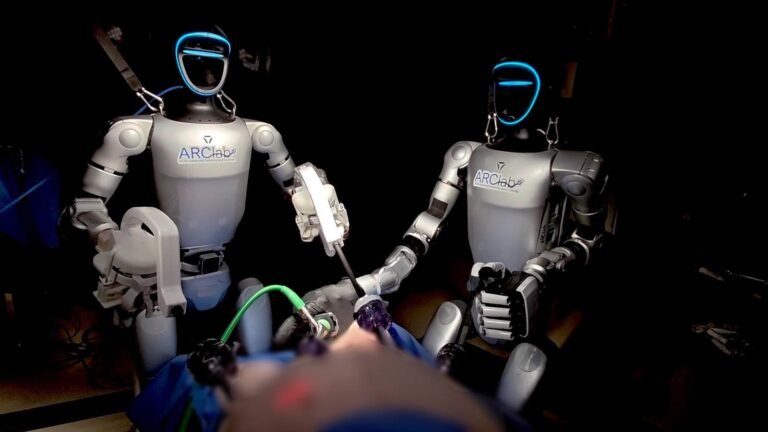
The healthcare and pharmaceutical segment, while currently the smallest at 8% of the market, is projected to be the fastest-growing end-use sector through 2035, with adoption expanding at an estimated 20–30% annually. Gesture-controlled robots are used in pharmaceutical manufacturing for sterile filling, packaging, and laboratory automation, where contactless control reduces contamination risks and simplifies cleaning protocols. In healthcare settings, they are deployed in surgical assistance, rehabilitation, and hospital logistics, allowing clinicians to control robotic systems without breaking sterility. Current adoption is concentrated in large pharmaceutical companies and advanced hospital systems in North America and Europe, but is spreading to Asia-Pacific as regulatory standards tighten. Through 2035, demand will be driven by the increasing stringency of cleanroom regulations (e.g., EU GMP Annex 1), the growth of biologics and cell therapy manufacturing requiring aseptic processing, and the need to protect healthcare workers from infectious diseases. Key demand-side indicators include pharmaceutical R&D spending, cleanroom construction in the pharmaceutical sector, and the number of robotic surgery procedures performed globally. Major trends include the development of gesture-controlled systems with antimicrobial surfaces, integration with hospital information systems fo Current trend: Rapid growth driven by hygiene requirements and regulatory preference for contactless control in sterile environments..
Major trends: Development of gesture-controlled systems with antimicrobial surfaces and cleanroom-compatible materials, Integration with hospital information systems for real-time patient data access and procedure logging, Use of gesture control in telemedicine and remote surgery applications to enable specialist intervention from a distance, and Adoption in pharmaceutical R&D laboratories for automated sample handling and analysis.
Representative participants: ABB Ltd, KUKA AG, Universal Robots A/S, Microsoft Corporation, and Google LLC (Alphabet Inc.).
Key Market Participants
The competitive landscape remains concentrated around large multinational groups with integrated production, broad distribution reach, and stronger quality-certification capabilities.
- ABB Ltd
- Fanuc Corporation
- Yaskawa Electric Corporation
- KUKA AG
- Universal Robots A/S
- Omron Corporation
- Mitsubishi Electric Corporation
- Intel Corporation
- Microsoft Corporation
- Google LLC (Alphabet Inc.)
- Sony Corporation
- Infineon Technologies AG
These participants continue to shape pricing discipline, capacity planning, and product-mix upgrades across major consuming regions.
Regional Dynamics
Asia-Pacific (estimated share: 45%)
Asia-Pacific accounts for an estimated 45% of global market value, functioning as both the largest demand center and a major manufacturing base. Growth is driven by electronics and semiconductor production in China, Japan, South Korea, and Taiwan, as well as expanding automation investments in India and Southeast Asia. The region benefits from a dense supply chain for sensors and components, and strong government support for robotics adoption. Direction: Dominant and growing.
North America (estimated share: 28%)
North America holds an estimated 28% share, supported by reshoring initiatives, labor shortages, and stringent safety regulations that favor collaborative and gesture-controlled robots. The United States is the largest market, with strong demand from automotive, aerospace, and pharmaceutical sectors. Canada and Mexico contribute through manufacturing and medical device production. Direction: Steady growth.
Europe (estimated share: 18%)
Europe represents approximately 18% of the market, with demand concentrated in Germany, Italy, France, and the United Kingdom. Growth is driven by the automotive industry’s shift toward flexible manufacturing, as well as pharmaceutical and food-grade applications requiring hygienic design. EU regulations on worker safety and cleanroom standards support adoption, though price sensitivity in Southern Europe limits premium system uptake. Direction: Moderate growth.
Latin America (estimated share: 5%)
Latin America accounts for an estimated 5% of the global market, with growth concentrated in Brazil and Mexico. Demand is primarily from automotive and electronics assembly plants operated by multinational corporations, as well as from educational institutions adopting robotics for STEM training. Infrastructure challenges and economic volatility constrain faster adoption, but government incentives for industrial automation are creating opportunities. Direction: Emerging growth.
Middle East & Africa (estimated share: 4%)
The Middle East and Africa region holds an estimated 4% share, with demand driven by oil and gas automation, healthcare modernization, and educational robotics initiatives. The United Arab Emirates and Saudi Arabia are leading adopters, investing in smart manufacturing and medical robotics as part of economic diversification plans. South Africa shows potential in mining automation. Limited local manufacturing and high import costs remain barriers. Direction: Nascent but expanding.
Market Outlook (2026-2035)
In the baseline scenario, IndexBox estimates a 12.0% compound annual growth rate for the global gesture controlled robot market over 2026-2035, bringing the market index to roughly 420 by 2035 (2025=100).
Note: indexed curves are used to compare medium-term scenario trajectories when full absolute volumes are not publicly disclosed.
For full methodological details and benchmark tables, see the latest IndexBox Gesture Controlled Robot market report.