Govt establishes Robotics Committee to accelerate adoption of robotic surgery – OBSERVER
Jakarta, IO – The Health Ministry (Kemenkes) is accelerating the transformation of healthcare services by developing robotic surgery technology as a key pillar of its health technology transformation. In addition to procuring 40 surgical robotic units for government hospitals, the Ministry is actively building an Artificial Intelligence (AI) ecosystem, expanding medical training for doctors, and driving technology transfer, to foster a self-reliant national medical device industry.
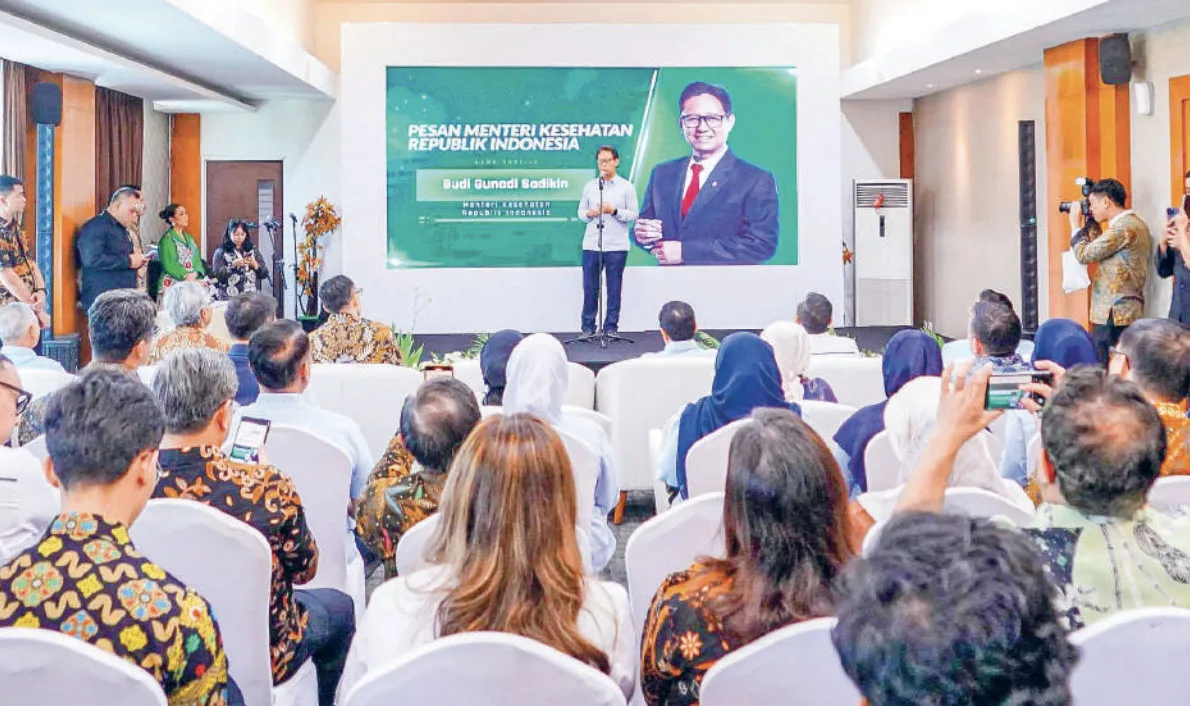
Health Minister Budi G. Sadikin underscored this commitment while attending a milestone celebration for nearly 1,000 robotic surgical procedures at Bunda Hospital in Jakarta. The event also marked the launch of a strategic collaboration between Kemenkes, Bunda Hospital, and Bandung Institute of Technology (ITB).
According to Budi, robotics is one of the Ministry’s three priority health technologies, alongside artificial intelligence and biotechnology. “Robotics is a global trend. This technology offers superior quality of care for patients, more precise surgeries, reduced pain, and shorter recovery times,” he said on Monday (27/7/2026). “The Government’s duty is to ensure these services become increasingly accessible, high-quality, and affordable.”
He acknowledged that Indonesia’s utilization of robotic surgery still lags behind trends in several neighboring countries, including Singapore, Thailand, Malaysia, and even Vietnam. Consequently, the Government is taking aggressive steps to expedite its adoption through national policy.
A primary initiative is the formation of a Ministry Robotics Committee, tasked with charting the trajectory of robotics technology development in Indonesia—ranging from technological requirements and service standards to strategies for cost-efficient public access.
On the financing front, the Ministry is evaluating a payment scheme through the Healthcare and Social Security Agency (BPJS Kesehatan) to include robotic surgery in the national financing system, thereby broadening public access to the cutting-edge technology.
To lay the groundwork for widespread robotic application, Kemenkes is first strengthening minimally invasive surgical services. This is being achieved through a national laparoscopic surgery training program for surgeons, across 514 regencies and municipalities. The initiative aims to expand public access to modern procedures, such as surgeries for hernias, appendicitis, gallbladders, and various other digestive interventions.
“We want an increasing number of Indonesian doctors to possess competencies in both minimally invasive and robotic surgeries. We must not allow these skills to be confined to specific groups or exclusively available in major cities,” Budi stressed.
The development of robotics is not solely aimed at elevating service quality but will also serve as the bedrock for advancing healthcare AI in Indonesia. The country is currently constructing three integrated national databases: population, clinical, and genomic data. Moving forward, data from robotic surgeries will be aggregated nationally to develop AI systems that assist doctors in improving surgical precision.
“AI is not meant to replace doctors; rather, it serves as augmented intelligence that assists medical professionals in making decisions based on machine learning derived from thousands to millions of clinical data points,” Budi explained.
He added that open access to robotic surgery data will enable Indonesia to develop AI-based learning systems capable of raising surgical quality standards while keeping clinical decision-making firmly in the hands of doctors. Furthermore, in the procurement of surgical robots, Kemenkes will mandate technology transfer, particularly for the domestic production of consumables.
This policy is expected to drive down the cost of robotic surgical procedures, making them more affordable for the public, while simultaneously bolstering the national medical device industry. In addition, Kemenkes will expand robotic surgery training centers across various regions of Indonesia, to ensure educational access is not centralized in a single area or institution.
Innovation Success Hinges on Collaboration
ITB Rector Professor Tatacipta Dirgantara noted that Indonesia boasts robust research capacity in biomedical engineering, biomechanics, robotics, and AI. However, he stressed that successful innovation heavily depends on close collaboration between academia and medical professionals.
“Facilitation by Kemenkes is crucial so that researchers and doctors can work seamlessly together to develop health technologies tailored to Indonesia’s specific needs. With this collaboration, we are optimistic that Indonesia can produce globally-competitive medical device innovations,” he said.
Dr. Ivan Rizal Sini, President Commissioner of PT Bundamedik Tbk, noted that reaching the milestone of nearly 1,000 robotic surgeries is the culmination of more than a decade of consistency in pioneering minimally invasive surgery in Indonesia.
He affirmed that Bunda Hospital is fully prepared to support government programs by developing training centers, sharing expertise, and expanding knowledge transfer to doctors from various regions. “We believe that experience must be shared. The more Indonesian doctors who master robotic surgery, the greater the benefits that can be felt by the public,” he said.
Through synergy among the government, universities, hospitals, and industry players, Kemenkes targets establishing Indonesia as a premier regional hub for robotic surgery technology development. Ultimately, this effort aims to strengthen the autonomy of the national medical device industry and deliver higher-quality, equitable, and affordable healthcare to the entire population. (est)