Humanoid Robot Industrialization Breakthrough: Figure AI’s 38-Hour Livestream of Autonomous Parcel Sorting with Zero Human Intervention
A livestream lasting nearly 40 hours is reshaping global expectations for the industrialization of humanoid robots. On May 14, US time, humanoid robotics startup Figure AI launched a “hell-level” difficulty live broadcast on its official channels: its humanoid robots sorted parcels non-stop on a real logistics conveyor line. As of the afternoon of May 15, Beijing time, the challenge—originally slated for 8 hours—had continued for over 38 hours, processing nearly 50,000 parcels without any systemic failure requiring human intervention.
Figure AI CEO Brett Adcock stated on social media platform X: “The original goal was just 8 hours, but since there were absolutely no failures, we decided to let the robots keep running. Operating fully autonomously for over 24 hours is uncharted territory in the industry.”
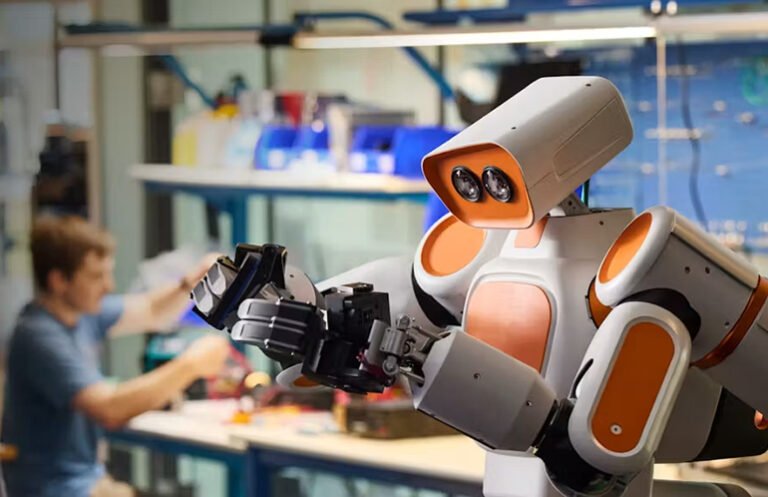
The core highlight of this livestream was not the robots’ ability to pick up items, but the “fully autonomous operating system” they demonstrated. In the livestream footage, the robots faced an array of scattered parcels of varying sizes and orientations. Relying solely on a pure vision system, they identified barcodes in real-time, precisely placed packages label-side down, and pushed them onto the conveyor belt. The entire process involved no pre-programmed trajectories or remote human control. Adcock emphasized that the robots achieved a processing speed of about 3 seconds per parcel, which is essentially on par with the average efficiency of a human sorter.
Powering this performance is Figure AI’s proprietary end-to-end artificial intelligence system, “Helix-02.” Unlike traditional industrial robots that split “visual perception, task planning, and motion control” into separate modules, Helix-02 is a unified neural network. This means the robot operates not on a serial logic of “see first, think later, then act,” but instead “sees and acts simultaneously,” adjusting finger grip strength and posture in real-time the moment it contacts an object, much like a human. According to Figure AI, the system achieves hardware-level optimizations including doubled camera frame rates, a 75% reduction in latency, and a 60% increase in the field of view. The tactile sensors embedded in its dexterous hands can detect pressure as low as 3 grams, allowing it to both pinch fragile items and handle irregularly shaped soft packages. The breakage rate during the livestream was just 0.3%.
What further excited the industry was the practical demonstration of multi-robot collaboration and autonomous fault tolerance. During the livestream, when one robot’s battery was about to deplete, it did not simply stop and wait. Instead, it autonomously notified an idle robot to take over its position before leaving its station to head to the charging area. Upon detecting a hardware or software anomaly, a robot would first perform a self-diagnostic check; if it confirmed it could not recover, it would proactively exit the production line while simultaneously triggering the backup mechanism. This “robot shift system” design theoretically supports 24/7 uninterrupted logistics operations.
This livestream is viewed as a crucial turning point for humanoid robots moving from “laboratory prototypes” to “scalable industrial products.” For years, the industry’s most criticized flaw has been an over-reliance on “staged performances,” with most manufacturers only releasing edited demo videos in controlled environments, only for their robots to frequently malfunction in the dynamic conditions of a real production line. By choosing to face public scrutiny with an unedited livestream, Figure AI—despite occasional minor errors like a package being nudged off the belt—demonstrated stability and error-correction capabilities that the industry widely considers a major signal of industrialization readiness.
Figure AI is not the only player targeting logistics and manufacturing. Tesla is accelerating the mass production plan for its Optimus Gen3 robot, while Agility Robotics’ bipedal robot, Digit, is already undergoing real-world testing in some warehouse settings. Following the success of Figure AI’s long-duration autonomous operation, the commercialization race around “Physical AI”—humanoid robots capable of replacing humans in high-intensity, repetitive physical labor—has fully intensified.
Supply Chain Ripple Effect: Reducers and Motors Emerge as Core Beneficiaries
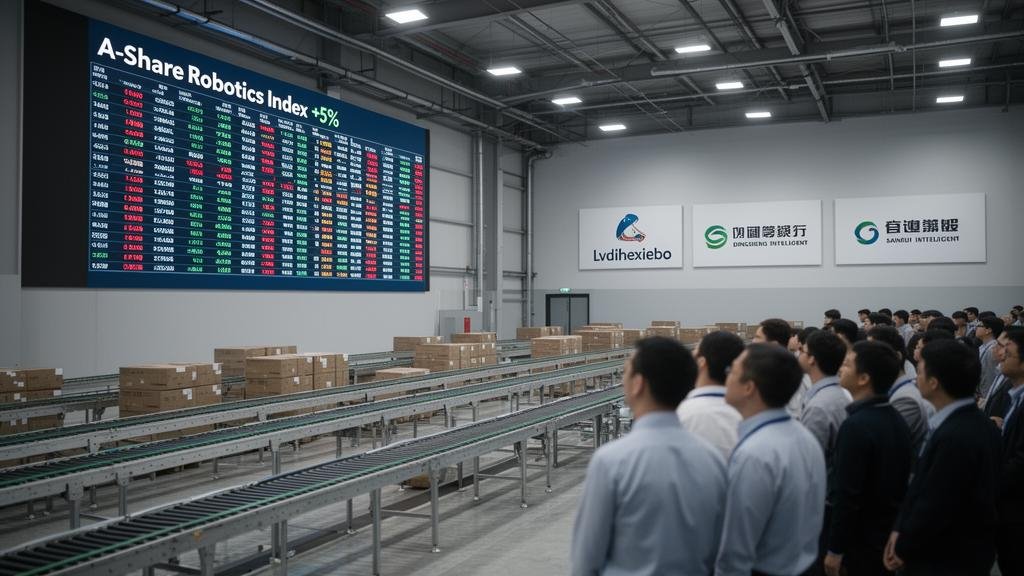
Figure AI’s livestream directly ignited bullish sentiment for the humanoid robotics sector in China’s A-share market. Since Figure AI has yet to begin mass production and has limited direct supply relationships with Chinese companies, market funds predominantly flowed into segments poised to benefit from these technological breakthroughs along the industrial chain.
The core hardware determining whether a humanoid robot can “move stably and continuously” was pinned on two major components: precision reducers and motors. A general-purpose humanoid robot typically requires 28 to 32 joints, each needing one motor and one reducer. Together, these components account for 50% to 60% of the total machine cost. This 38-hour high-intensity continuous test subjected the joints’ durability, precision retention, torque responsiveness, and heat dissipation to an extreme stress test. The more successful the livestream, the greater the certainty of an imminent explosion in demand for these two key components.
In the reducer space, SSE-STAR Market-listed Leaderdrive (688017.SS) was widely cited by the market as a core supplier of harmonic reducers for Figure AI’s finger joints, with its products very likely used in the Helix-02 dexterous hands featured in the livestream. In the motor sector, frameless torque motors, prized for their high torque and compact size, are primarily used in a robot’s arm, leg, and waist joints, with representative companies including Sanrui Intelligence. Meanwhile, the smaller, high-speed coreless cup motors are critical components for finger joints, with Dings’ Smart Technology considered a leader in this niche segment.
Furthermore, the importance of control systems—the “brain and heart” of the robot—was also amplified by the market, with related stocks including Hikvision Robotics and Leadshine. In the sensors and lightweight materials space, companies like Ampron, Jundin Tech, and Wote Advanced Materials also drew attention for their involvement in PEEK materials, modified plastics, and joint components.
However, some analysts cautioned that despite the significance of this technological demonstration, humanoid robots are still a considerable distance from large-scale commercial deployment in complex, open-ended scenarios. The current market rally largely reflects speculative hype driven by medium-term industrial catalysts, and investors should pay attention to subsequent order fulfillment and mass production progress.