Mistral AI Launches Robostral Navigate, An 8B Robotics Model That Steers Robots With A Single Camera And Plain‑Language Commands
Mistral AI has released Robostral Navigate, its first dedicated robotics navigation model and a key step in the French startup’s push into “physical AI” for factories, warehouses and industrial automation. Robostral Navigate is an 8‑billion‑parameter vision‑language‑action model that takes images from a single RGB camera plus a plain‑language instruction and moves a robot through complex environments, without relying on LiDAR, depth sensors or multi‑camera rigs.
On the R2R‑CE (Room‑to‑Room in Continuous Environments) benchmark, the standard test for robots following instructions in unseen environments, Robostral Navigate achieves a 76.6% success rate on the unseen split and up to 79.4% on validation seen. Mistral says this beats the best single‑camera approach by 9.7 percentage points and the best system using depth sensors or multiple cameras by 4.5 points, despite using neither. The company argues that this performance, combined with a simpler sensor setup, could significantly lower deployment costs for robotics fleets in manufacturing, logistics and delivery.
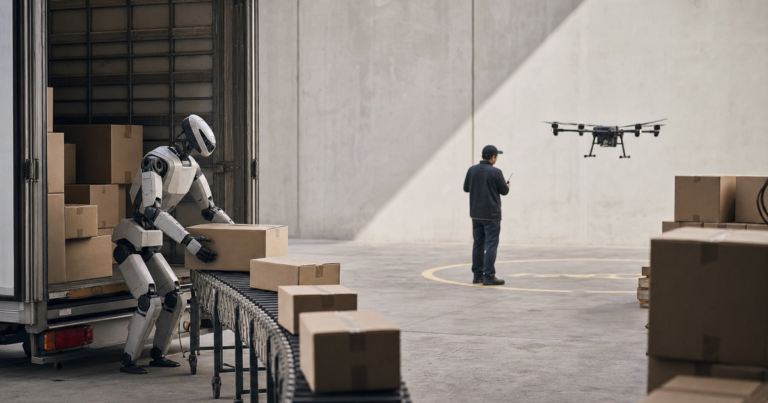
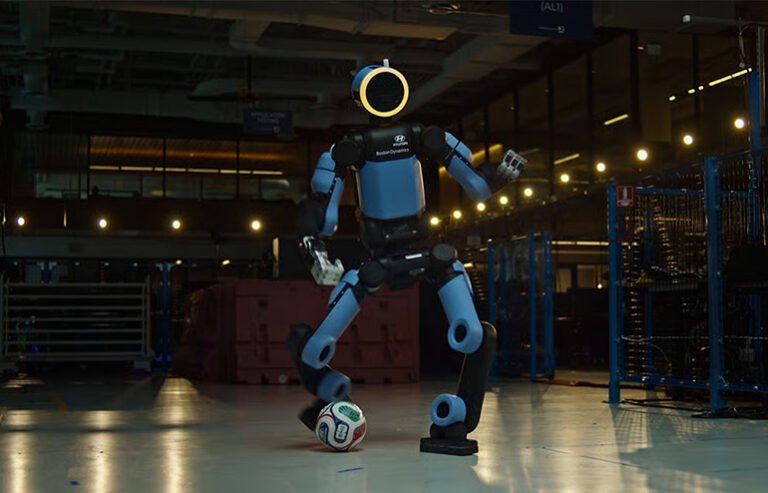
Robostral Navigate is designed to be hardware‑agnostic: the same model can run on wheeled, legged and flying robots, generalizing across form factors and sizes. The model was built entirely in‑house and trained solely in simulated environments, using roughly 400,000 recorded paths across more than 6,000 virtual spaces. Mistral highlights that it uses token‑efficient training techniques, reportedly cutting the number of training tokens by more than an order of magnitude compared with competing approaches, and reducing training runs from months to days. Early experiments with reinforcement learning have already boosted success rates by around 3.2 percentage points with no clear plateau, and the company expects further gains as it continues training.
The launch post frames navigation as the foundation for universal robotics: once a single model can reliably move robots through varied real‑world environments under natural language instructions, more complex embodied tasks like manipulation, inspection and multi‑step workflows become easier to layer on top. Robostral Navigate combines pointing‑based navigation (using language to specify goals and waypoints) with reinforcement learning for continuous improvement, and Mistral positions it as a building block for a broader “unified embodied AI” stack.
Mistral also emphasizes usability. Because robots can be directed via plain‑language commands, non‑technical staff can operate them without specialized robotics training. Combined with the single‑camera design and hardware‑agnostic architecture, this is meant to make the system easier to deploy across existing fleets and more accessible to industrial customers that are just beginning to experiment with AI‑driven automation.
KEY QUOTES:
“Robostral Navigate uses only one ordinary RGB camera and no depth sensors, yet still achieves 76.6% on R2R-CE validation unseen, the benchmark for following instructions in environments held out of training. Consequently, it beats the best single-camera approach by 9.7 points and the best system using depth or multiple cameras by 4.5 points, despite using neither.”
Mistral AI launch announcement for Robostral Navigate