Nearly 4,000 Years Ago, Egyptian Princesses Took Bows and Blades to Their Graves and May Have Used Them in Life
Princess Ita entered the afterlife with a beautifully crafted bronze dagger beside her. Its patterned blue-and-gold handle reflected her place in Egypt’s royal family, but the weapon may have represented more than her status. Nearly 4,000 years later, marks on Ita’s right shoulder, forearms, and hands suggest she repeatedly trained with a weapon like the one buried beside her.
Ita was not the only royal woman whose body carried marks associated with weapons training. A new analysis examined five ancient Egyptian royal women and King Hor, whose remains date to the Middle Kingdom, around 1850 to 1700 B.C.E. Their skeletons showed changes consistent with archery and other physically demanding activities. Being a princess, it seems, did not mean staying away from bows and blades. Several of the women had also been buried with weapons traditionally associated with men.
Archaeologists have disagreed over whether weapons buried with ancient Egyptian royal women were ceremonial objects or tools they had used. The new findings, published in Frontiers in Environmental Archaeology, indicate that for several of the women, the weapons may have been both.
“Their objects and jewelry are truly fascinating, breathtaking in their craftsmanship. Yet, while archaeologists have long focused on preserving these treasures, the people themselves were often forgotten. Our study seeks to change that,” said lead author Zeinab Hashesh in a press release.
Rediscovered Bones of Ancient Egyptian Royal Women
Archaeologist Jacques de Morgan uncovered the remains near the pyramids of Amenemhat II and Amenemhat III at Dahshur in 1894 and 1895. They belonged to King Hor, Princesses Ita, Khenmet, Itaweret, and Noub-Hotep, and an unidentified woman tentatively identified as Princess Sathathormeryt.

Dagger of Princess Ita.
(Image Credit: Sameh Abdel Mohsen)
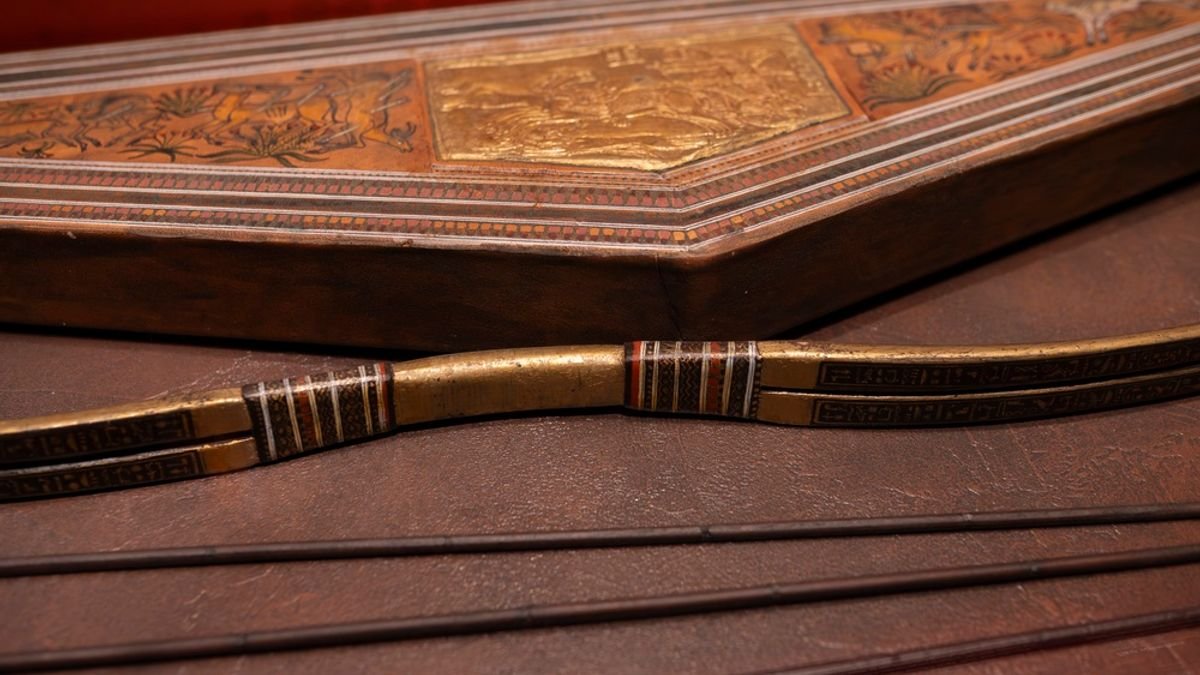
Four of the women were daughters of Pharaoh Amenemhat II. Their tombs contained bows, arrows, maces, scepters, and staves that could have served ceremonial or practical purposes.
The remains went unexamined for more than a century before researchers rediscovered them in the basement of the Egyptian Museum in Cairo in 2020. Although little soft tissue remained and most of the skulls had been lost, the surviving bones allowed the team to look for signs of illness, injury, and repeated movement.
Bones Carry Marks Associated With Archery
Strenuous movements repeated over time can alter the places where muscles and ligaments attach to bone. The researchers documented pronounced attachment sites, differences between the right and left arms, and modifications to hand bones across the Dahshur skeletons.
Princess Itaweret, who died between the ages of 20 and 34, and Princess Khenmet, who died between 35 and 45, had changes in their shoulders and arms that the team associated with repeatedly drawing a bow. Noub-Hotep, who died between 40 and 44, had marks of sustained gripping on her right hand and forearm, while one hand bone had developed a distinct curve. Arrows accompanied her burial.
Princess Ita, who died between the ages of 28 and 34, had different marks. The researchers connected them to the movements required to handle a dagger or mace.
The bones cannot reveal whether the women used weapons for hunting, military training, or ritual activities. Muscle attachment changes can also have several causes, so the interpretation partly depends on how the marks correspond with the objects found in each tomb.
Royal Status Did Not Protect Them From Injury
Several of the royals had survived significant injuries. Itaweret had healed fractures in three ribs and several foot bones, possibly caused by a fall or forceful impact. Researchers also found infections, joint degeneration, and signs of nutritional or metabolic stress across the group.
Missing skulls and incomplete skeletons limit how much the team can learn about their lives. Even so, the surviving bones shift attention back to women often remembered through the treasures buried beside them. Their weapons may have conveyed royal power in death, but the marks on their bodies indicate that some had also learned to use them during life.
Read More: Nearly 1,800-Year-Old Kohl Bottle Found in Roman York May Have Been Carried From Egypt
Article Sources
Our writers at Discovermagazine.com use peer-reviewed studies and high-quality sources for our articles, and our editors review for scientific accuracy and editorial standards. Review the sources used below for this article: