OpenAI research chief says AI could make Nobel-worthy discoveries within two years
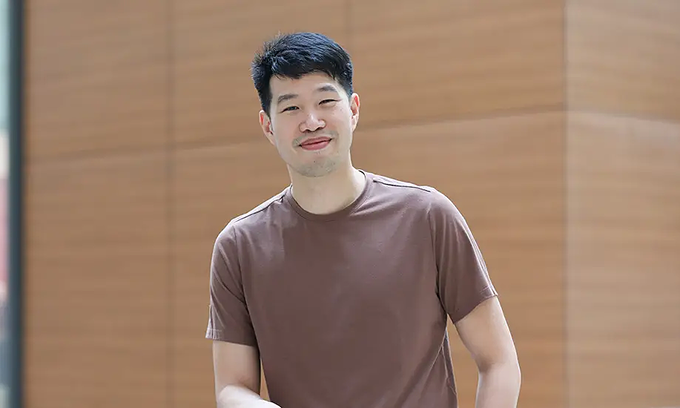
“Within the next two years, artificial intelligence will produce groundbreaking innovations worthy of major awards,” Chen,who oversees OpenAI’s research strategy and the allocation of computing resources, said at OpenAI Korea’s office in Gangnam, Seoul, last week, as reported by South Korea’s Chosun Daily.
“Whether it will win a Nobel Prize is uncertain, but it will make discoveries of immense value to the world.”
Born in 1990 to a Taiwanese family in the U.S., Chen attended high school in Taiwan before earning degrees in mathematics and computer engineering from the Massachusetts Institute of Technology. He visited South Korea to attend the International Conference on Machine Learning at COEX in Seoul.
His remarks come as AI is increasingly demonstrating its ability to accelerate scientific research. In 2024, researchers behind AlphaFold at Google DeepMind received the Nobel Prize in Chemistry for using AI to predict protein structures.
 |
|
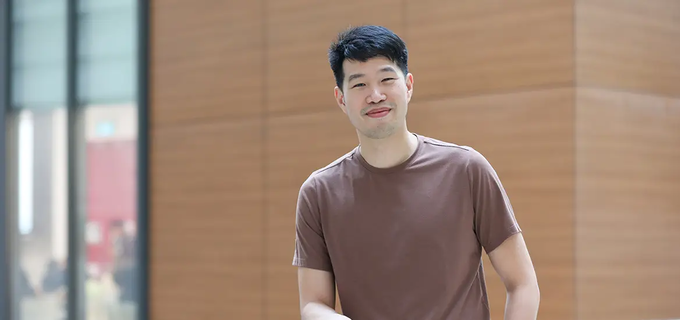
Mark Chen, chief research officer at OpenAI. Photo courtesy of Singapore Economic Development Board |
AI has also posted major advances in mathematics recently. In April, a Chinese AI system solved a decade-old mathematics problem in just 80 hours with almost no human assistance, according to a research team led by Peking University.
A month later, an OpenAI chatbot solved the long-standing unit distance problem, first posed in 1946 by Hungarian mathematician Paul Erdős, according to Scientific American.
Several mathematicians consulted by OpenAI said the proof would likely qualify for publication in a leading mathematics journal if it had been produced entirely by a human. British mathematician Timothy Gowers, a Fields Medal winner, said: “No previous AI-generated proof has come close” to meeting that standard.
Reflecting on AI’s progress, Chen said: “At this rate, AI will soon become intelligent enough to research AI itself.”
He added that AI-driven discoveries, particularly targeted treatments for diseases, could deliver enormous benefits to humanity.
Chen has volunteered as a coach for the U.S. team at the International Mathematical Olympiad for more than a decade.
Asked whether children should continue studying mathematics and science in the AI era, he said: “Mathematics teaches how to think. It shows how to reason, solve problems, and cultivate resilience. At a fundamental level, math must remain a core subject.”