Samsung Galaxy S26 Vs. S26 Plus & S26 Ultra: What Are The Differences?
When you go shopping for smartphones, you have countless options. Do you go with something niche like a Xiaomi, or do you defer to what Consumer Reports considers the best Android phones? If you do the latter, you might be interested in purchasing a Samsung Galaxy.
Samsung’s Galaxy lineup includes the flipping and folding Galaxy Z line, the mid-range Galaxy A phones, and the subject of this article — the flagship Galaxy S. These are the cream of the crop that make headlines with the features they bring to the table. The latest entry in this line is the S26 range, comprising the base S26, the S26 Plus, and the S26 Ultra. The lineup was released in February of 2026 and was touted as a notable improvement over the Samsung Galaxy S25 thanks to its superior chip and screen, as well as its stronger battery and focus on AI. That said, each phone offers feature sets that cater to different target audiences. Obviously, the S26 Ultra is supposedly better than the S26 Plus, which in turn is meant to surpass the base S26, but what exactly does that mean?
We are going to break down what sets the Samsung Galaxy S26, S26 Plus, and S26 Ultra apart from each other. This won’t be an exhaustive article, but we will go into as much detail as possible.
Screen and Resolution
Screens are the first feature most people notice about smartphones since they take up an entire side. Plus, there’s the fact that these screens display information and receive almost all input for the phone. Understandably, many people prioritize phones with high-clarity screens, and that’s how the Samsung Galaxy S26 phones set themselves apart right out of the box.
With a 6.3-inch screen, the base S26 is the smallest of the family, although its resolution of 2,340 x 1,080 pixels is anything but fuzzy. Meanwhile, the S26 Plus is slightly larger with a 6.7-inch screen and a resolution of 3,120 x 1,440 pixels. Finally, the S26 Ultra is the largest of the bunch, thanks to its 6.9-inch screen, but that’s it; the resolution caps out at 3,120 x 1,440. While Samsung displays are generally reliable, users have recently started reporting a red tint on their S26 Ultra screens, so keep that in mind when shopping for one.
Since the S26 phones have different screen sizes, these characteristics also affect their other physical attributes. Obviously, the S26 is the smallest at only 5.89 by 2.82 by 0.28 inches, and it only weighs 5.89 ounces. The S26 Plus, meanwhile, measures in at 6.24 by 2.92 by 0.29 inches and 6.7 ounces. Finally, the S26 Ultra measures 6.44 by 3.07 by 0.31 inches and weighs in at 7.55 ounces.
Internal Components
While the screen is a crucial component for all smartphones, it is nothing without memory to store all its apps and a processor to translate them into visible information. Many phone manufacturers use model variants to differentiate between these capabilities, and the Samsung Galaxy S26 is no different.
At their core, all S26 models run on the same processor. Every model utilizes the Snapdragon 8 Elite Gen 5 chipset, and they all ship with Android 16, Samsung One UI, and AI capabilities. Moreover, Samsung promises that S26 owners will receive seven years’ worth of OS and security updates, regardless of the phone.
As you have likely gathered, the meat and potatoes behind the various S26 models and their differences lies in their memory capabilities. The S26 and S26 Plus are neck and neck in this regard: Both ship with 12GB of RAM and can either include 256GB or 512GB of storage. The S26 Ultra, meanwhile, starts with those specs, but Samsung also offers a 16GB RAM version with 1TB of storage. Since the phone doesn’t support microSD cards, these components might turn into your biggest deciding factors: Do you want to spend a ton of money on a max amount of storage, or would you rather get a smaller phone and frequently free up its storage using cloud storage options?
Battery and Charging
While Samsung Galaxy phones generally have good battery life, the beefier S26 models are better at maintaining a charge. The base S26 phone starts with a 4,300 mAh battery, which can last anywhere between 6.5 hours and under 16 hours, depending on the workload. As for the S26 Plus, that phone features a 4,900 mAh battery, which gets between under 7.5 hours and almost 18.5 hours of life per charge. As for the S26 Ultra, its 5,000 mAh battery lasts between under eight hours and just over 20 hours, again depending on the workload.
When it comes to charging, all three variants have the same capabilities: Wired Super Fast Charging via USB-C, Fast Wireless Charging, and Wireless PowerShare (i.e., using your phone as a portable wireless charger). However, performance differs from model to model. The standard S26 supports wired charging up to 25W and wireless charging up to 15W; the S26 Plus provides wired charging up to 45W and wireless charging up to 20W, and the S26 Ultra delivers wired charging up to 60W and wireless charging up to 25W. Timewise, the S26 fully charges in one hour and 16 minutes; the S26 Plus fully charges in one hour and three minutes, and the S26 Ultra only needs 49 minutes for a complete charge.
Camera and Other Components
Virtually every smartphone includes a camera. Even if you don’t use it to snap photographs of your family or food, a camera is indispensable for video calls. And the cameras of the Samsung Galaxy S26 family are no slouch.
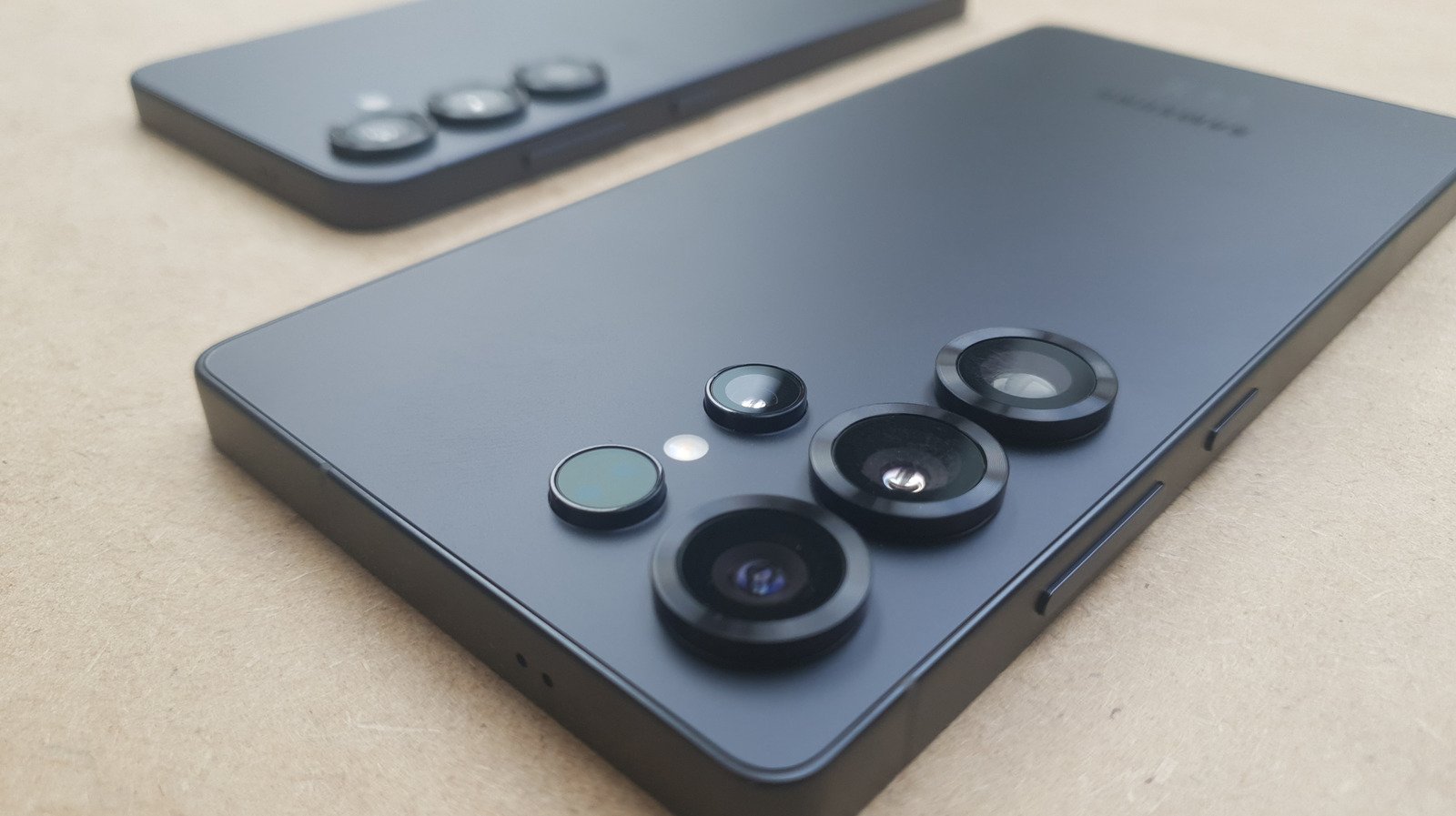
The current S26 and S26 Plus models sport the same cameras with the same capabilities. Both feature a 12MP Ultra Wide lens, a 50MP Wide-angle lens, a 10MP Telephoto lens with 3x zoom, and 8K 30fps video recording. However, the S26 Ultra’s camera setup is a clear upgrade, as it includes a 50MP Ultra Wide lens and a 200MP Wide-angle lens. You get the same 10MP Telephoto lens, but there’s an additional 50MP Telephoto camera with 5x optical zoom, making it a quad-camera setup.
On the subject of upgrades, the S26 Ultra includes several features that you don’t see in the base S26 or S26 Plus. The S Pen (a digital stylus) is the poster child of this design philosophy. Samsung’s S Pen has numerous useful features you might not know about, such as remotely controlling your camera and music apps. Additionally, you can use the S Pen in a variety of cool ways, such as writing notes when the screen is off. If you buy the S26 or S26 Plus, you are missing out on the included S Pen.
Price
And now for the differences you’ve all been waiting for: how much each Samsung Galaxy S26 costs. Well, it’s not that simple since the model affects the price as much as the internal components.
It probably goes without saying that the standard S26 is the least expensive version, but you’re still looking at an $800 price tag for the phone with 256GB of storage and $1,000 for 512GB, at the time of writing. As for the S26 Plus, that phone starts at $900 for the 256GB version and $1,100 if you want 512GB. Obviously, this leaves the S26 Ultra as the most expensive, but also as the model with the most options. $1,100 gets you 256GB of storage; $1,300 buys you 512GB of storage, and $1,600 provides 1TB.
While the S26 Ultra’s prices look daunting compared to the other S26 models, they are by far the better deals since you aren’t just paying for more storage space and larger screens. $1,600 also nets a better camera, a larger battery, and the S Pen.