
Similar Posts
Which way will it move?
Consider a sealed can completely filled with fluid placed on a supermarket conveyor belt. When the conveyor belt starts moving to the right, in which direction will the can move? Can its velocity relative to the ground be determined or quantified? (If so what parameters dectates it?) submitted by /u/Fit-Breakfast-2266 [comments]
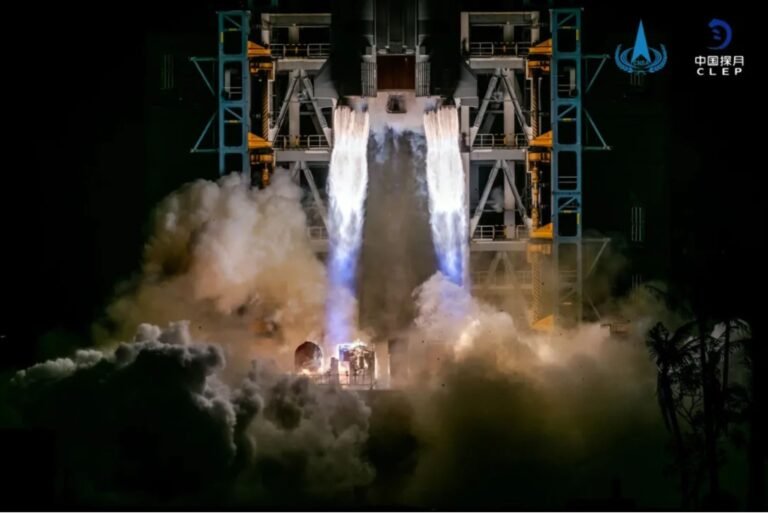
AI rocket engine startup LegendSpace raises $29.5 million angel round
HELSINKI — A six-month-old Chinese startup aiming to use artificial intelligence to compress rocket engine development cycles has raised $29.5 million in angel funding. LegendSpace, full name Linjie Hangtian (Beijing) Intelligent Technology Co., Ltd., announced the 200 million yuan round July 16, with investors including Vitalbridge, Yuanma Lüdong, Shangshi Capital, Crystal Stream Capital and Oriental…
Nearby “Super Earth” Could Host Life After All
In 2024, astronomers detected a rocky exoplanet, GJ 3378b, orbiting a red dwarf sun just 25 light-years from Earth in the direction of the northern constellation Camelopardalis. Based on radial velocity measurements, the discovery team estimated that this planet is 2.3 times as massive as Earth – making it a “Super Earth.” Thanks to revised…
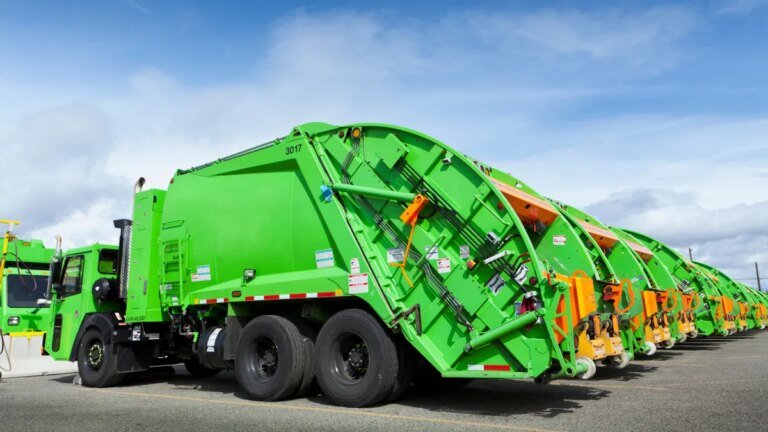
How do garbage trucks work?
Get the Popular Science daily newsletter💡 Breakthroughs, discoveries, and DIY tips sent six days a week. By signing up, you confirm you are 16+, will receive newsletters and promotional content and agree to our Terms of Use and acknowledge the data practices in our Privacy Policy. You may unsubscribe at any time. Week after week,…
Blue-green algae: Blooms spotted at Camlough and Craigavon lakes
As locals and visitors make the trip to Northern Ireland’s lakes in search of summer sunshine, they are once again facing an unwelcome sight: blue-green algae. The toxic bacteria which can cause skin irritation and sickness in people and animals who come into contact with it, has become an unwelcome feature of recent summers. There…
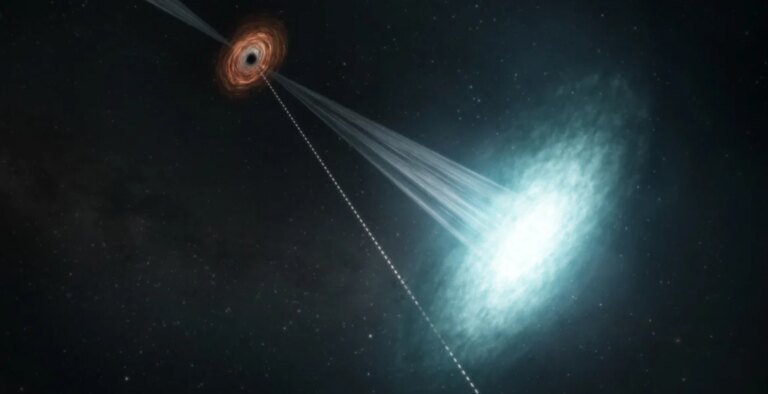
A Relativistic Jet Could be an Indication of the ‘Missing-Link’ for Black Holes
A team of Chinese astronomers using the Very Large Array (NSF VLA) recently detected a rare transient event taking place in a dwarf galaxy 3.4 billion light-years from Earth. The event, known as AT2019ijn, consisted of an intermediate-mass black hole tearing apart a star, which appeared to reveal the afterglow of a powerful jet. It…