“Smuggle chainsaws onto the pitch”: What Blood Bowl’s new publisher thinks the World Cup can learn from Warhammer
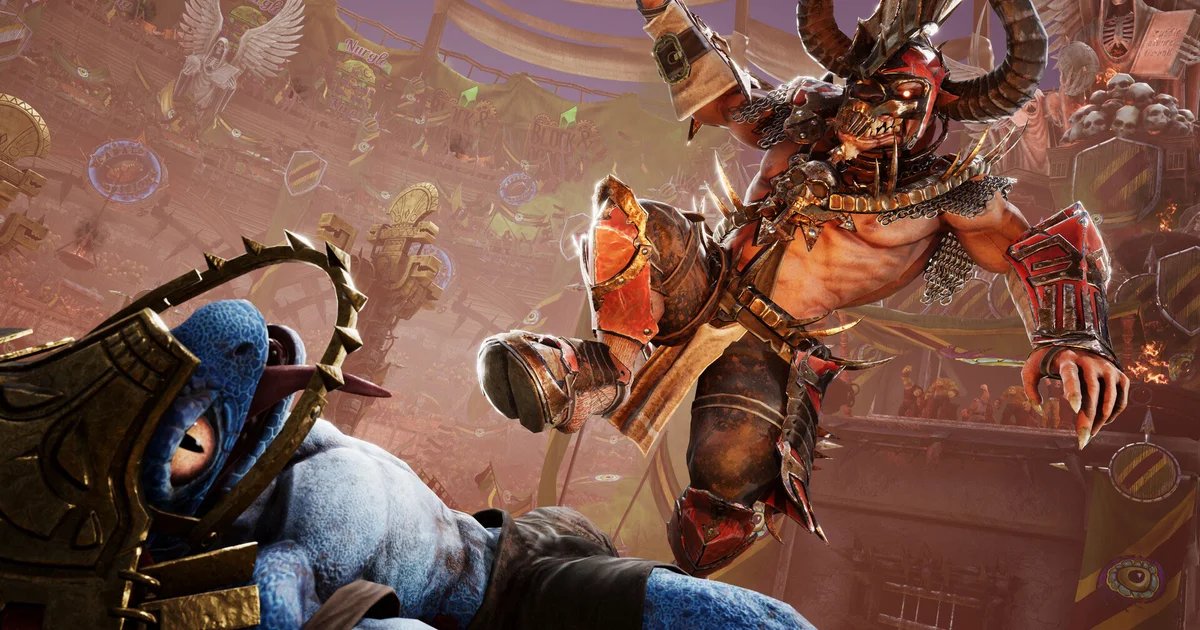
Last week brought the news that strategy game publisher Slitherine have penned a deal with Cyanide Studios to continue developing Blood Bowl 3 (which will soon become Warhammer Blood Bowl. The tabletop-inflected sport is broadly similar to American football, though there are opportunities for even greater violence on the pitch.
As the Americans are currently one of the nations hosting the World Cup, and using that opportunity to clutter it up with things like hydration breaks and half-time shows, I thought it best to ask Slitherine what the yanks could lift from Blood Bowl while they’re at it.
“If the World Cup could learn just one thing from Blood Bowl, it’s how to properly manage a tournament that has bloated to 48 teams,” Slitherine’s director of publishing told Marco Minoli. “Honestly, looking at the massive grid, it already feels like an Old World league. Minus Italy’s permadeath, of course.”
(In hindsight, I realise it was a little tactless of me to bring up the World Cup with an Italian, after the team failed to qualify for this year’s tournament. However, I’m a hard-hitting journalist, and sometimes you have to hurt feelings for news.)
“But more than that,” Minoli continued, without letting Italy’s absence falter him, “FIFA could learn to embrace the casual violence. If we allowed teams to secretly bribe the referee, smuggle chainsaws onto the pitch, or have a literal Ogre flatten the opposing midfield, Tuchel and co might finally take the coveted trophy home.”
I’ll add that I Minoli these questions last week before Trump lobbied FIFA president Gianni Infantino to overturn striker Folarin Balogun’s ban ahead of the US’s game against Belgium. So with secret bribes already checked off the list, the people staffing the VAR desk should be on the lookout for US midfielders bringing chainsaws onto the pitch, or a last-minute substitution for a club-wielding ogre in the defensive line.

Our conversation comes on the trail of the news of Slitherine’s publishing deal with Cyanide, which came about after French publisher Nacon filed for insolvency earlier this year. What would happen to the developer of Blood Bowl and the Styx series was unclear, especially after Spiders, the developer of Nacon-published Greedfall, closed their doors.
When Slitherine heard the news about Nacon, they put together a pitch to Cyanide that would see the publisher support continued live service development of Blood Bowl 3. According to Gamesindustry.biz, they weren’t the only publisher to do so, but Minoli told me the reason Slitherine were so quick to reach out is because “Blood Bowl is the absolute epitome of the intersection between tabletop gaming and its digital counterparts. It represents the heart and soul of what Slitherine does—and what we do best: deep, tactical, turn-based strategy supported by a dedicated, passionate community.”
That admittedly does have a business-y ring to it, but Minoli also shared how since he announced news of the deal internally at Slitherine, staff have been sending him photos of their Blood Bowl teams, both in the tabletop game and Cyanide’s digital spinoff. “Slitherine is built by strategy fans,” Minoli says. “We are people who actually play these games, love them, and have lifelong memories associated to them.”
It’s important to note that Slitherine haven’t acquired Cyanide, instead signing a deal to continue supporting Blood Bowl’s development. Last year, Cyanide announced that they would be releasing a free update to Blood Bowl 3 that would update the game to Games Workshop’s latest ruleset for the tabletop game, and see the game become Warhammer Blood Bowl. Minoli says that Slitherine “are going to do our absolute best to honor the promises made to players and ensure a seamless transition from Blood Bowl 3 into the future of the franchise, giving all existing owners full access to the content they already own.”
Considering monetisation concerns mired Blood Bowl 3’s launch, promises that players won’t lose access to anything they’ve already bought are aa relief.
The big push, though, is one of pruning. “What we are trying to build on top of that foundation is a fundamental simplification of the overall experience,” Minoli explains. “Our philosophy is simple: if we can’t explain a system or a feature in ten words, then it’s not fit for purpose. Doing that won’t be easy. Everything in a long-running franchise like this carries a heavy baggage of expectations, and those expectations vary drastically from player to player. But our roadmap is clear: honour the promise first. Then, streamline and simplify. Finally, build toward the future by adding meaningful depth to the experience.”
Though, with more than a dash of self awareness, Minoli adds: “Gosh, it sounds so simple on paper.”

Adding to the complexity is that there is a lot about Blood Bowl which will be a first for Slitherine. While the game is born from tabletop strategy, an area Slitherine knows well, it is a live service game, which is new for the company. “It’s going to be vital for us to look outside our usual playbook and adapt,” Minoli says. “Slitherine is traditionally grounded in the premium-plus-DLC model, whereas Blood Bowl exposes us to the complexities of virtual currencies, cosmetics, and seasonal content. We don’t want to completely abandon our roots, but we absolutely need to listen, learn, and adapt to these different systems for the ultimate good of the game.”
Minoli also recognises that despite being a live service game, because of its roots in Games Workshop’s tabletop game, not every player has come for that experience. “Blood Bowl 3 was fundamentally launched as a live-service product,” Minoli explains. “That has fostered a dedicated community of active players which we view as a core pillar of the franchise’s future. However, there is also a much wider audience out there that just wants to enjoy their favorite Blood Bowl experience: a game where you create and develop a team, much like a traditional sports game.”
Minoli states that the audience split as an opportunity saying that “When you start looking at Blood Bowl through the lens of a sports title, the sky is the limit for what the core, single-player experience can become.” But he also acknowledges the challenges of making a game that appeals to all those players is a significant challenge. “We also have to be completely honest: at this point, almost everything outside of the pitch is up for review. The business model, the UX structure, the seasonal flow—everything except the core Blood Bowl gameplay itself is on the table. We have our own views, but if we want to succeed in the long run, we need to come up with ideas that embrace all players’ needs. That is a massive balancing act when a community is this large and passionate.”
I must admit, I’ve not played Blood Bowl since Cyanide’s original. I remember some glorious evenings whomping Jeremy Peel’s (I want to say Lizardmen) team with my Skaven gutter runners. But a game that better supported singleplayer seasons may draw me back, or certainly one that doesn’t demand a live service commitment.