‘The goal of design is to efficiently communicate ideas’
Stone Librande’s 2010 GDC talk on one-page designs may be sixteen years old, but it’s still, to use a technical term, a banger. Despite a few (rather charming) vestiges of the early 2010s—like a love of good old, raster-based Adobe Illustrator for making maps and diagrams—it’s full of practical, actionable advice for communicating complex design ideas in succinct, successful ways. It’s a talk I keep coming back to, both for personal inspiration on my own projects, and something I showcase to my game design students almost every quarter.
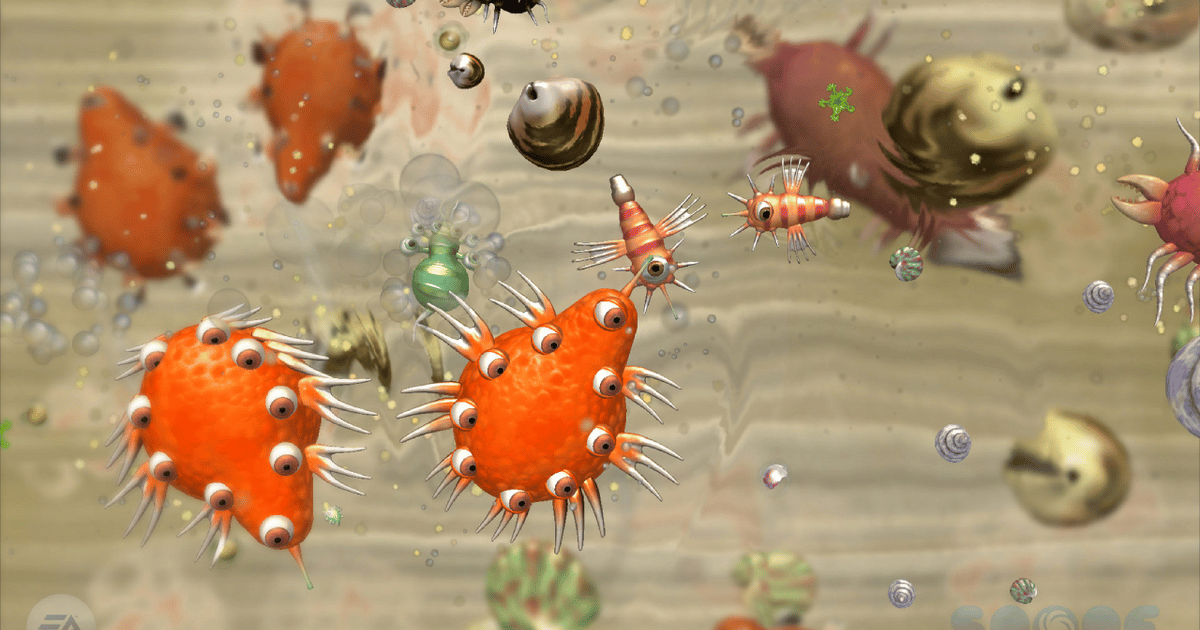
Responding to the age-old design problems of thick “design bibles” and the disconnected nature of design wikis, Librande draws on inspiration from such sources as architectural blueprints, children’s placemats, engineering schematics, and timeline graphics to arrive at a succinct format for conveying information: the one page design. He uses examples from a prototype project at Blizzard, an absolutely delightful paper prototype from The Simpsons Hit and Run, and later systems and build aspects of Spore to showcase the power of a strong one-page design.
One anecdote from the talk that I especially enjoy is the inspiration Librande got from seeing a colleague actually print out a one page design and hang it on the wall in their office. Librande loves the idea of using physical paper and pens when collaborating with colleagues on these—encouraging plenty of white space on the documents for notes, illustrations, and ideas. While this may seem charmingly old-school, it’s something I’ve actually used myself more in recent years, in my own education and design process, and it’s still an idea that carries just fine in whiteboard software like Miro (encouraging team members to write notes or small side illustrations in a similar way).
There’s even a wonderful in-between space here—the physical whiteboard! I’ve become a real-life whiteboard aficionado in recent years, using one especially for “early drafts” of an idea before I bring in a more succinct version to a team Miro board. Getting to that version—the idea with all the “juice” minus the fluff or extraneous detail—is the hard part, and the important part.
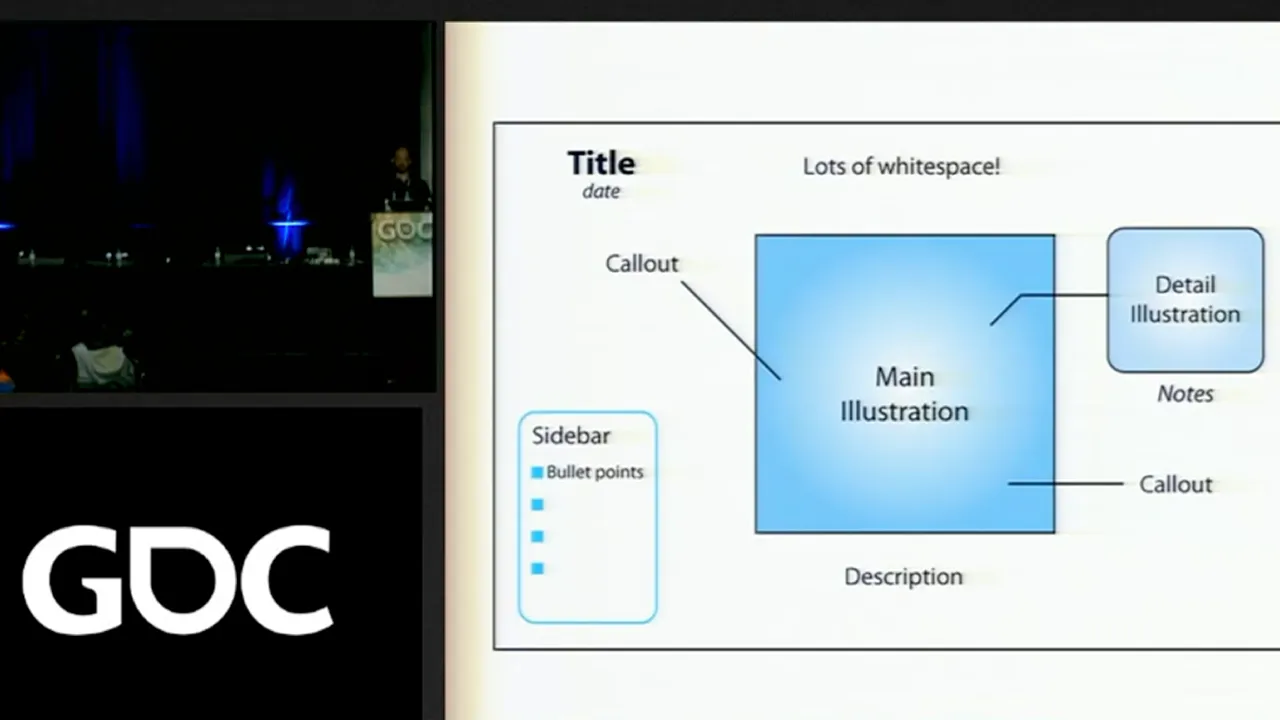
As Librande notes, the process forces a complete understanding of the idea—to communicate it in a small space, you need to *really* know what you are talking about, you’ll need to consider a number of possibilities, and do a lot of the legwork of finding at least one of the best ways of solving a particular design problem. In this way, that hard work benefits the designer as much as it facilitates communication and collaboration among team members, so it really helps everyone. It’s not easy—but Librande certainly makes the case that it’s well worth it.
A way I like to translate this to my students is that a good, solid one page design goes far in “translating” design ideas to many different types of brains. On anything but the smallest (read: one person) team, you’ll need your ideas to make sense to people with very different types of training and expertise: programmers, level designers, systems designers, narrative designers and writers, animators and artists and many others. The one-page document isn’t a Rosetta stone, exactly, but it can be a touchpoint for real collaboration—the more you are able to do the hard work of clarifying and scrubbing away distractions, the better and faster you can get on to working together, testing ideas, and making them better.
In summarizing the session, Librande really brings it all down to effective communication. “The goal of design—of any designer and their design that they make—is to communicate an idea. Your job as a designer is to kind of come up with solutions to problems, figure out what’s going on, and giving that information back out to the team.”
The goal is very much to get people to want to read and interact with your designs, to really engage with the ideas and get excited about them, instead of just dictating a bunch of details to your team.
“I hope that even, you in the audience, as you looked at some of these things, said ‘man, I wish I could see some of that design, I want to see more of that,’ if you had that reaction, this was a success, because that’s the reaction that I’m going for. To draw people into your stuff, instead if you having to like, call a meeting and tell everybody what’s going on.”


![Black Flag Resynced is missing iconic combat mechanics because they were ‘lower priority’, "[but] we’re listening to the community"](https://jobssz.com/wp-content/uploads/2026/07/x7MQuIQ7M-boWth1WPQSlc_Q7ddiF-cGvYKmSMxDCdo.jpeg)