US to develop smart tools for nuclear energy, grids and quantum tech
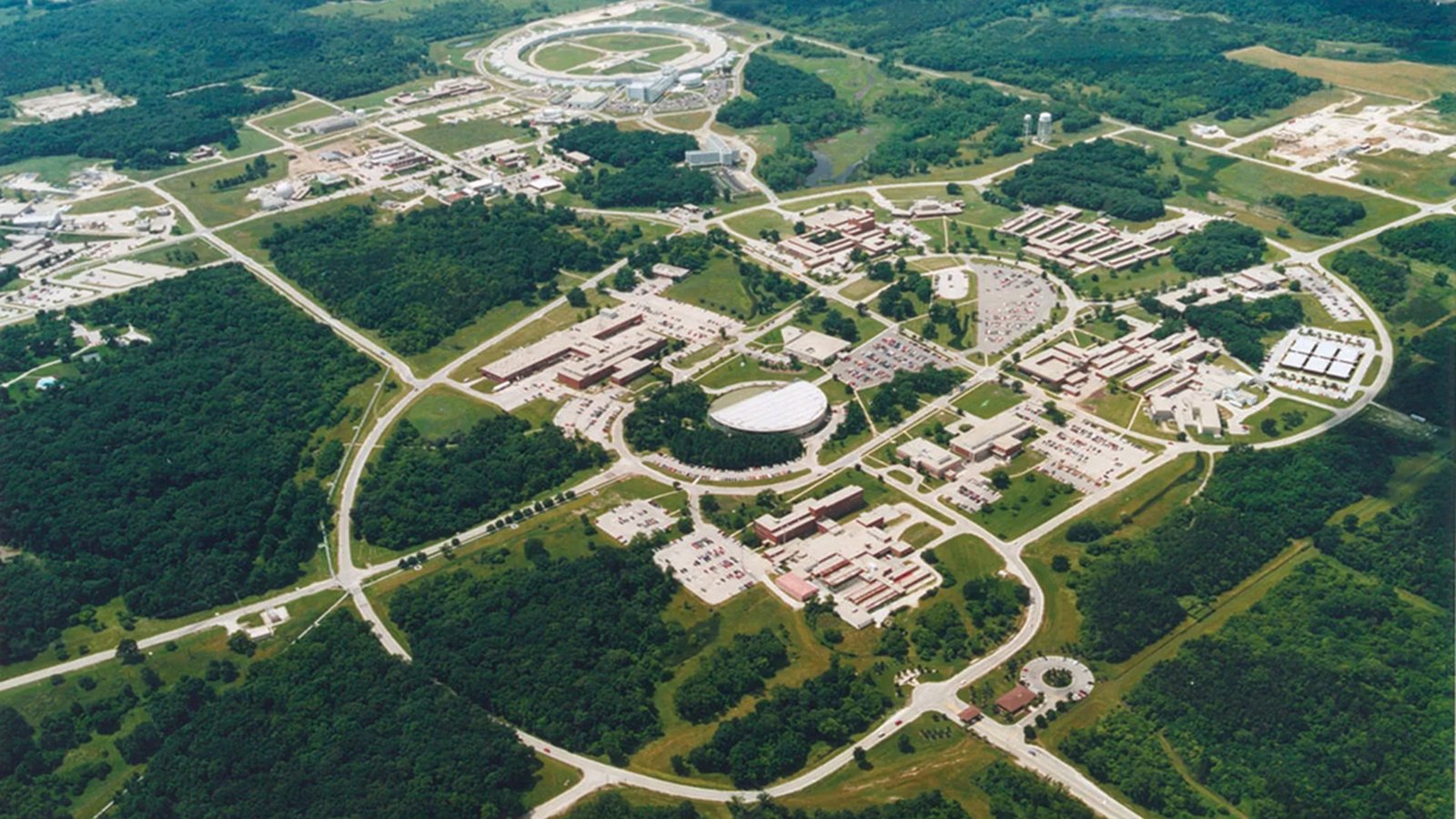
The US Department of Energy (DOE) has awarded Argonne National Laboratory (ANL) funding to lead a broad portfolio of research projects meant to speed up scientific discovery across energy, weather forecasting, quantum technologies and cybersecurity.
The initiatives are part of the DOE’s new Genesis Mission, a national effort aimed at building what the agency describes as the world’s most powerful integrated science discovery platform. The program was announced in November 2025.
Launched by the federal government, the Genesis Mission links supercomputing, quantum systems, advanced scientific instruments, and other digital technologies. Its goal is to accelerate scientific research through artificial intelligence (AI).
Argonne will lead or support projects to speed nuclear energy deployment, grid reliability, weather forecasting, and scientific infrastructure. “The Genesis Mission represents an important step toward a new era of AI-integrated scientific discovery,” said Paul Kearns, ANL director.
Transforming US science
One of the lab’s flagship projects is developing digital twins, or virtual models of real-world systems. The researchers hope they will simplify nuclear fuel recycling and speed regulatory approval.
Meanwhile, ANL is also participating in Prometheus, an initiative led by the Idaho National Laboratory (INL). It aims to modernize nuclear energy by using advanced digital tools throughout the entire reactor system.
The DOE said that the project will unite national laboratories, universities, industry partners, and philanthropic organizations. Together, they will support reliable and abundant nuclear energy in the US.
At the same time, several other projects will improve environmental forecasts and safeguard infrastructure. They will improve predictions of water availability, flood risks, and extreme rainfall.
Better forecasts could help utilities, planners, and policymakers strengthen energy systems and infrastructure. ANL will also work on protecting scientific data and research infrastructure through advanced cybersecurity technologies designed to detect unusual activity and protect scientific workflows.
“This investment will empower our researchers and partners to pursue bold ideas, accelerate innovation and deliver scientific breakthroughs that will benefit the nation and the world,” Kearns continued in a press release.
The future of research
Quantum science will be another focus area for ANL. The researchers will work on improving the sensitivity of quantum sensors and making them more accurate for measuring extremely small physical signals. Other projects will improve quantum circuit design for nuclear physics simulations.
The team will create advanced microelectronics capable of operating at ultra-low temperatures using superconducting materials. They also intend to streamline nuclear astrophysics experiments to accelerate discoveries about the universe.
The Genesis Mission will establish a research platform that integrates advanced computational tools into large-scale experiments. Meanwhile, ANL’s expertise in supercomputing, data management, and collaborative research platforms will provide much of the computational foundation for the initiative.
The awards seek to identify promising paths for future scientific breakthroughs and investment. “Project teams will design and demonstrate research workflows that integrate AI with scientific investigation, while rigorously evaluating whether those approaches can accelerate discovery, improve predictive capabilities, enhance experimentation, or generate new scientific insights,” ANL concluded.