What drives 4 Shaw Prize laureates in pursuit of scientific discovery
The Shaw Prize, first presented in 2004, is an annual international award which honours groundbreaking research and outstanding achievements in important fields of scientific endeavour.
It was inspired by the vision of legendary philanthropist Run Run Shaw, who believed the work of scientists reveals the mysteries of the universe, and that this quest for knowledge is the key to advancing civilisation and the general well-being of humankind.
Fascination with universe sparks stellar research
The two recipients of the 2026 Shaw Prize in Astronomy have unlocked some of the greatest of those mysteries about the end stages of stellar evolution and the origins of the elements found in today’s universe. Their discoveries have also fulfilled their fascination with science and the universe.
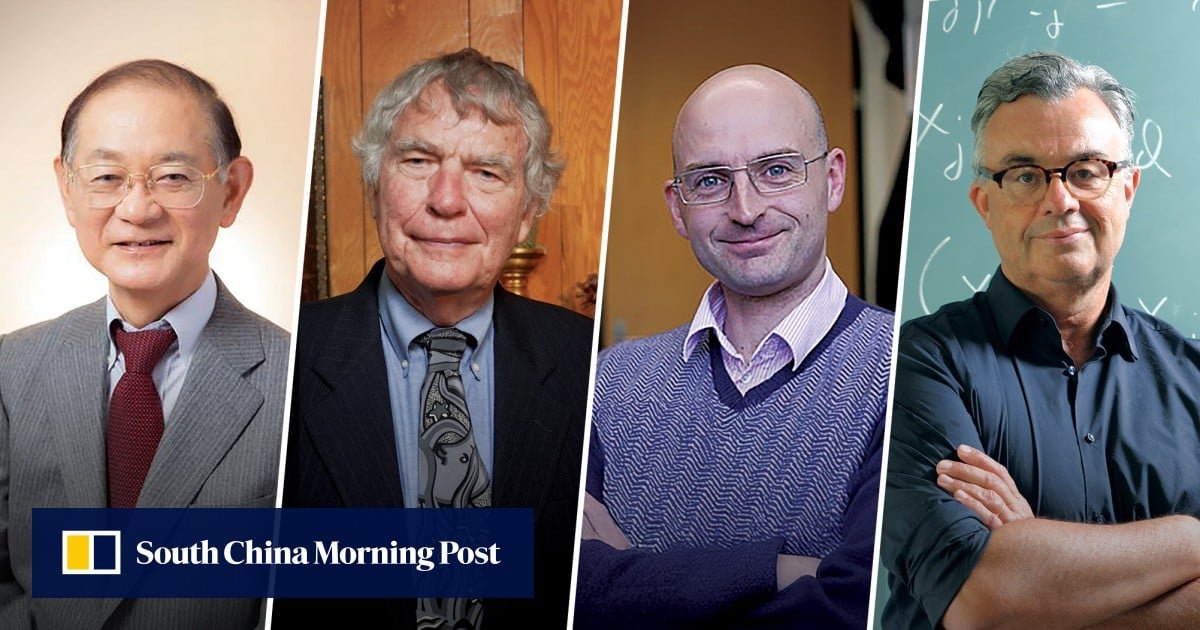
Japanese astrophysicist Ken’ichi Nomoto, emeritus professor and visiting senior scientist of the Kavli Institute for the Physics and Mathematics of the Universe at the University of Tokyo, in Japan, says that as a child he was fascinated by living things, such as plants and insects, which led on to an interest in physics, history, and the fundamentals of how everything – including the Earth and the universe – is evolving.
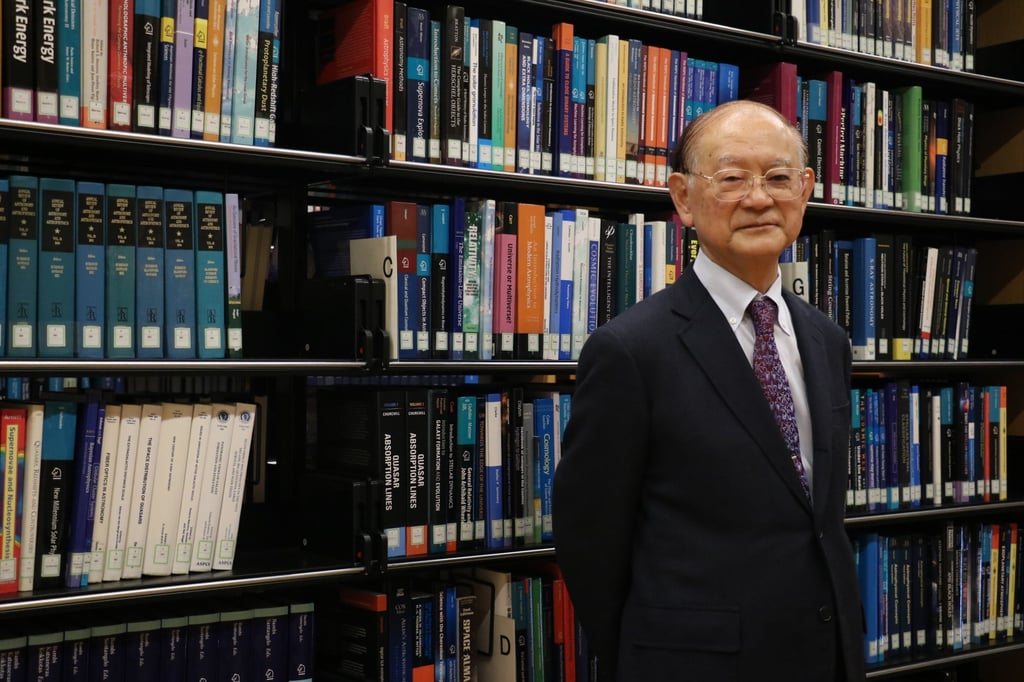
“My supervisor at the University of Tokyo, Professor Daiichiro Sugimoto, taught us about the critical role of entropy, which affects the structure and evolution of materials, including stars,” Nomoto says.
“I started to work on white dwarfs [a small, dense star near the end of its life] in close binaries and showed they undergo explosions under certain conditions with a theoretical model. But it wasn’t until I went to the US as a postdoctoral researcher at Nasa’s Goddard Space Flight Center that I was told my model predictions of exploding star spectra were quite similar to their supernovae observations. That was very exciting.”
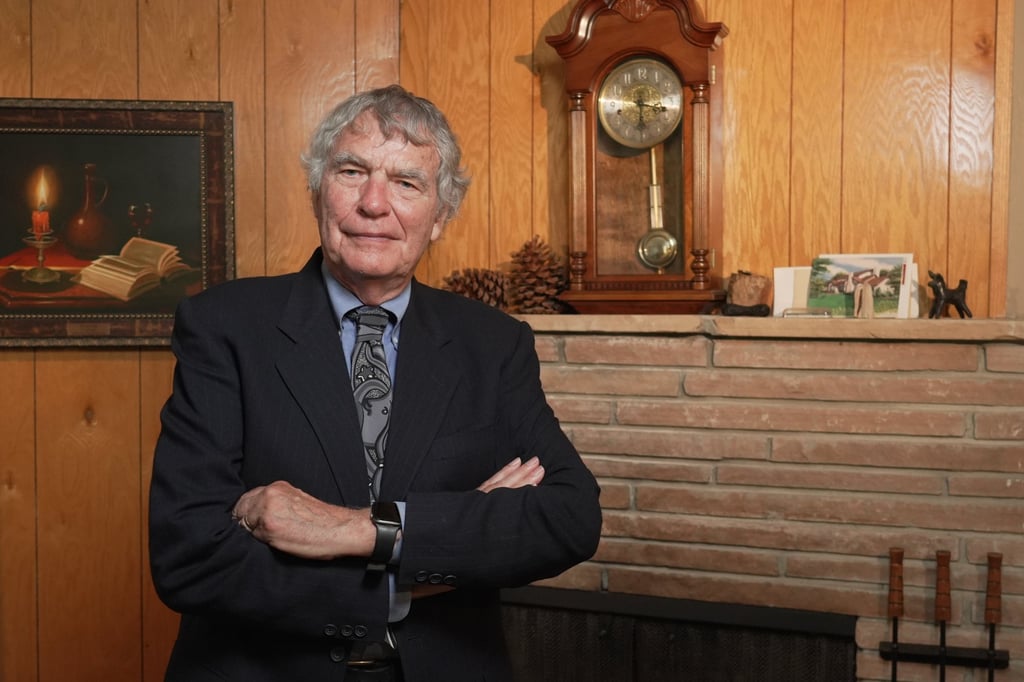
For American astrophysicist Stanford Woosley, professor of astronomy and astrophysics at the University of California, Santa Cruz, in the United States, the pivotal moment came when he was a first-year student sitting in the audience during President John F. Kennedy’s historic “We choose to go to the moon” speech at Rice University in Texas in 1962.
“That was tremendously impressive and exciting for me,” Woosley says. “I wanted to be an astronaut like everyone my age then. I was curious about extraterrestrial life, but here was something real. I didn’t become an astronomer then, but the seed was planted.”
As someone who always wanted to know how things worked, his later career path had a clear sense of destiny fulfilled.
Over the course of their careers, Nomoto and Woosley have conducted independent but complementary research, moving in parallel directions and motivated in part by a sense of friendly rivalry.
This has furthered understanding of the visual signatures and origins of supernovae and other stellar explosions, as well as the chemical elements those processes generate and what the earliest stars were made of.
The significance lies in the fact that supernovae, which contain as much energy in a few days as the Sun will emit in 10 billion years, give birth to the most exotic states of matter – black holes and neutron stars [dense, collapsed stars]. They also drive the dynamics of interstellar gas from which stars are born, produce galactic cosmic rays, and create many of the elements that form planet Earth and the human body.
Nomoto and Woosley – and their collaborators – devised comprehensive calculations that track massive stars from birth to core collapse. Their work helped to characterise and even predict types such as electron-capture and pair-instability supernovae.
Additionally, Woosley proposed the “collapsar” model to explain how the core collapse of a massive, rapidly spinning star can create a black hole surrounded by a disc, which sends out powerful jets that produce long gamma-ray bursts. Nomoto, meanwhile, is also known for his detailed calculations of nucleosynthesis and light curves in the jet-driven explosions associated with such a collapse, which he dubbed “hypernovae”.
“The process of scientific discovery, at least in astronomy, is usually a long slog,” Woosley says. “It usually takes many years, from the time you come up with a theory, to when you write and publish a paper on it, to realising and confirming the theory is a great discovery.
“To younger scientists who want to take up research as a lifelong career, I would advise them to surround themselves with clever people who will encourage and challenge one another’s ideas, like how good jogging partners help to reinforce each other.”
Sustaining momentum in search for answers
This year’s Shaw Prize in Mathematical Sciences is similarly being awarded jointly to two worthy laureates.
One is French mathematician and statistician Emmanuel Candes, the Barnum-Simons Chair in Mathematics and Statistics at Stanford University, in the US, who uses analytical techniques to understand and solve problems in informational theory, signal processing and statistics.
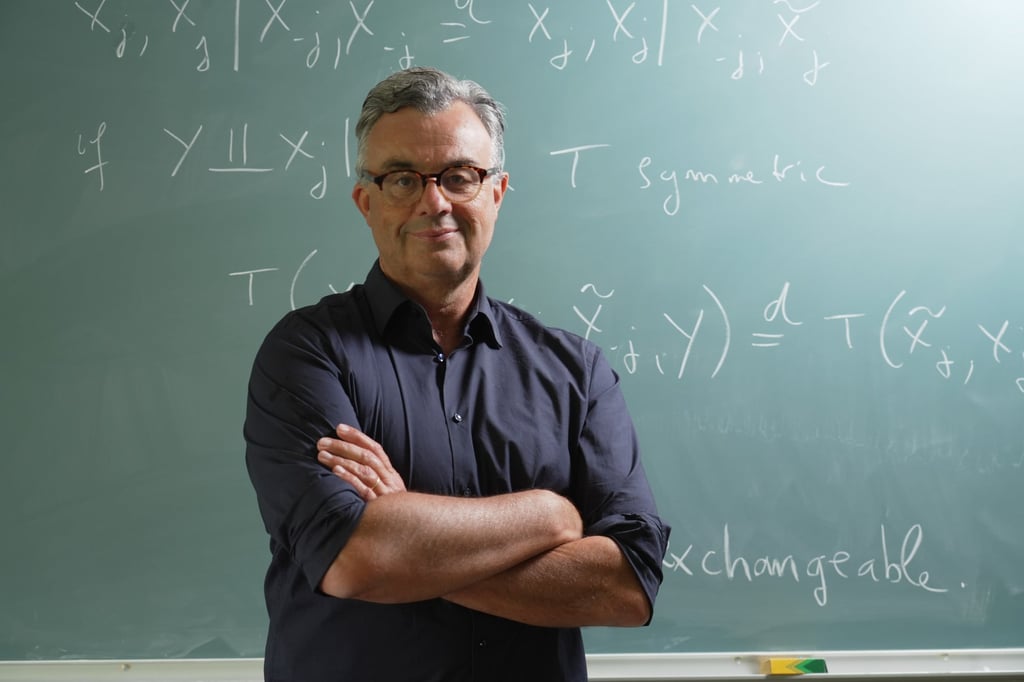
The broad aim for his team is to devise clear frameworks that can bring everyday practical solutions. A prime example is the development of compressed sensing, a mathematical framework which makes it possible to reconstruct signals from incomplete measurements or data.
It has a direct application in speeding up magnetic resonance imaging (MRI), where a full image can often be generated quickly with high accuracy.
In fact, one can massively under-sample, but still reconstruct, and that technique also has major implications for machine learning and data science.
Candes has also advanced the theory of super-resolution, which allows users to transform low-resolution measurements to high-resolution signals and has created a new filter to reduce false discovery rates in statistical data.
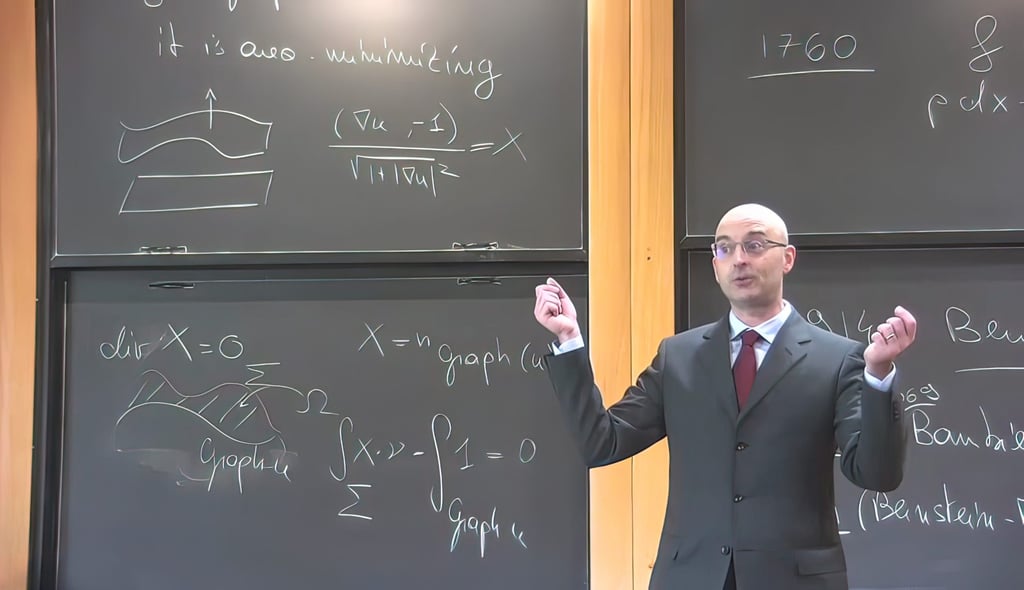
His fellow laureate is Italian geometric analyst Camillo De Lellis, IBM von Neumann Professor in the School of Mathematics at the Institute for Advanced Study at Princeton University, in the US.
One of his notable successes, collaborating with other scholars, was to simplify and complete the 1,700-page manuscript of the late American mathematician Frederick Almgren, who addressed the Plateau problem, which explores the minimal surface that spans a given boundary.
Separately, De Lellis is also credited with advancing the study of fluid dynamics. He and his collaborators adapted powerful convex integration methods to understand the behaviour of fluid, especially focusing on turbulence and energy loss.
Over the years, both laureates in Mathematical Sciences have experienced the challenges inevitable in any research career where breakthrough achievements are hard-won and success is never guaranteed.
“For that reason, I do two things that I learned from my PhD adviser,” Candes says. “One is to pay really close attention to what is going on outside your field to see what the problems are and where you can contribute with associated studies. The other is to brainstorm with students about what we can make better with mathematics. That is an opportunity and a privilege – and it keeps you young.”
For De Lellis, the key when approaching a complicated proof, which almost nobody has understood, is to go stage by stage and, if necessary, be prepared to wait.
“You may then find the one special moment of inspiration which gives you the clue and solves all the problems relating to it,” he says. “A lot of my work is like that. You can reach a choke point and get stuck for maybe four or five years, but then the floodgates open.”
When a discovery is made, De Lellis says he often experiences a mix of emotions. Besides a sense of elation, there is often an underlying feeling of fear and doubt about whether there were any errors in the work, or if someone else had already made the same discovery.
“That danger that somebody might achieve something ahead of you will always be there,” he says. “But when I am very confident that I have solved a problem, then that’s a moment of big excitement.”