Rare Genetic Disorder Leaves Bones Unable to Harden – And Many Patients Don’t Even Know They Have It : ScienceAlert
A rare and potentially fatal genetic disease marked by weakened bones is often overlooked, but with greater awareness, we can better diagnose and treat the devastating condition, scientists say.
Hypophosphatasia, thought to affect as few as perhaps only three in 100,000 people in the US, is caused by impaired bone mineralization, which can lead to many different kinds of health complications during life, and in extreme cases, death.
Despite the severity of the condition and the chronic pain it can cause to those who have it, many people with hypophosphatasia are likely not even aware they have the disease, due to diagnosis often taking several years.
That’s one of the takeaways of a new study published in Frontiers in Endocrinology, led by first author and endocrinologist Martin Kužma from Comenius University in Slovakia, and senior author and osteologist Roland Kocijan from the Ludwig Boltzmann Institute of Osteology in Vienna.
In their study, the researchers aimed to evaluate the prevalence of hypophosphatasia in Central and Eastern Europe, collecting information on 49 patients with the condition, which they say amounts to one of the largest reported cohorts of people with the disease.
While the disorder is very rare and faces significant issues in terms of diagnosis, hypophosphatasia is well understood biologically.
The disease is caused by mutations in the ALPL gene, which reduce activity of the TNSALP enzyme, a form of the alkaline phosphatase (ALP) enzyme necessary for healthy bones and teeth.
About 470 pathogenic (or likely pathogenic) variants of the ALPL gene have been identified to date, which could explain the wide variety of hypophosphatasia symptoms patients can experience.
“Patients at the severe end of the spectrum exhibit profound bone demineralization, pulmonary hypoplasia, respiratory failure, and vitamin B6–responsive seizures,” the researchers explain.
“Patients at the mildest end of the disease spectrum may present only with premature tooth loss or periodontal disease.”
The disease can be identified in unborn babies in the uterus, through childhood and into adulthood, but despite the potential severity of symptoms and the pain it can cause patients, hypophosphatasia is often overlooked, due to ALP levels not being properly tested.
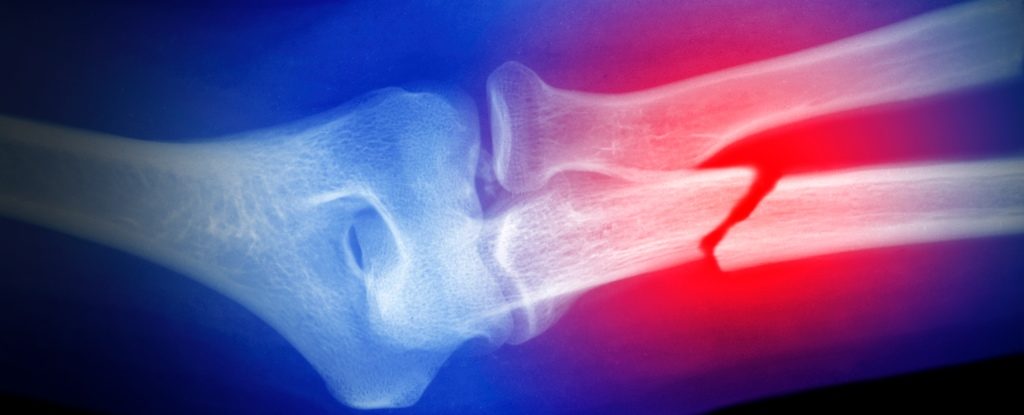
One study suggests the median time between symptom onset and HPP diagnosis is about 5.7 years, during which time the condition, its symptoms, and resulting complications could worsen.
In their analysis of European patients, Kužma and Kocijan’s team found chronic musculoskeletal pain was reported by 73.5 percent of HPP patients, with fractures documented in 44 percent and bone deformities noted in 17 percent of the cohort.
Premature loss of teeth was found in about a quarter of cases.
According to the researchers, the disease seems to manifest somewhat differently depending on when it emerges, with childhood cases marked by severe mineralization defects and adult diagnoses exhibiting a chronic pain-dominant phenotype.
The disease goes beyond bones and teeth, and can also bring on respiratory problems, kidney issues, and other complications.

Overall, the results suggest the key symptom of hypophosphatasia is chronic pain, reported in over 70 percent of the group.
“The observation that 71 percent of patients required regular use of analgesics – often multiple concurrent agents – highlights the severity and complexity of pain management in this population,” the study authors write.
“This is in line with existing literature suggesting that chronic pain in hypophosphatasia is frequently under-recognized and inadequately treated, particularly in adults with a diagnostic delay for many years.”
In the patients studied, only one person was receiving a treatment for the condition, the enzyme replacement therapy asfotase alfa.
The researchers say this is partly because asfotase alfa is only available for child-onset disease with evidence of bone manifestations (reflecting a minority of patients in the cohort), but also because access to the therapy is limited.
Related: Breakthrough to Make Bones Stronger Could Reverse Osteoporosis
While there’s no denying the grimness of this severe and painful disease, there is reason for hope.
Continued research into the condition is leading to greater awareness of the disorder and how it presents, which in turn can bolster diagnosis and treatment efforts.
In the European cohort, low ALP levels were found in almost all (97 percent) of the patients studied, which the researchers say is a valuable diagnostic signal.
“While low ALP activity is a hallmark of hypophosphatasia, it is frequently overlooked in routine clinical evaluations, particularly in adults with non-specific musculoskeletal complaints,” the researchers write, adding that once low ALP levels are confirmed, doctors need to follow up with DNA testing.
“Genetic testing of the ALPL gene must be emphasized as an essential and systematic step in all suspected cases of hypophosphatasia, since hypophosphatasia is by definition a genetic disease. Identification of a pathogenic variant confirms the diagnosis and guides clinical management.”
Earlier this year, researchers in Canada also discovered a molecular ‘dial’ that they say, with further testing and development, could be turned up to help restore deficient bone mineralization to healthy levels.
The findings are reported in Frontiers in Endocrinology.
This article was fact-checked by Clare Watson and edited by Clare Watson. While we pride ourselves on our process, we are only human. If you spot a mistake, please let us know.